

Balancing growth and net-zero ambitions in Asia-Pacific aviation
How the region’s ecosystem can lead the global transition to greater sustainability
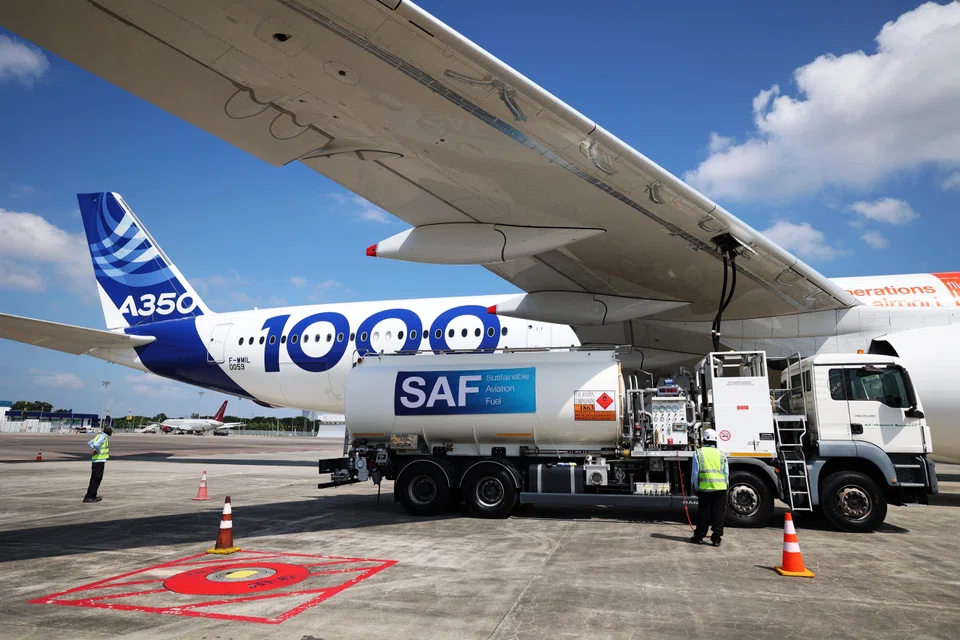
AVIATION in the Asia-Pacific is entering its most consequential decade, one defined by rapid growth colliding with tightening carbon constraints.
Over the next 20 years, the region is set to drive the largest share of global air traffic growth, fuelled by rising incomes, expanding middle classes and deeper regional connectivity.
At the same time, the industry has committed to achieving net-zero carbon emissions by 2050 – a target that leaves little room for delay.
This collision of demand and decarbonisation is already reshaping fleet strategies, infrastructure investment and public policy. In this environment, growth and sustainability are no longer parallel ambitions. They are inseparable challenges that must be solved together.
The dual reality of net-zero and growth
There is an urgent need to accelerate the adoption of sustainable aviation fuel alongside complementary technologies.
Net-zero aviation will not be delivered by any single solution. Progress depends on how effectively airlines, regulators, fuel producers and technology providers integrate sustainable aviation fuel, operational efficiencies and emerging propulsion solutions into a coherent strategy.
According to the International Air Transport Association, sustainable aviation fuel can cut life-cycle emissions by up to 80 per cent compared with conventional jet fuel, yet supply remains limited and cost is staggeringly high.
Airlines are ready to adopt sustainable aviation fuel at scale, but without clear pricing signals and regulatory certainty, progress risks remaining fragmented – forcing carriers to make difficult trade-offs between growth, cost and sustainability.
Producers require long-term demand clarity to justify investment and expand supply. Turning sustainable aviation fuel from promise into impact demands decisive action: transparent frameworks, stable market signals and coordination across the ecosystem.
Singapore’s innovative sustainable aviation fuel levy, effective October 2026, is a practical and bold solution to this dilemma. It charges passengers, business aviation and cargo on flights departing Singapore with proceeds pooled through the Sustainable Aviation Fuel Company to purchase sustainable aviation fuel.
This initiative supports Singapore’s goal of achieving at least 1 per cent sustainable aviation fuel uplift in 2026, with ambitions to scale this to 3 to 5 per cent by 2030.
Other Asia-Pacific countries are similarly following suit. Japan has committed to a 10 per cent sustainable aviation fuel target by 2030; South Korea and Indonesia will introduce phased mandates starting 2027; and India aims for a 1 per cent blend by 2027.
Even if execution and feasibility remain murky, these policies signal that the region is moving from aspiration to action.
Emerging bright spots and innovations driving the green transition
On the bright side, Asia-Pacific is slowly but surely producing real results.
Neste’s Singapore refinery, now the largest renewable diesel and sustainable aviation fuel facility globally, is supplying sustainable aviation fuel to carriers across the region.
Australia is developing commercial sustainable aviation fuel plants, with one project aiming for 100 million litres annually by 2026 to 2027, backed by both public and private players.
Japan’s energy firms are similarly scaling up efforts to develop biofuels as a more near-term, commercially viable solution, while Hong Kong saw its first corporate sustainable aviation fuel purchase of 3,400 tonnes in recent years.
These developments highlight a critical point: Policy signals are beginning to translate into operational results, but supply chains remain delicate. Airlines must navigate limited availability, pricing uncertainties and early-stage logistical constraints.
However, slow but burgeoning adoptions of innovations, such as book-and-claim systems and digital tools that optimise fuel use, are enabling early adopters to maximise impact despite these limitations.
What is notable is the breadth of experimentation across the region. Airlines are trialling blended fuels, airports – including Singapore’s – are adjusting ground operations for energy efficiency and research centres are supporting applied sustainable aviation fuel deployment.
Sustainable skies: It takes an ecosystem
Decarbonisation in aviation is a systemic challenge, one that demands coordinated action across the entire ecosystem.
Airlines need cost predictability to adopt sustainable aviation fuel and emerging technologies at scale. Financiers require credible, long-term policies to justify investment. Regulators must align standards to prevent fragmentation and fuel producers and technology providers must have clear, stable demand signals.
Singapore remains unparalleled as the regional hub for collaboration and experimentation, having relentlessly cultivated the conditions for progress over the past two decades. By convening stakeholders, piloting solutions and setting tangible standards, it provides a platform where lessons learnt locally ripple across the region.
Equally critical is human capability. Engineers, operations specialists, policy designers and sustainability professionals must be able to navigate the complexity of alternative fuels, digital optimisation and emissions management as an integrated system.
Singapore is investing in this capability through initiatives such as the S$200 million OneAviation Manpower Fund established by the Civil Aviation Authority, alongside partnerships with institutes of higher learning, AI Singapore and industry players.
This focus on talent ensures that ambition can be translated into execution.
Great solutions cannot take flight alone. Mechanisms must exist for these promising ideas to be heard and shared. Cross-border dialogue, knowledge-sharing and collaboration is already underway, ensuring innovations are not isolated but can accelerate regional decarbonisation.
Finally, events play an important role in enabling these conversations and driving industry partnership. By cultivating an ecosystem that encourages experimentation, rewards learning and facilitates shared expertise, the Asia-Pacific region can collectively drive both sustainability and aviation growth.
From pledges to practical progress
We cannot wait for perfect solutions. Business leaders, policymakers and aviation professionals must act now – adopting innovative fuels, investing in operational and technological improvements and fostering the required talent.
The decisions made now will matter far more than the pledges made for 2050. They will determine whether Asia-Pacific leads the global transition to sustainable aviation or pays the price for moving too slowly.
The writer is managing director at Experia Events, the organiser of Singapore Airshow 2026, happening from Feb 3 to 8
TRENDING NOW

Once staunchly pro-China, Malaysian Chinese businesses are now distancing themselves from Beijing

Britain’s mansion tax shows the difficulty of targeting wealth

Three hats, one goal: How Ng Kian Swan runs sustainability at NUHS

COE review: The gap between luxury and mass-market cars isn’t the only one worth bridging

