From bedroom to boutique: Singapore’s blogshops come of age, but can they stay relevant?
Their next test will be whether they can turn early momentum into staying power, and style into substance


[SINGAPORE] Once the domain of young entrepreneurs selling affordable fashion from their bedrooms, Singapore’s blogshops – small, home-grown fashion boutiques – have become a formidable presence in the local retail scene.
Two decades after their emergence in the early 2000s, labels such as Love, Bonito and The Tinsel Rack have evolved from online startups to established fashion brands with design studios, multiple stores and a loyal following.
Their trajectory tracks Singapore’s own e-commerce and entrepreneurial boom, but now, the next chapter looks less certain.
Rising manufacturing costs, growing competition from ultra-fast fashion brands and shifting consumer habits are squeezing margins and testing what local blogshops can offer increasingly discerning consumers.
As the market matures, the qualities that once defined blogshops, such as accessibility and affordability, may no longer be enough. Can these brands that once disrupted traditional retail reinvent themselves again to stay relevant in a very different fashion landscape?
Origins and evolution
Most early blogshops did not design or manufacture their own clothing; they were essentially curators, sourcing pre-loved or imported garments and selling them online, says Shannon Sim, Lasalle College of the Arts’ programme leader for fashion media and industries.
“A common model involved visiting wholesalers, such as the former popular Oxley BizHub warehouse in Singapore, ordering items… and then selling them online or in small physical shops.”
Michelle Ting, founder of fashion brand Chello, recalls how when blogshops first began, the focus was on affordability and quick trends.
Ting, who ran a wholesale and manufacturing company in the 2010s before starting her own brand in 2019, says: “Most (of the blogshops) didn’t have a distinct identity. You could click into any of the blogshops and you see them selling the same pieces, but with different models and under different brands.”
Around 2016, she noticed that brands started to work directly with manufacturers in other countries, which allowed them to have more control over the design and pricing of their products. This coincided with Alibaba’s expansion into Singapore.
She says: “Brands started to put more emphasis on fabric cutting and overall quality to differentiate themselves.”
Typically, blogshop owners visit fabric markets in China, or work with manufacturers, mostly from China or the region to source materials, request prototypes and refine samples, Sim says.
“Samples are refined for fit and comfort before mass production begins... Once approved, goods are shipped back to Singapore,” Lee Gek Keow, a lecturer in business management at Nanyang Polytechnic, says.
To create a website, brands previously needed to hire a website designer but now several apps or websites like Shopify seamlessly allow you to create a website, says influencer Mongchin Yeoh, also known as Mongabong, who designed two collections with popular blogshop Lovet.
And with the shift towards video-based social media platforms in the late 2010s, blogshops also learnt how to generate engaging content on TikTok and Instagram. Many have their own social media teams, which stage photoshoots and create content for each collection, repost outfits customers wear and respond to enquiries.
New platforms to conquer
In the past five years, the most noticeable change for the industry has been the shift towards selling on Shopee and TikTok, brand owners interviewed by The Business Times said.
On these platforms, customers are able to get the same items at a discount during flash sales and can enjoy bonus cashback and vouchers during campaigns. For local womenswear sellers on TikTok Shop, all items must be shipped by the next working day.
To boost sales, brands often launch livestreams while releasing their products for sale on these platforms.
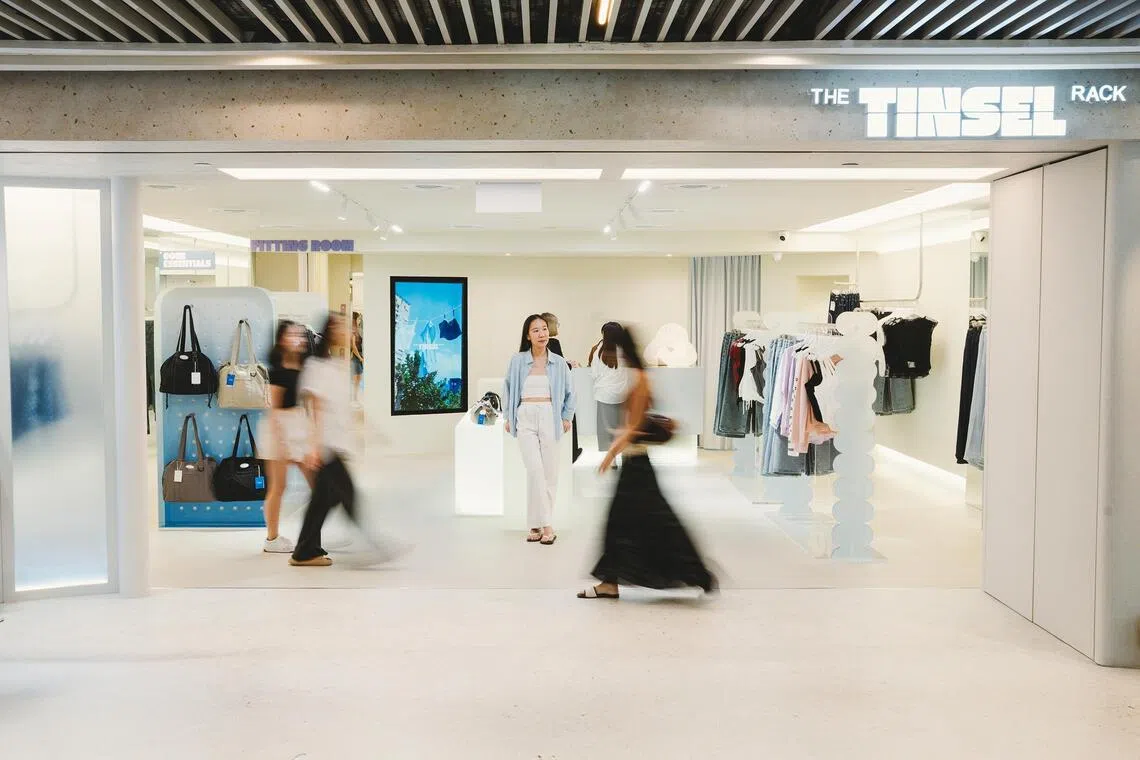
The Tinsel Rack’s founder, Joyce Ng, says: “Before TikTok Shop, we did livestreams on Instagram. It’s just that customers couldn’t buy clothes directly. In a sense, there was a disconnect in the buying journey. But with TikTok Shop, I think they very nicely closed up that loop for us.”
“Livestreaming is a great way to engage further with customers because in real time, we get their questions about the clothing answered. (This) strengthens the brand and customer engagement,” she adds.
Livestream hosts are also able to share details about the product which customers may not take note of, such as a dress’ elasticity and fit, says Neonmello’s founder Maybelle Sua.
However, as Singaporean consumers become more accustomed to buying clothes on Shopee, TikTok and other platforms such as Taobao, they may also seek out overseas brands and experiment with different styles.
Nanyang Polytechnic’s Lee says: “Chinese fast-fashion platforms such as Shein and Taobao, as well as (home-grown) Shopee – where independent Vietnamese brands are gaining rapid popularity – have reshaped consumer expectations by fuelling demand for trendy pieces at extremely affordable prices.
“This puts pressure on local brands to compete not only on cost but on originality, quality and brand story.”
Brands will also have to be mindful of platform fees, which are increasing. For instance, TikTok Shop’s platform fees were around 4.9 per cent for fashion products in January 2025, but rose to about 7.1 per cent by mid-July. Commission fees currently stand at 7.63 per cent for non-Shopee Mall local sellers.
Average monthly sales of local fashion sellers on Shopee have more than tripled from June to September 2025, Geraldine Ho, Shopee Singapore’s head of marketing, says.
A TikTok Shop spokesperson notes how gross merchandise value for local womenswear sellers on its platform between January and September 2025 have increased 90 per cent compared with the same time period last year.
The case for brick and mortar
In a highly saturated online market, more blogshops now have a physical location where customers are able to try on their clothes in person. These can be in malls or their offices, which are often located in industrial estates in Singapore.
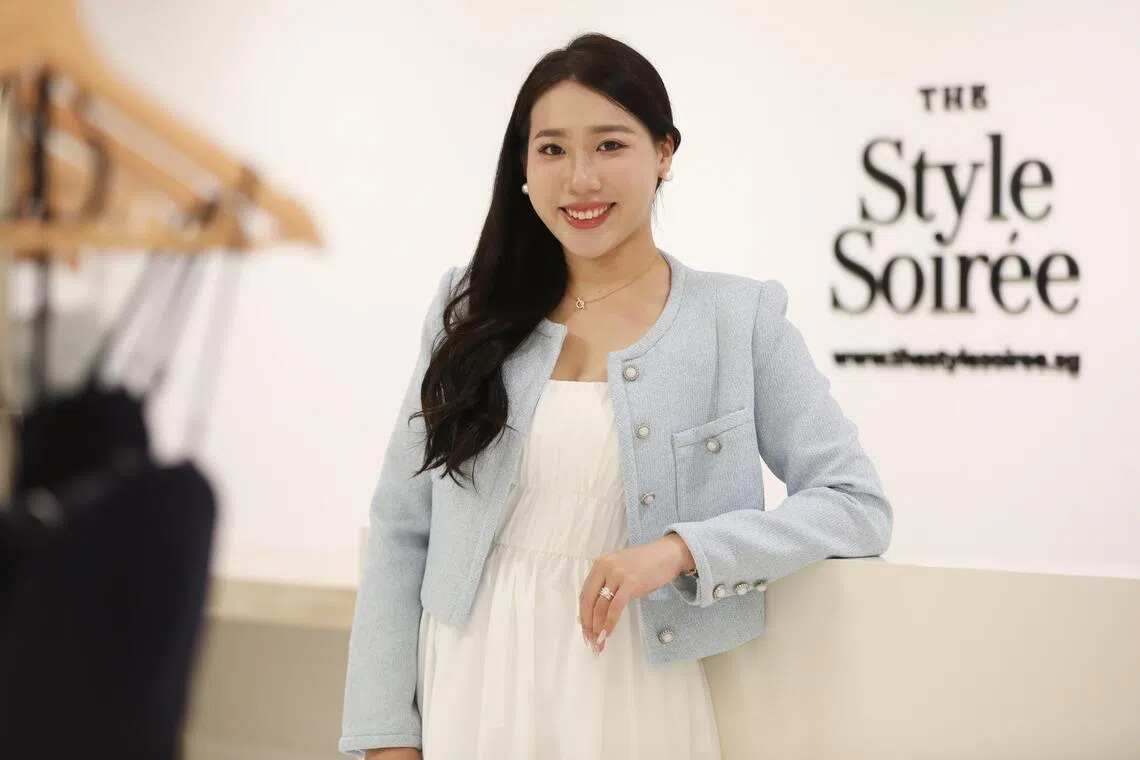
Some brands such as Lovet also have store-exclusive items, which helps increase footfall to their stores. Others, like The Style Soiree, have diversified into related products such as shoes, says founder Chia Hui Shi.
Love, Bonito opened its first physical store at 313@Somerset in 2017 and today, it has 27 stores across Singapore, Malaysia, Indonesia, Cambodia, Hong Kong and the Philippines.
Having a store at Plaza Singapura “in the heart of town” has given Neonmello an avenue to interact with more customers who may not be familiar with its brand, says Sua.
In recent years, some of these brands have increased their visibility due to their presence in the same zone or floor at certain malls.
For instance, Plaza Singapura is home to several brands including the aforementioned Neonmello, as well as The Tinsel Rack and The Willow Label. Some shops such as Fash Mob and Shop Sassy Dream have been with the mall for more than six years.
While their online presence helps these fashion labels reach a broad audience and drive sales, their mall stores provide “visibility, credibility and an experiential touchpoint where customers can browse, try on and engage directly with the brand,” a spokesperson from CapitaLand Investment, which manages Plaza Singapura, said.
According to Knight Frank’s Q3 retail report, the average gross rents of prime retail spaces in Orchard rose 3 per cent year on year to S$31.70 per square foot (psf) per month.
In comparison, industrial rents are significantly lower. Blogshops typically have their offices located in light industrial units, which command rents between S$2 and S$4 psf per month, according to PropertyGuru listings. However, these locations tend to be further away from the city centre.
Chello currently allows customers to book a personal shopping experience at its studio in Tai Seng, but is exploring the possibility of opening a pop-up store in the future.
Its founder, Ting, says: “It’s not just about the sales, but mainly it’s about exposure and giving customers the chance to experience Chello in person. Our designs really come to life when women can feel and touch the fabric and understand the structure of the piece.”
Expanding overseas
Chello has also been focusing on actively and steadily building brand awareness outside of Singapore, Ting says.
She says: “We have sent our pieces to influencers in other countries, and the response has been encouraging. It’s part of our strategy to test and grow our international customer base while staying true to our Singapore roots.”
The next big opportunities lie in expanding into regional markets that offer further growth, says Nanyang Polytechnic’s Lee.
Lovet, which organised a pop-up in Kuala Lumpur in 2024, is looking to open a store in Malaysia within the next three years, its co-founder Lee Wei Leong says.
Citing the example of Indonesia, which has hundreds of millions of people, he is hopeful that if the brand were to expand to Indonesia, it could target at least “10 to 20 times” the number of shoppers.
Lasalle’s Sim says: “Singapore blogshops have exported operating models across South-east Asia as they opened physical locations and expanded cross-border e-commerce.”
This refers to strategies such as clothes designed for the Asian body type, rapid micro drops and creator-first marketing.
“The overall South-east Asia e-commerce environment now demonstrates how influencer-led commerce drives a significant percentage of online sales – a development that directly tracks back to the blogshop model,” she adds.
Rising costs
One of the largest challenges that blogshops now face is the rise in manufacturing costs.
Lovet’s Lee says: “Our manufacturing cost, since Covid-19, (has gone up) by at least 40 per cent. We tried producing in other countries but we had to drop the manufacturers because the workmanship was not up to our standards.”
Tay Huay Ling, associate professor of logistics and supply chain management at the Singapore University of Social Sciences, says: “Rising raw material cost is driven by commodity price volatility, higher energy costs, stricter environmental regulations and supply chain adjustments.”
A recent change that Neonmello’s Sua foresees will affect the industry is China’s introduction of a new law which bans informal arrangements between companies and their workers to opt out of mandatory social insurance contributions. The law took effect from Sep 1.
Sua says: “For employers, their costs go up. If you have 100 workers, you have to increase contributions for 100 workers.”
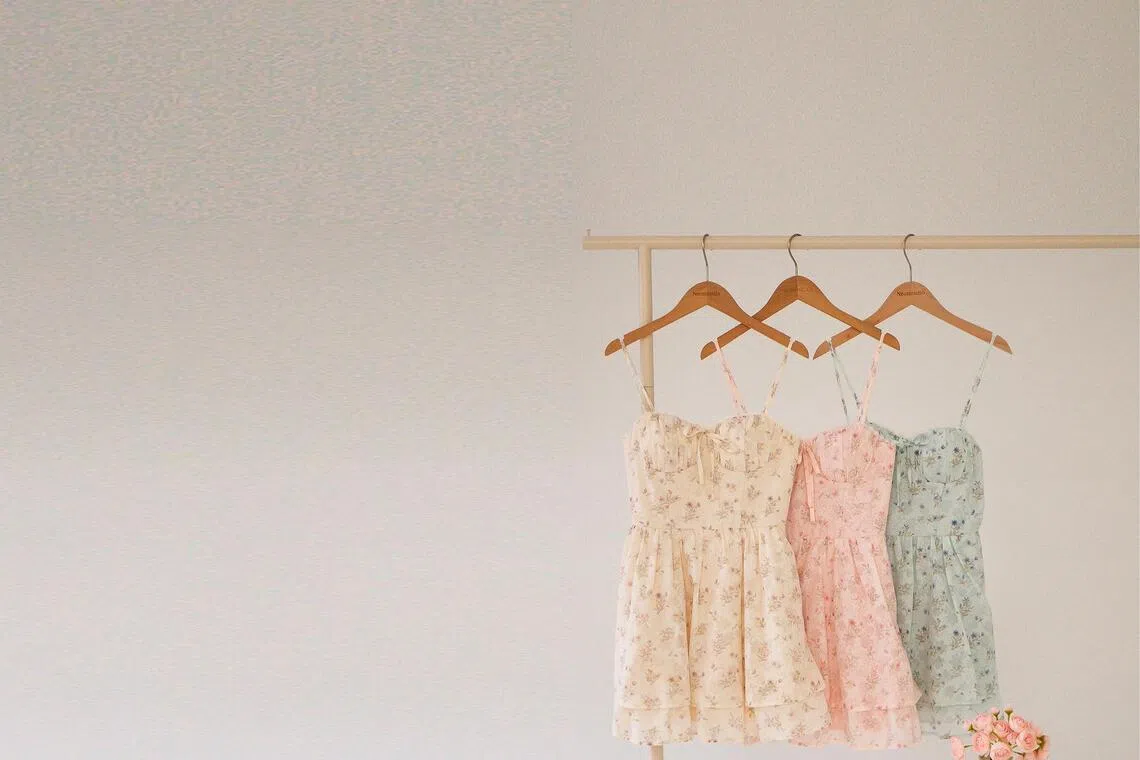
“For Singapore brands sourcing from China, higher production costs reduce profitability unless offset by price adjustments or efficiency gains,” says Prof Tay.
The ongoing US-China trade war has had an indirect impact on shipping cost, some brands say, due to a decrease in shipment volume following the implementation of several rounds of tariffs on Chinese goods.
“When shipment volumes drop, carriers operate below capacity, reducing economies of scale. Fixed costs remain, so rates increase to offset revenue shortfalls,” Prof Tay explains.
She adds: “Looking ahead, these trends will likely push blogshops to diversify sourcing beyond China… Competing on price alone will be harder. Brands will need to differentiate through quality, sustainability and customer experience.”
Building a lasting brand
Amid rising costs, as brands mature and expand into new platforms and overseas markets, strengthening brand identity may be the key to maintaining customer loyalty.
Mongchin Yeoh says: “Brands, at least the successful ones, are very good at discerning their target audiences. They create designs that are meant for that type of shopper or demographic.”
For instance, some brands are known for their workwear such as Chello, while others such as The Style Soiree are recognised for their occasion wear.
Having brand consistency also helps brands to build awareness over time.
About five years ago, Neonmello underwent a rebranding exercise, coming up with a new logo and brand colours which are reflected in its store, paper bags and clothing tags.
Sua says: “It’s a lot easier for us to set ourselves apart.”
“To thrive long term, (blogshops) must evolve into lifestyle brands, offering not just clothing but also values, experiences and community,” Nanyang Polytechnic’s Lee says.
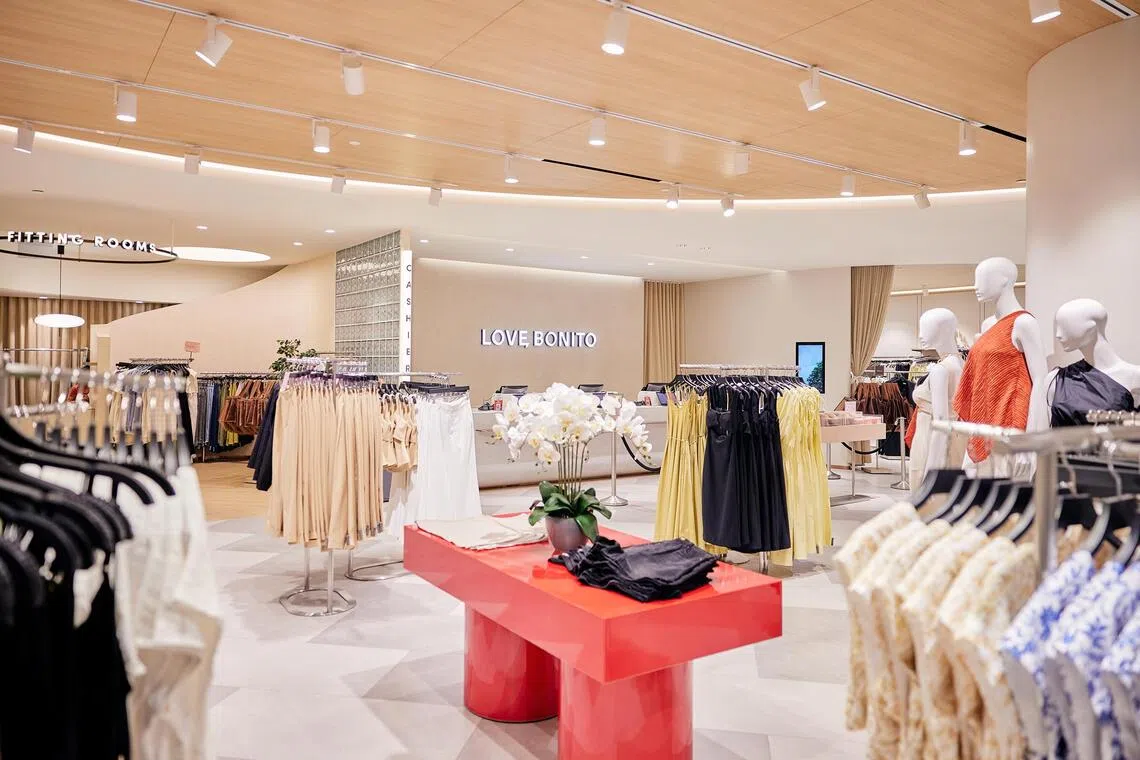
Love, Bonito’s chief executive officer Dione Song agrees. “We’re not just in the business of fashion, we’re in the business of women,” she says. “We see ourselves as more than a company, we’re building a women’s lifestyle ecosystem and want to serve them thoughtfully, whether it’s in fashion or beyond.”
That philosophy guided Love, Bonito’s move into adjacent categories such as wellness, including its 2022 acquisition of activewear brand Butter (now rebranded as Cheak) and its investment in supplements label Moom.
Song says: “Women don’t just live in silos, but they may cross-purchase when these (items) are in categories that will serve their needs.”
“Blogshops are uniquely Singaporean in how they made fashion entrepreneurship accessible to young individuals without formal training and minimal capital, while reflecting local tastes through designs tailored for South-east Asian body types, climates and festive occasions,” Nanyang Polytechnic’s Lee says.
While Singapore’s blogshops have come a long way, to continue thriving, they must pursue new opportunities – across different retail categories, platforms and markets – while carving out their own identity and audience.
As competition intensifies, the challenge in this next phase will be to turn their early momentum into staying power, and style into substance.