

Beijing’s calculated silence on the Iran war
For China, the deeper strategic calculation is not about Iran’s survival, but about the shape of the emerging world order
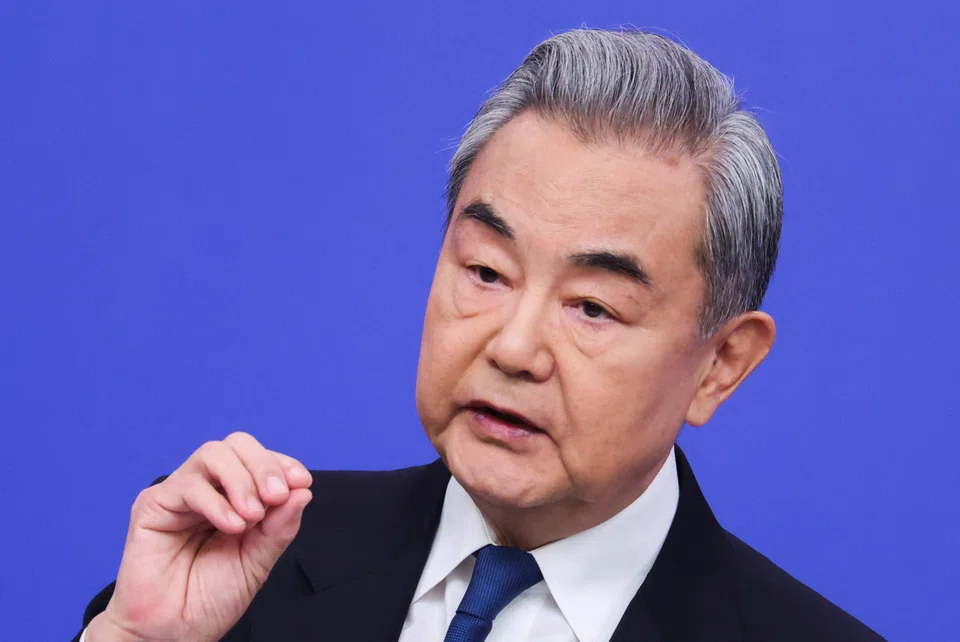
WHEN the US and Israel launched coordinated strikes against Iran on Feb 28, 2026, killing Supreme Leader Ali Khamenei and triggering the most consequential Middle Eastern conflict since the 2003 Iraq War, the world watched closely to see how China, Iran’s most important diplomatic and economic patron, would respond.
The answer, ultimately, was: carefully, and within carefully chosen limits. China’s initial response was swift in form but modest in substance.
Beijing firmly opposed the use of force in international relations and called for an immediate halt to military operations, joining Moscow in demanding an emergency United Nations Security Council session.
Chinese Foreign Minister Wang Yi struck a forceful rhetorical posture, arguing that “might does not make right” and warning that the attacks proved “the world has regressed to the law of the jungle”. Yet Wang stopped short of explicitly naming the US or Israel as aggressors, a telling omission from a country that otherwise speaks with little diplomatic timidity.
Beijing paired diplomatic protest with precautionary measures, urging Chinese nationals in Iran to evacuate and warning citizens in Israel to strengthen emergency preparedness.
This combination of public condemnation and rapid risk mitigation suggested China was preparing for escalation rather than seeking to halt it.
Interests over ideology
Despite China’s formal designation of Iran as a “comprehensive strategic partner” under a 25-year cooperation agreement signed in 2021, the conflict has laid bare a hierarchy of interests that places Iran well below China’s core priorities.
For President Xi Jinping, a hard-nosed pragmatism is at play – Iran ultimately ranks below the stability of China’s relations with the US, particularly as Beijing eyes an upcoming summit with US President Donald Trump.
The economic maths reinforces this posture.
Bilateral trade remains modest relative to China’s global portfolio; oil imports from Iran are useful but replaceable; and Belt and Road investment flows more heavily towards Gulf states such as Saudi Arabia and the United Arab Emirates, economies now exposed to Iranian retaliation.
Put bluntly, Iran has long needed China far more than China has needed Iran.
What Beijing has offered instead is a mix of indirect material support and diplomatic manoeuvring. China adopted a restrained posture, emphasising diplomacy while providing indirect support to Iran.
Intelligence assessments indicated Beijing prepared to offer financial aid and missile components, though it refrained from overt military involvement to safeguard its oil imports through contested waterways.
Chinese radar systems and navigation technology, exported before the war began, quietly enhanced Iran’s electronic warfare capabilities.
On the diplomatic front, China dispatched envoys for mediation, and on Mar 31, China and Pakistan announced a five-point proposal calling for a ceasefire and the resumption of normal navigation in the Strait of Hormuz.
Meanwhile, according to The Washington Post, private Chinese technology companies have been marketing detailed intelligence on movements of US forces in Iran, even as Beijing seeks to keep its official distance.
This shadow engagement is consistent with Beijing’s preferred mode: plausible deniability at the state level, influence operations below the threshold of formal commitment.
Playing the long game
For Beijing, the deeper strategic calculation is not about Iran’s survival, but about the shape of the emerging world order.
China’s muted response reflects a deliberate effort to manage systemic risk, preserve the external conditions necessary for trade and capital flow, and safeguard the foundations of China’s long-term ascent.
China is likely to use US military intervention in Iran to reinforce its messaging, particularly to countries in the Global South, that Washington acts as a hegemonic power, while Beijing presents itself as a champion of non-interference. Every day the war continues, China accrues soft-power capital without firing a shot.
To many in Washington, another US military adventure in the Middle East appears to be a strategic gift to China.
But as a Foreign Affairs magazine analysis notes, Beijing does not see it so simply. An increasingly volatile and unpredictable America is also a destabilising force for the global economic order on which China’s rise fundamentally depends.
China’s response to the US-Iran war is neither abandonment nor alliance, it is the behaviour of what one analyst at the Middle East Institute aptly describes as “a cautious opportunist operating within clear constraints, preserving flexibility while avoiding entanglement in a conflict it cannot control”.
Beijing has calculated that the costs of deeper involvement outweigh the benefits, and that time and American overreach are already working in its favour. Whether that bet proves correct will depend on how long the war lasts, and how badly it reshapes the world China is trying to inherit.
TRENDING NOW

Stocks to watch: Clar, Seatrium, Sheng Siong, MPACT, NetLink NBN, Starhill Global Reit

Singapore government slaps loan curbs on individual private-hire car buyers

If Europe goes to war, the fallout will be felt in East Asia
DBS denies rumours of Indonesia unit merging with Bank Central Asia; analysts see sense in a deal

