

Beyond concerts and casinos: Selling a side of Singapore tourists can’t find elsewhere
Big-ticket attractions are all very well, but Singapore should also use its unique network of parks and cycling trails to draw visitors
SINGAPORE has become exceptionally good at attracting visitors.
From Taylor Swift and Lady Gaga concerts to Formula One races and major business events, the Republic has spent heavily to position itself as a premier events capital.
At the same time, billions are being invested into expanding Resorts World Sentosa, Marina Bay Sands, Sentosa island and the Mandai wildlife precinct, among other projects, to ensure Singapore remains competitive as other cities aggressively court tourists.
These efforts have paid off. International visitor arrivals reached 16.9 million in 2025, up 2.3 per cent from 2024, while tourism receipts hit a record S$32.8 billion. The Government has also committed another S$740 million as part of its Tourism 2040 strategy, which aims to grow tourism receipts to between S$47 billion and S$50 billion by 2040.
But can Singapore keep spending to bring people here?
Much of our tourism strategy revolves around “one-hit wonder attractions” – manufactured experiences that generate a burst of arrivals, but do not necessarily give visitors a reason to keep returning, and stay longer.
The next superstar can always choose to perform in another city, while major sporting events can always find other hosts willing to pay more. Today’s mega attractions will eventually become yesterday’s news.
Like Bangkok’s shopping, Bali’s villas, Kuala Lumpur’s food and Tokyo’s culture, Singapore should focus on what rivals cannot easily replicate: its own everyday experiences.
The objective should not be to build another attraction, but to encourage the creation of memories and experiences so personal and distinctly Singaporean that visitors leave feeling they have discovered a version of the Republic they can call their own.
SEE ALSO

To be fair, the Singapore Tourism Board has already begun exploring new ways to market the country.
Beyond traditional advertising campaigns, it has partnered international artistes and entertainment producers to feature Singapore in music videos, films and television series. Blackpink member Jisoo filmed parts of her music video for Your Love at Mandai Wildlife Reserve, while BTS member Jin’s Don’t Say You Love Me showcased locations ranging from Gardens by the Bay to Goldhill Plaza.
But marketing can persuade someone to visit Singapore perhaps only once or twice. Whether they keep coming back depends on the experience they have.
That does not necessarily require billion-dollar investments, but simply elevating and showcasing what we already have.
Building on Singapore’s greatest assets
Take Singapore’s parks and park connector network.
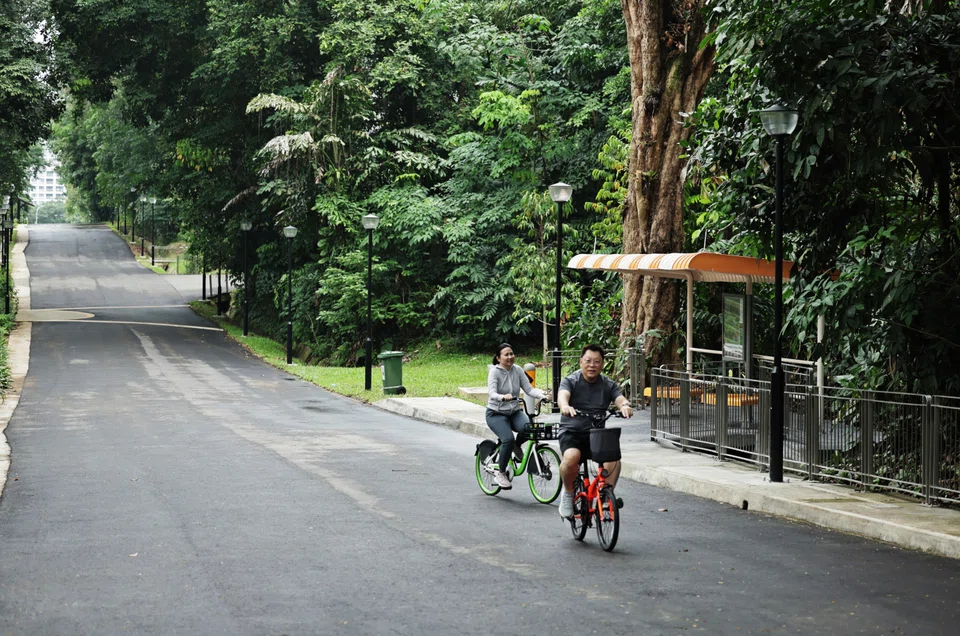
While other cities may be green, too, few of them allow people to run, walk or cycle from well before sunrise or late into the evening through a connected network of parks. Even fewer let them do it in an environment so safe. That is not a small attraction.
Visitors could join run clubs or jog scenic routes through coastlines and neighbourhoods, offering a fresh way to stay active while experiencing everyday life in Singapore. They could also cycle curated routes linking East Coast and Marina Bay, or West Coast and Mandai.
As a road cyclist, I would gladly extend a holiday in a foreign city for a day of riding scenic routes with locals.
In fact, some travellers to Singapore are already doing it.
There are social media stories of transit passengers sharing their experiences renting bicycles from local cycling groups and joining rides through Mandai, Lim Chu Kang and the western parts of Singapore, with kaya toast breakfasts and kopi stops at hawker centres along the way.
Singapore does not need to spend billions to make this happen. Much of the infrastructure already exists, with plans under way to expand the park connector network towards a 500km target alongside 1,300km of cycling infrastructure by 2030. Just keep the roads clear of construction debris.
Bringing back the night
Singapore can also do more to reclaim the night.
For a tropical country, some of the most pleasant hours of the day begin after sunset. Yet despite the cooler evenings, there are still relatively few entertainment options after dark.
It’s true that we invest heavily in celebrity DJs and premium clubs, but many visitors are not looking to spend S$40 or more on a glass of whisky.
What is missing is accessible, lively local nightlife.
When my brother visited from Penang recently, he wanted to revisit Clarke Quay, which he had loved more than a decade back.
Instead, he came away dismayed by how much the district had changed.
Gone were many of the smaller venues that once gave Clarke Quay its character. The Pump Room, famous for its live band performances, is no longer there. The old Highlander whisky bar beside it is gone, and the former Attica nightclub has disappeared as well. Even the bridge near 7-Eleven, once a popular gathering point before a night out, was deserted.
While Zouk’s expansion is welcome – the nightclub in Clarke Quay underwent a multimillion-dollar renovation and reopened recently – large operators alone do not create a nightlife ecosystem.
We need more live music venues together with pubs and speakeasy bars in districts that once thrived after dark, such as Clarke Quay, Holland Village and Mohamed Sultan Road.
Regular, buzzing night markets, where local food vendors, craft beer producers, musicians and performers come together, could also play a larger role. Here, visitors could let their hair down, mingle with residents and perhaps even enjoy a game of chess or mahjong with them.
Supper culture could become part of the tourism experience as well.
One of Singapore’s underrated strengths is that people from different backgrounds still gather over food late into the night. Whether it is prata, dim sum, satay and beer or a bowl of bak chor mee after a night out, these are experiences visitors often remember long after they return home.
It may be worthwhile extending alcohol hours somewhat so that visitors can enjoy Singapore the way locals once did – lingering over supper, sharing food and beer with friends and strangers, and discovering that some of the city’s best conversations happen long after midnight.
Beyond curated experiences
Perhaps most importantly, Singapore should encourage visitors to venture beyond the usual tourism districts.
While I enjoyed exploring Hanoi’s Old Quarter during a recent trip there, it was a morning stroll around Truc Bach Lake, followed by fresh pho and iced coffee with locals on short stools and makeshift tables by the roadside, that most endeared the city to me.
Tourists do not travel to see something that feels manufactured. They travel to discover things and soak in experiences they cannot find elsewhere.
So even as Singapore invests in rejuvenating places such as Smith Street in Chinatown, Lau Pa Sat and Orchard Road, we should also take care not to polish away the quirks, character and spontaneity that make them authentic and special in the first place.
Some of the most interesting parts of Singapore are not found in a tourist brochure. They are found in places such as Balestier and Little India, where old and new Singapore coexist naturally.
In Toa Payoh for example, newer cafes like Wang Lee sit alongside decades-old provision shops and neighbourhood food centres where elderly residents gather over dim sum and kopi in the mornings. Nearby, traditional biscuit shops still display love letters, chocolate wafers and fish-shaped biscuits in large metal tins, much as they did decades ago.
A short walk away, bird-singing enthusiasts gather beneath housing blocks with prized songbirds, continuing a nostalgic tradition that has survived generations of urban redevelopment.
One traveller may remember stumbling upon a hidden bakery. Another may strike up a conversation with a retiree over kopi. A third may spend half an hour watching bird owners compare the melodies of their prized songbirds.
When my parents visit me in Singapore, they rarely venture beyond Bishan. They spend their time browsing the provision shops and markets, watching residents gather for taiji at the community club, lingering over kopi and bak chor mee at Housing Board coffee shops and enjoying the convenience of it all.
To many Singaporeans, these scenes may seem mundane. To visitors, they offer a glimpse into how Singaporeans actually live and the opportunity to experience and appreciate our way of life.
Our people and parks and culture, and our safety and cleanliness, are tourism assets that no rival can match.
Our mega attractions are all very well, but in the eyes of visitors it’s the smaller things we take for granted that could make us special. THE STRAITS TIMES
Decoding Asia newsletter: your guide to navigating Asia in a new global order. Sign up here to get Decoding Asia newsletter. Delivered to your inbox. Free.
Share with us your feedback on BT's products and services






