Beyond the hub: Singapore’s strategic choice in the age of capital geofencing

With index freezes in Jakarta and new investment curbs in Washington, Singapore must evolve into a key node for compliant Asean investment
Summarise
    • Singapore’s role could evolve from hosting regional listings to providing institutional architecture that makes Asean sovereign flows investable under Coins-era compliance requirements.
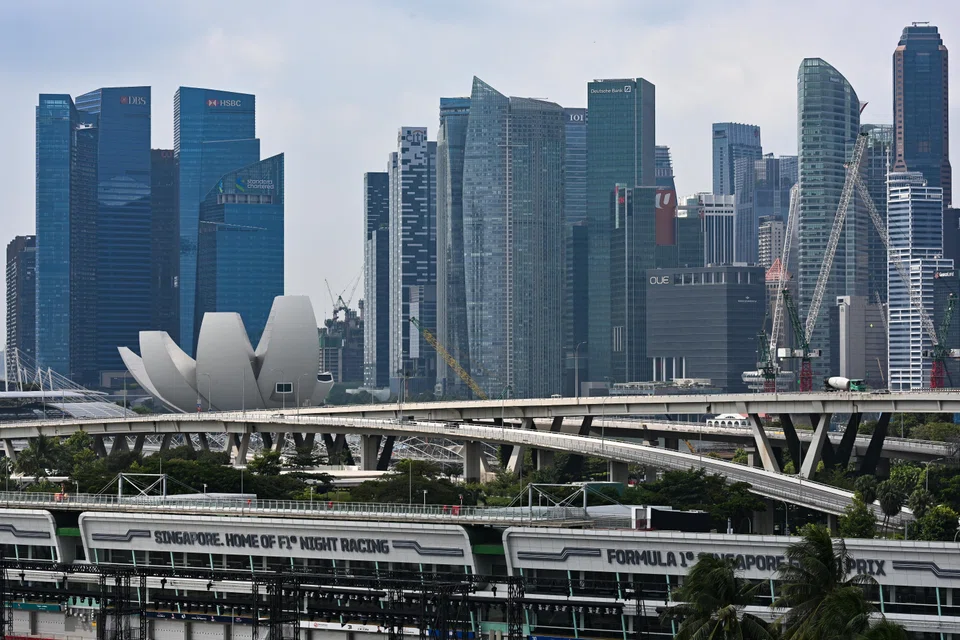
    • Singapore’s role could evolve from hosting regional listings to providing institutional architecture that makes Asean sovereign flows investable under Coins-era compliance requirements. PHOTO: BT FILE
    Published Wed, Feb 11, 2026 · 12:55 PM

    IN ITS quarterly index review released on Tuesday (Feb 10), MSCI made no changes to Indonesian securities – consistent with the interim freeze announced on Jan 27, which remains in effect pending a May 2026 reassessment.

    The day before, FTSE Russell separately postponed its March index review for Indonesia, citing uncertainty in determining accurate free-float percentages amid ongoing reforms. FTSE Russell will provide an update ahead of its June quarterly review, scheduled for May 22.

    The effect: coordinated limbo. Indonesia has avoided immediate reclassification, but it has not secured resolution.


    Both major index providers have hit the “pause” button – and the uncertainty itself carries cost for institutional allocators considering Asean exposure. In the age of capital geofencing, investors may choose to reallocate instead of waiting for regional reforms.

    For Singapore, this extended holding pattern presents a strategic question that deserves direct attention: As Asean’s financial hub, Singapore’s value proposition is tied to regional investability. When the region’s largest economy remains under index scrutiny, the implications hit Singapore directly.

    The new binary

    The scrutiny arrives amid a broader structural shift. The transformation of global capital flows began on Jan 2, 2025, when the Biden administration’s Outbound Investment Security Program rules took effect, restricting American investment in Chinese semiconductors, artificial intelligence (AI) and quantum computing.

    That framework became permanent architecture on Dec 18, 2025, when President Donald Trump signed the Comprehensive Outbound Investment National Security (Coins) Act under the 2026 National Defense Authorization Act.

    The Coins Act codifies and extends the existing outbound investment programme into statute. Treasury has 450 days to finalise implementing regulations, which could bring the regime fully into force by the first quarter of 2027.

    The legislation functions as a “reverse CFIUS”: where the Committee on Foreign Investment in the United States historically screened capital entering the US, Coins grants Treasury authority to prohibit or mandate notification for American capital leaving the country.

    The geographic scope now extends beyond China to include Cuba, Iran, North Korea, Russia and Venezuela – an expansion from the Biden-era rules that focused solely on mainland Chinese entities.

    For institutional investors, Coins introduces additional compliance layers: expanded technology coverage to include hypersonic systems and high-performance computing; enhanced “knowingly directing” liability extending to US persons on boards of foreign firms; and a formal detection programme backed by US$150 million in enforcement funding.

    This is not a tariff cycle. It represents a structural break from 35 years of capital neutrality. In this new taxonomy, markets carrying a “compliance burden” face systematic underallocation, regardless of fundamentals.

    The implications extend beyond equity markets. Singapore’s role as a booking centre for US private equity, venture capital and debt structures into Asean faces similar pressure.

    When US pension funds route investments through Singapore-domiciled vehicles into regional technology or semiconductor suppliers, Coins compliance requires looking through the structure to the ultimate destination.

    Yet this is not a total freeze. Bilateral frameworks – including the US-Singapore Critical and Emerging Technology Dialogue – are keeping “warm lane” sectors like digital services and life sciences open. But for tech-adjacent capital, compliance costs now factor more heavily into return calculations.

    Singapore’s paradox

    Singapore appears well-positioned in this sorting process – with its rule of law, transparent governance and an advanced digital infrastructure. Yet it faces an unexpected vulnerability: its traditional role as Asean hub means its index weight reflects the region’s aggregate health, not just its own fundamentals.

    The Straits Times Index (STI), now near 5,000 points, represents around 80 per cent of Singapore’s free float-adjusted market capitalisation. Yet a substantial share of STI constituents generate the majority of their revenue outside Singapore.

    The strategic question: Is this strength driven by Singapore-specific fundamentals, or by Singapore’s role as the safest available proxy for Asean exposure?

    When Thai Beverage listed on the Singapore Exchange (SGX) in 2006 rather than the Stock Exchange of Thailand, the decision reflected Singapore’s governance premium. Twenty years later, as regional exchanges continue to professionalise and build systematic domestic depth, that calculus is shifting.

    Singapore’s banking sector – DBS, OCBC and UOB, collectively half the STI – reported resilient Q4 2025 earnings, with OCBC and UOB growth offsetting a DBS dip from a high base.

    These are Singapore stories anchored in Singapore fundamentals. But the regional listings and cross-border infrastructure plays carry Asean execution risk.

    The “clearing node” opportunity

    The blueprint for navigating this transition comes from India, which has positioned the Gujarat International Finance Tec-City not as a generic financial hub, but as clearing and settlement infrastructure for cross-border flows.

    Between 2014 and 2026, India also built what might be called a “domestic wall” – systematic retail infrastructure that decoupled market resilience from foreign sentiment. In recent foreign sell-off episodes, including in 2025, domestic investors increasingly offset foreign outflows.

    Singapore cannot replicate India’s domestic retail scale. But the Republic can adopt similar strategic positioning: from hub (vulnerable to regional risk) to node (providing essential infrastructure for regional flows).

    What would this look like? Singapore’s role would evolve from hosting regional listings to providing institutional architecture that makes Asean sovereign flows investable under Coins-era compliance requirements.

    The Monetary Authority of Singapore could establish frameworks allowing Asean pension funds and sovereign wealth vehicles to clear transactions through Singapore’s infrastructure, while maintaining home-market domicile – providing the “compliance wrapper” that satisfies US fiduciary requirements.

    The alternative path

    The alternative to proactive clearing node positioning is reactive defence – and the risks are accumulating.

    Indonesia’s ongoing exchange governance reforms, with sovereign wealth fund Danantara as proposed anchor investor, directly address broker-club conflicts that historically made SGX attractive for Indonesian companies.

    Malaysia’s government-linked investment companies coordination has mobilised over RM22 billion (S$7.1 billion) in domestic investments, creating institutional architecture to support large-cap listings.

    Thailand’s retail base – around 30 per cent of daily turnover – represents latent systematic depth if converted to securities information processor infrastructure.

    These are not theoretical risks. Thai Beverage illustrates the repatriation pressure Singapore faces as regional exchanges professionalise. The historical calculation – “Singapore offers governance premium worth the listing fees” – is being tested.

    The way forward

    Singapore’s advantages remain formidable: a highly educated population; over S$1 billion committed to AI research infrastructure through 2030; robust manufacturing growth in Q4 2025 driven by biomedical and electronics clusters; and political stability that remains the regional gold standard.

    The opportunity is to leverage these strengths, not as a competitive moat against Asean neighbours, but as the foundation for becoming Asean’s institutional infrastructure. This requires a mindset that does not view regional development as zero-sum: deeper markets in Jakarta and Bangkok will enhance Singapore’s value as a clearing node.

    In the age of capital geofencing, success will not be measured by market capitalisation relative to Bangkok or Jakarta. It will be measured by whether Singapore has positioned itself as essential infrastructure – the trusted node that makes Asean investment viable under Coins-era constraints.

    The writer is a senior advisor on market infrastructure and geopolitical risk. He formerly served as president-director of Thomson Reuters and Refinitiv in Indonesia, and head of Asean for the London Stock Exchange.