Biden gets tough with China on trade
The US president hopes his latest trade measures could help win him support among working-class voters in key electoral states come November
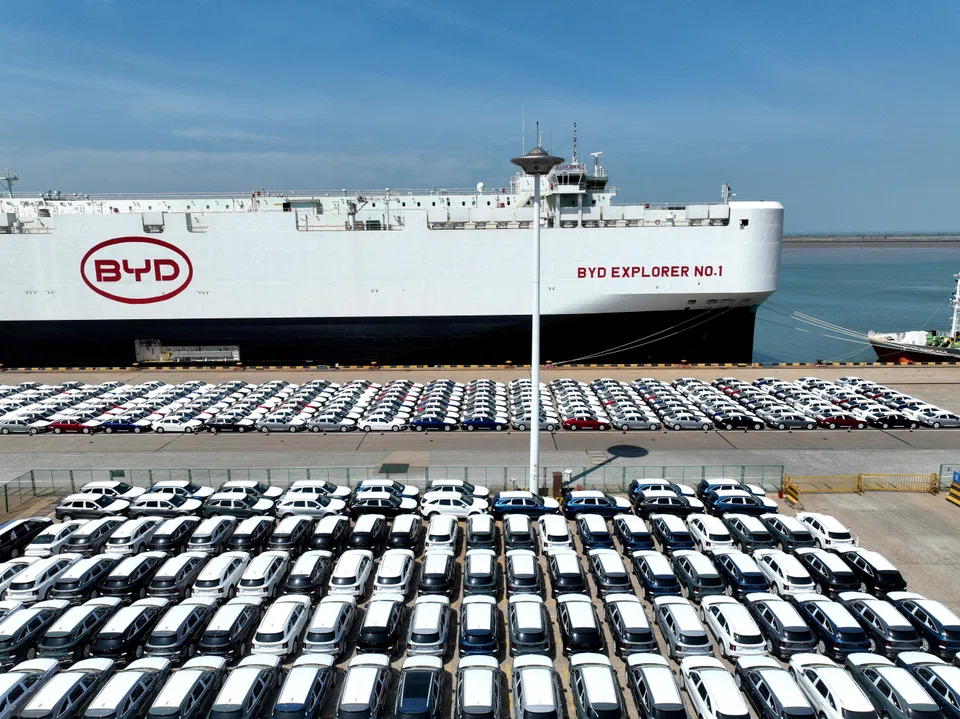
US PRESIDENT Joe Biden announced on Tuesday (May 14) new tariffs on US$18 billion of Chinese imports – including electric vehicles, solar cells, semiconductors, advanced batteries, critical minerals, cranes and medical products – and other sectors that the US regards as strategic to its national security, and which he argues are unfairly subsidised by Beijing.
The new tariff rates – which range from 100 per cent on EVs to 50 per cent for solar components, to 25 per cent for all other sectors – will take effect over the next two years.
President Biden also officially endorsed maintaining tariffs on more than US$300 billion worth of Chinese goods that were put in place by his predecessor Donald Trump – taxes that candidate Biden had criticised during the 2020 race to the White House.
Former president Trump imposed the tariff regime during his administration, by drawing authority from a provision in US trade law that allows tariffs to be used to stifle competition that would threaten national security interests. That trade law requires the effectiveness of such tariff programmes to be evaluated every four years. The Biden administration says that its latest decision to extend the tariffs resulted from that study.
The higher tariffs imposed by the Biden Administration come as President Biden is courting the support of working-class voters in Midwest battleground states such as Michigan, the centre of the US auto industry.
Recent opinion polls indicate that President Biden is trailing former president Trump among voters in Michigan and Pennsylvania, and has come under pressure from the powerful labour unions to get tougher on trade with China.
Indeed, President Biden’s actions can effectively help neutralise Trump’s arguments on China and trade in these key industrial swing states. And by targeting Chinese clean energy tech exports like EVs and other trade practices, President Biden would increase his advantage on the climate issue, which is important to young voters and progressives.
In fact, these new levies against Chinese vehicles will far outpace the 25 per cent tariff put in place against Chinese EVs when president Trump was in office, and which Biden retained.
By taking this series of actions, President Biden explicitly contrasts his trade and climate policies with those of his predecessor. He can actually make the argument that he is outflanking Trump on China trade.
The Biden administration insists that the president is taking action against Beijing’s massive subsidies that have been in place since 2008, when China channelled US$320 billion of direct government funding into two technologies: Chinese solar panels and lithium-ion electric batteries for EVs.
Officials and lawmakers in Washington believe that these huge expenditures have helped China dominate the global clean energy export market, with the Chinese market share growing from about 25 per cent of the global market for solar panels and electric batteries to 75 per cent over the last 15 years.
The latest actions of the Biden Administration are part of its industrial policy aimed at aggressively protecting strategic American industries like clean energy and semiconductors.
Quadrupling tariffs on Chinese EVs to 100 per cent from 25 per cent will shield a growing sector of the American automotive industry that will also receive hundreds of billions of dollars in federal subsidies as part of a strategy to transition the US to a clean energy future.
The hope is that employing government investments in EVs and other green technologies would help create new middle-class jobs in the long run. In the short run, it could help the president electorally in swing states that are home to those industries.
In terms of geo-economic competition between Washington and Beijing, the latest American action will attempt to cripple Beijing’s development of critical technologies and instead increase US production.
Indeed, Biden administration officials have accused China of undercutting American companies and threatening US manufacturing jobs.
Hence White House national security adviser Jake Sullivan told reporters that the tariffs were intended to counter the threat posed by China’s business practices.
“It’s no secret that the president, this entire administration, has been concerned about unfair practices by the (Chinese) that harm American workers and businesses, the issue of overcapacity, the ways in which China has put in place a series of non-market, distorting practices in strategic sectors,” he said.
Lael Brainard, director of the National Economic Council, told reporters Monday that China is “using the same playbook it has before to power its own growth at the expense of others” by “flooding global markets” with excess exports.
Biden administration officials have been complaining for months about Chinese industrial policy and overcapacity in the Chinese car industry in excess of estimates of global demand, and that the Chinese are offering massive subsidies and cheap loans for domestic car producers before dumping excess supply on foreign markets.
Treasury Secretary Janet Yellen and Secretary of State Antony Blinken each raised the point with their Chinese counterparts during formal visits to the country in April. From that perspective, the Biden administration’s latest actions have come after Beijing failed to respond to those complaints.