

Biden versus Trump: The sequel?
Poll findings indicate that Americans, including Democrats, aren’t keen on Joe Biden running for re-election. Yet Biden remains the Democrats’ best prospect for 2024, especially in a rematch with Donald Trump.
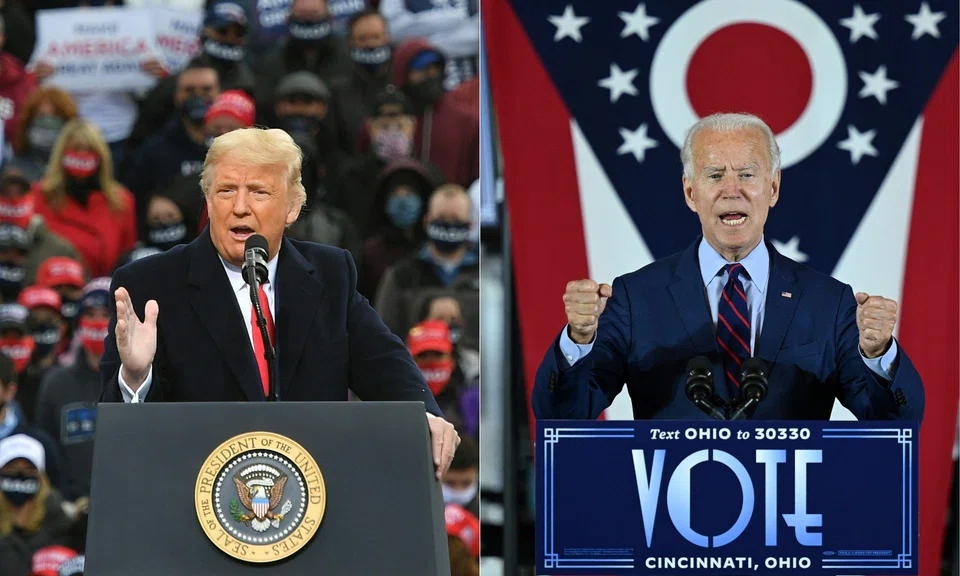
US PRESIDENT Joe Biden’s formal announcement on Tuesday (April 25) that he will run for re-election in 2024 didn’t come as a surprise, and to describe it as anti-climactic would probably be an understatement. It generated nothing more than a few shrugs and yawns among politicians and pundits in Washington, who have never doubted that the current White House occupant would seek a second term in office.
But it would be more than an overstatement to suggest that many Americans are greeting the prospect of “four more years” with Biden with much enthusiasm.
Indeed, what should have been a rallying moment – an opportunity to remind supporters why one had run for office four years ago, and to promise voters a sense of continuity and renewal – feels more like being stuck with an employee you can’t fire, or can’t find a replacement for.
In fact, only a quarter of Americans want Biden to run again, according to a recent Associated Press-NORC poll. Even more depressing, the same survey showed that slightly less than half of Democrats wanted Biden to be on the 2024 ballot.
Other polls indicate that 57 per cent of Democrats would have liked to see another Democratic candidate run for president next year. By comparison, 75 per cent of Democrats wanted President Barack Obama to run for re-election towards the end of his first presidential term.
At 80, Biden is the oldest American president in history, and will be 82, if re-elected, at the start of his second term, and 86 at the end of it – an issue that seems to be on the minds of many voters, including Democrats. They haven’t failed to notice what some refer to as the president’s “cognitive abilities” – these seem to be challenged during public appearances, when he occasionally misidentifies the person standing next to him, or even the location where the event is taking place. Not surprisingly, the president’s aides have been reluctant to hold press conferences at the White House, in case they result in another of his “gaffes”.
In a recent Yahoo-YouGov poll, 65 per cent of Americans, 72 per cent of Independents, 85 per cent of Republicans, and 45 per cent of Democrats agreed with the statement that Biden was too old for another term as president.
While there is no evidence that Biden’s age has hindered his ability to do his job, it is likely to have an effect on his capacity to lead the world’s most powerful nation and make the life-and-death decisions that his office requires, especially under the circumstances of domestic political strife and global insecurity today. That could force him to delegate authority to unelected officials and family members.
Moreover, America remains a relatively young nation that celebrates youth, innovation and dynamism, and is now going through a major demographic transformation that is promoting ethnic and racial diversity. This raises the following question: Why are Americans forced to end up with an old white man, who is a veteran political professional, as the head of the presidential ticket of one of the two major political parties?
That is certainly a question being asked by young voters, and by African-Americans, Hispanics and Asian-Americans, who now constitute a larger slice of the electoral base of the Democratic Party, and by the high-tech entrepreneurs and business executives who provide the party with funds.
Not that there is no talk about a possible challenge to Biden’s re-election by younger Democratic politicians. The list includes Michigan governor Gretchen Whitmer, California governor Gavin Newsom, Vice-President Kamala Harris, transportation secretary Pete Buttigieg, and Colorado governor Jared Polis.
While they and other politicians enjoy some support among Democrats, they would all find it difficult to challenge an incumbent president who tends to be the prohibitive candidate, who has the organisational and financial resources required to win the nomination. And a political fight between these candidates could divide and weaken the Democrats and expose deep divisions in the party between left-leaning progressives and moderates.
Moreover, among all the names mentioned as potential candidates, Biden continues to be considered the most centrist Democrat; and centrist Democrats are the ones who tend to beat Republicans in general elections.
And while he remains unpopular among voters, many of whom hold him responsible for the high inflation which has created a sense of economic uncertainty, Biden can boast some major policy achievements, including the pumping of billions of dollars into infrastructure, climate and healthcare; his response to the Russian aggression in Ukraine; and the effective management of the growing competition with rising China.
And then there is that other old white man, former president Donald Trump, who, despite challenges from several Republicans including Florida governor Ron DeSantis, has better than a 50 per cent chance of getting nominated as the Republican presidential candidate in 2024.
The conventional wisdom is that Biden could beat the 76-year-old candidate in the general election, like he did in 2020 and in the 2022 midterm elections, when a group of Republican candidates endorsed by Trump and running on anti-Biden tickets ended up losing to Democratic candidates.
Opinion polls suggest that when it comes to choosing between President Biden and former president Trump, Independents, suburban voters – including Republicans and especially women – would prefer the Democratic candidate.
But such analysis is based on the assumption that Republican voters would be foolish enough to nominate Trump as their presidential candidate – and most polls suggest that they are.
But another Republican presidential candidate who could attract Independents and get moderate Republicans to return to their political home – say, the younger Governor DeSantis, who is seen as a success story in the state of Florida – would clearly have a better chance than Trump of defeating President Biden next year.






