Biden’s Israel balancing act
AT A ceremony to mark Holocaust remembrance last week (May 7), US President Joe Biden said that for him “never again” means “never forget”.
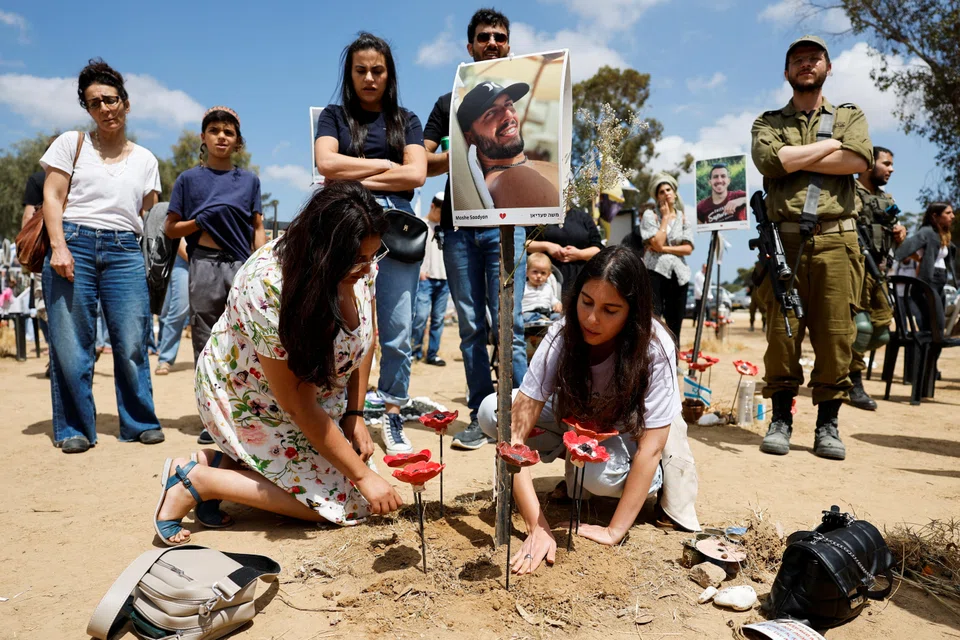
Referring to the Hamas attack on Israel on Oct 7 last year and the murder and kidnapping of innocent Israeli civilians, the president stated, “I have not forgotten”.
Indeed, a few days after the savage attack, President Biden pledged during a visit to Israel to make sure that the Israelis “have what they need to protect their people today and always”, and has since reiterated his “ironclad” support for the Jewish State. Hence the US president has provided Israel with all military aid it requested, dispatched two US aircraft carriers and a Marines contingent to the Middle East to help protect the nation, and defended it at the United Nations and other international forums.
At the same time, reflecting the wide support for Israel on Capitol Hill, Congress approved military aid to Israel in April – 79-18 in the Senate and 366-58 in the House of Representatives.
The support for the Jewish State wasn’t only a reflection of the president’s traditional pro-Israel sentiments. His administration views the Oct 7 Hamas attack on Israel as part of an effort by Iran, the patron of Hamas’s and other anti-America guerrilla groups, to challenge the US position and that of its allies in the Middle East. From that perspective, Israel’s military victory over Hamas would be in line with US strategic interests.
But then last week, a day after his remarks in the Holocaust memorial speech, President Biden announced that despite “ironclad” bonds, he decided to pause the delivery of 3,500 bombs to Israel – a move aimed at conveying his administration’s displeasure with how the Israelis were conducting the war against Hamas in the Gaza Strip.
The move set up a high-stakes showdown with Israeli Prime Minister Benjamin Netanyahu while representing a significant turning point in the 76-year-old relationship – a close security partnership – between the United States and Israel.
More specifically, President Biden warned that he could pause more weapons deliveries to Israel if it launched a major assault on the southern Gaza city of Rafah, where more than one million Palestinians are taking shelter.
For weeks, the Biden administration has said it would not support a military operation in the city unless Israel presented a credible plan to evacuate and protect the civilians in the city. And it did not.
“Civilians have been killed in Gaza as a consequence of those (American-made) bombs and other ways in which they go after population centres,” Biden said in an interview on CNN.
“I made it clear that if they go into Rafah – they haven’t gone into Rafah yet – if they go into Rafah, I’m not supplying the weapons that have been used historically to deal with cities,” the president emphasised.
But Israeli leaders have argued that they would not be able to defeat Hamas unless they capture Rafah where the group’s leaders are hiding in underground tunnels and from which they maintain control over the organisation’s operations. They also insist that their military operations are a form of Jewish self-defence against genocidal enemies.
The Israelis say that only continuing military pressure on Hamas would force it to release the remaining hostages, which is also the goal of the Biden administration.
PM Netanyahu responded to President Biden’s warning in a video message in which he insisted that “if we need to stand alone, we will stand alone” and if necessary, “we will fight with our fingernails”.
American-made weapons, including heavy bombs, have been essential in Israel’s war effort in Gaza and in response to attacks by Lebanese Shiite Hezbollah forces in northern Israel as well as to Iran’s drone and missile assaults on Israel.
But as the death toll in Gaza has risen, with more than 35,000 civilians dead, President Biden has come under mounting pressure at home and abroad to rein in the Israeli offensive.
Indeed, the US is finding itself more and more isolated in the international arena, as even some of its European allies, not to mention the nations of the so-called Global South, are calling on Washington to take steps to end the Israeli military campaign and to achieve a ceasefire in the Gaza conflict.
At the same time, President Biden is facing growing domestic pressure in the form of pro-Palestinian demonstrations on American campuses and calls from members of the Democratic Party’s progressive wing to restrict military aid to Israel.
Biden is also worried that the continuing war in Gaza could affect the outcome of the US presidential election in November, now that the race against Republican presidential candidate Donald Trump is tightening.
One of the key states that could determine the outcome of the election is Michigan, home of a large Arab-American population, many of whom have been critical of the Biden administration’s support for Israel.
President Biden and his political aides are worried that many Arab-American voters, protesting his Israel policies, would stay at home in November – a development that could help deliver the state to Candidate Trump.
US officials are still trying to advance a deal between Hamas and Israel under which the terrorist organisation would release 33 Israeli hostages in exchange for an Israeli agreement to a temporary ceasefire in Gaza. But the Israelis reject Hamas’ demand for a permanent ceasefire and an end to the war.
American officials are hoping that their diplomatic high-wire juggling act would eventually achieve their long-term strategic goal, and that a ceasefire would pave the road for a political settlement in Gaza, under which Arab peace-keeping forces would maintain order there and the Arab oil states would help in the economic reconstruction of the Gaza Strip.
In return, that could lead to a diplomatic détente between Israel and Saudi Arabia and the formation of a pro-American Arab-Israeli axis aimed at containing Iran. From the American perspective, that would be the most effective way to counter Iran’s anti-American and anti-Israeli machinations in the region.