The bitter lessons of Brexit
Addressing the UK’s challenges requires more than the performative politics of populist leaders
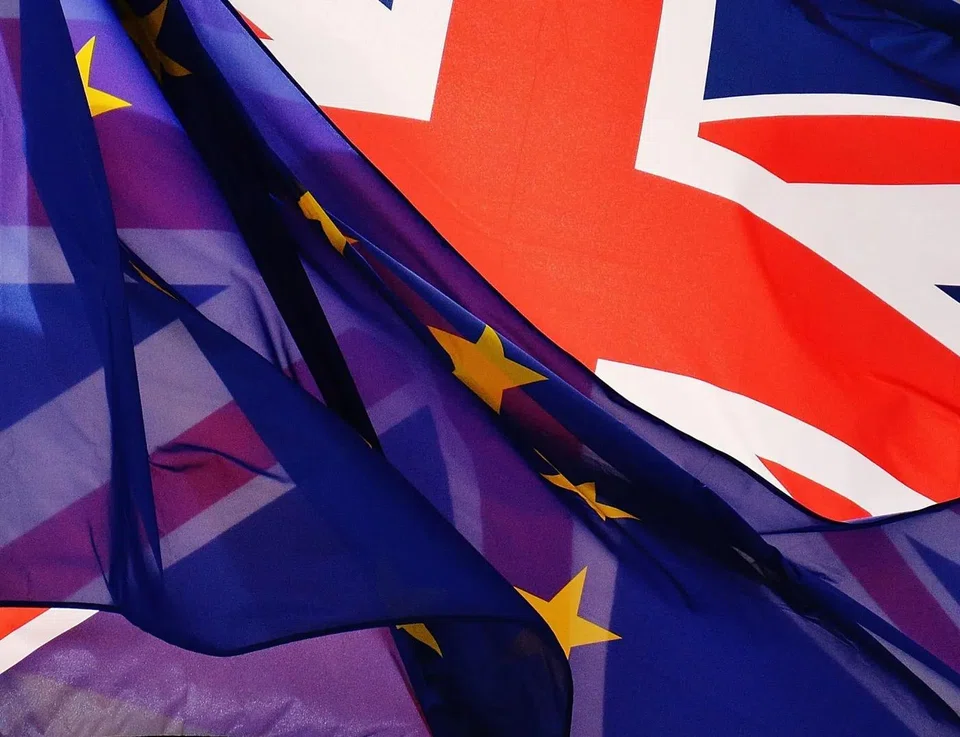
POPULISM is a potent form of democratic politics. Unfortunately, it is also a destructive one, weakening institutions, damaging debate, and worsening policy. It can threaten liberal democracy itself. The Brexit saga is an object lesson in the dangers: it has damaged what was long thought to be among the world’s most stable democracies.
The recent book,What Went Wrong With Brexit: And What We Can Do About It, by my colleague Peter Foster, lays out the story superbly. It shows how a classic populist alliance of fanatics and opportunists mixed simplistic analysis with heated rhetoric and outright lies to weaken the United Kingdom’s most important economic relationship and threaten its domestic stability. Happily, there exists an opportunity to learn from this experience and start putting things right.
Brexit was, in fact, certain to go wrong, because it was based on false premises. Countries cannot be fully sovereign in trade, since it involves at least one counterpart. Thus, the rules of the single market were created because the alternative was multiple different regulatory regimes, and so costlier (and smaller) trade. An institution also had to decide whether countries were abiding by the rules they had agreed. That has been the indispensable role of the European Court of Justice.
Creating the single market, then, was an act of regulatory simplification. Leaving it would increase regulation for any business trying to sell in both the UK and the European Union. Such business would necessarily be discouraged. So, indeed, it has proved. As Foster shows, smaller businesses suffer most under these burdens.
In the short term, existing businesses enjoyed sunk costs – their capital, knowledge and relationships. The costs of creating such assets anew is far higher than those of using what they already had. So, suppose a business is considering entering the EU market today. Other things being equal, would it make sense to locate in the UK rather than in any of its 27 members? Of course not. Over time, then, the separation will grow.
This is also true for personal relationships, education, work experience, or work as a creative person, consultant or lawyer. In sum, this supposed liberation has greatly curtailed the freedom of many millions of people on both sides.
Whose freedom has it increased? That of British politicians. They can act more freely than they could when bound by EU rules. What have they done with this freedom? They have lied about (or, worse, failed to understand) what they agreed over the Northern Ireland Protocol. They have threatened to break international law. They even proposed eliminating thousands of pieces of legislation inherited from EU membership, regardless of the consequences.
These people have, in sum, destroyed the country’s reputation for good sense, moderation and decency. All this is a natural result of the classic populist blend of paranoia, ignorance, xenophobia, intolerance of opposition and hostility to constraining institutions.
Yet, all is not lost. For some, good things have emerged, at least for now. The governing party rid itself of two terrible prime ministers, Boris Johnson and Liz Truss, peacefully. Their successor, Rishi Sunak, is not a fantasist. Neither is the leader of the opposition, Keir Starmer. This is cheering.
Many surely now know that the challenges confronting the country – inadequate infrastructure, sluggish innovation, low investment, poor corporate performance, huge regional inequalities and high income inequality – had nothing to do with the UK’s EU membership.
Moreover, the opportunities for transformative global trade deals have proved a “will-o’-the-wisp”. In Foster’s phrase, Brexit is “a colossal distraction”. It is performative politics, full of sound and fury signifying nothing sensible. Other EU members have at least learnt that.
I have argued that attempting to rejoin the EU now would be a mistake. But, it is possible to seek improvements in the UK’s relationship with it, notably over movement of people and workers and over regulatory standards, especially in food and manufacturing. There is no good case for divergence from the latter. For that matter, would UK-specific regulation of artificial intelligence or a carbon-border adjustment mechanism make any sense? More boldly, the case for rejoining the customs union and so eliminating the difficulties now created by rules of origin is strong.
The UK must try to mend its fences with the EU. Its government must also act to improve its economic performance. If the next government fails to improve the economic trajectory, this populism could return in worse form. Nothing less than that is now at stake.