LIFE & CULTURE

‘Blue Zones’ may hold the key to future travel, lifestyle and longevity

Nine lifestyle practices of those living in such areas may help latter-day adventurers achieve stress-free harmony
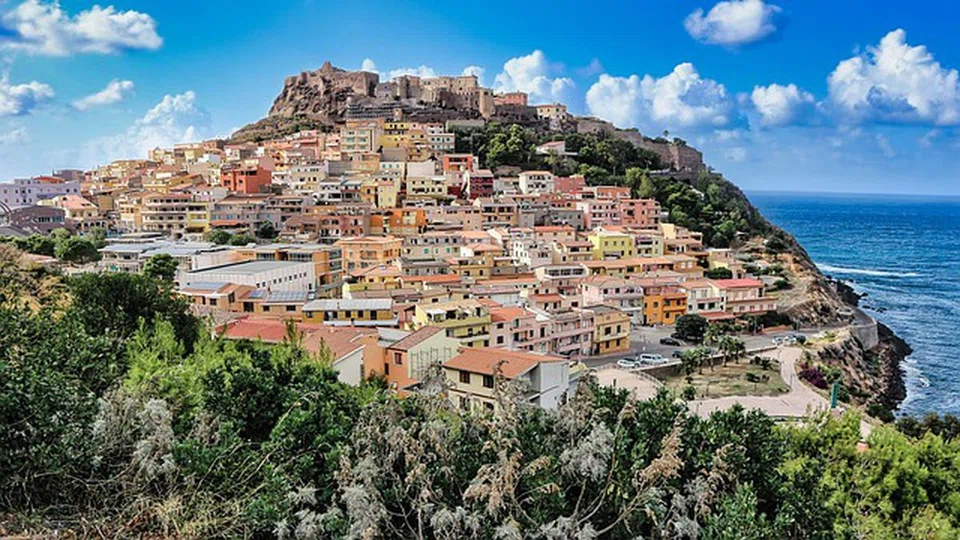
    • Sardinia, a remote region in Italy, was the first "Blue Zone" identified. It has nearly 10 times more centenarians per capita than the US.
    • Sardinia, a remote region in Italy, was the first "Blue Zone" identified. It has nearly 10 times more centenarians per capita than the US. PHOTO: PIXABAY
    Published Sat, Aug 3, 2024 · 05:00 AM

    WHAT constitutes a perfect holiday? Clearly, there are vastly divergent views on this. Pundits and peripatetics have long struggled with this conundrum, never quite finding a satisfying answer.

    The Chinese, Japanese, Australians, Indians, Americans and Europeans all travel with different expectations. Europeans chase the sun, Indians detest the heat and favour mad monsoon binges. Some crave delicacy in food to intrigue the palate, others need head-exploding chillies and spice. Dreams are different country to country. When it comes to romance, one shoe will never fit all.

    But it is clear that, whether on business or leisure, there is a common thread. This is the demand for practical how-to, where-to information based on accurate facts, a solid I-was-there viewpoint from seasoned journalists who know the difference between gin-blue seas and waste sludge being pumped directly into the bay. Honesty in travel has been one of the casualties of mass outreach and sales-driven propositions.


    So where should you holiday post-pandemic? What would the family enjoy? Where is the best place for a unique corporate meeting? What constitutes true luxury?

    The lockdown years proved a watershed for travel. After that grinding full stop, suddenly, issues such as personal space, safety, wellness and longevity have been thrust to the fore. No longer are people travelling just for generic ho-hum business or leisure. They are opting for “experience” – culture and heritage over Carrara marble; adventure and nature over crystal; neighbourhood exploration and local shopping and dining over bland brands cheapened by overexposure.

    There is a staggering list of must-dos cranked out by an army of social media influencers. Not all the information is accurate or to everyone’s taste, but it throws open a thrilling smorgasbord of experience.

    Some will head to the party playgrounds of a Phuket, a Dubai or a Hong Kong. The Maldives has its azure allure. Others are retreating to secluded havens such as Lord Howe Island – a two-hour flight from Sydney – which limits its welcome to 400 visitors at any given time. Or a hideaway like the 36-tented-villa, six-island Bawah Reserve, a 75-minute seaplane flight from Batam, Indonesia. Hard to reach, these escapes exemplify the search for a getaway “experience” – true luxury, as it is termed today – with guarantees of comfort and extreme seclusion.

    Covid cast a harsh light on mortality, accelerating demand for wellness, health cures and recipes for longevity. An interesting offshoot of this is the growing interest in “Blue Zone” holidays and similar experiences. Blue Zones are described as areas that host a disproportionate number of centenarians. The argument, sensible if not scientific, is that these regions hold lessons in lifestyle and food habits to promote healthy ageing.

    Five zones have been identified as worthy of exploration and emulation. These are Okinawa in Japan, Ikaria in Greece, Sardinia in Italy, Nicoya in Costa Rica, and Loma Linda, California. The last two are “interior cities”, one of them not far from heavily polluted Los Angeles. They got their name from the blue-ink circles drawn around these spots on a map as the original sponsors sought to narrow down locations.

    Simply put, nine lifestyle practices define these areas:

    • A defined purpose in life;
    • Constant human locomotion (walking, running, steps, housework);
    • Reducing stress;
    • Eating till 80 per cent full;
    • More plant-based foods in the diet;
    • Wine in moderation;
    • A nurturing social circle;
    • Strong family connections; and
    • “Belonging” to a faith-based organisation.

    As Blue Zone founder Dan Buettner shared in an article a few years back with the World Economic Forum, “the environment dictated the lifestyle of the world’s healthiest people. They weren’t trying to be healthy”.

    There are worthy moves towards slow travel too. Swiss-based photographer Ben Buckland embarked on a 12-day, 400 km walk from Lake Geneva to Lake Constance, relying just on hand-drawn maps from people he met along the way.

    Italian journalist Tiziano Terzano wrote a delightful book in 1997 called A Fortune Teller Told Me, describing a life-changing moment when a Hong Kong fortune-teller instructed him to avoid flying for a year in 1993. Curiosity and alarm piqued, Tiziano did so, using boats, trains and roads, encountering unique experiences and new friends. In that fateful year, a UN helicopter on which he was to be a passenger crashed in Cambodia.

    Unregulated travel has created its own backlash. Many destinations from Venice and Bruges to Amsterdam, Santorini and Barcelona have begun saying “No” to tourists: Some have barred cruise ships, others have limited the size of group entry to the city centre, and some, like Bhutan, have long favoured a fixed ceiling on numbers.

    The underlying message is that heritage needs to be preserved. After all, it is cultural diversity that excites the travel instinct.

    These are things to think about when planning a non-destructive escape or the next plastic-free corporate conference.

    The writer is a Hong Kong-based journalist and editor of the online magazines AsianConversations.com and SmartTravelAsia.com