The Board of Peace: Bold vision, uncertain future
It is a fundamentally different kind of institution – one whose rules, norms and accountability mechanisms are still being written
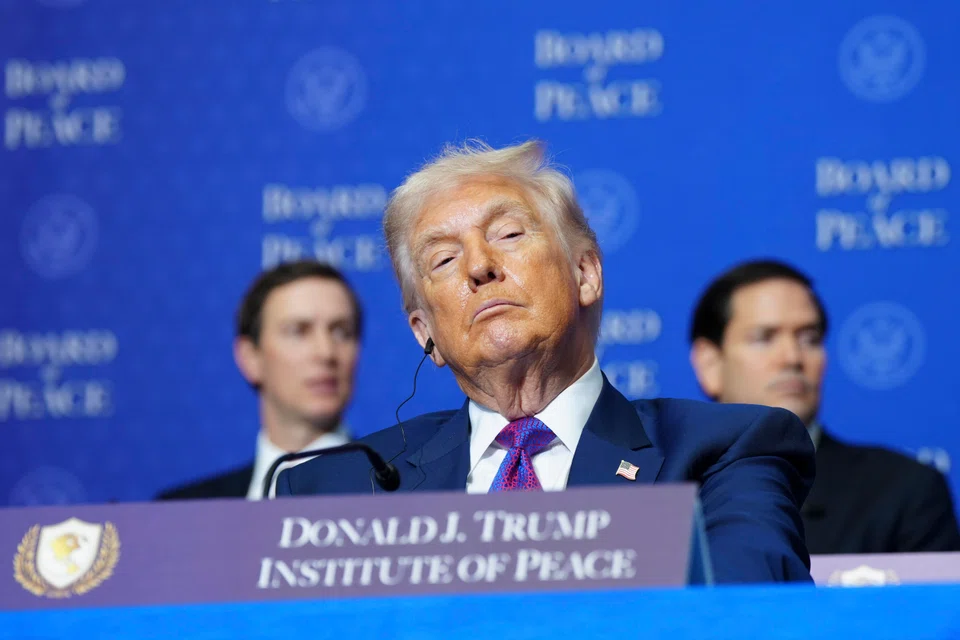
WHEN US President Donald Trump announced the formation of the Board of Peace in October 2025, many dismissed it as theatrical diplomacy – another headline-grabbing gesture dressed up in superlatives.
As representatives from more than 40 nations gathered at the US Institute of Peace in Washington for the board’s inaugural meeting on Feb 19, it became harder to wave it away entirely. But it also became harder to take it entirely at face value.
What emerged from the day’s proceedings was a portrait of something genuinely unprecedented: an international body that is equal parts promising and problematic, visionary and vague.
A ceasefire that held – and what it cost
Start with what Trump actually accomplished. The Gaza ceasefire, brokered under intense American pressure in October 2025, has held long enough to see dozens of Israeli hostages return home after more than a year in captivity.
That is not nothing. Previous administrations, Republican and Democratic alike, tried and failed to broker durable agreements in the region. Whether through force of will, unconventional dealmaking, or unpredictability, Trump achieved something that eluded his predecessors.
The Board of Peace was built on that foundation. Former British prime minister Tony Blair’s proposal to place Gaza under international administration gave the initiative its intellectual scaffolding, and the United Nations Security Council’s Resolution 2803 gave it a measure of international legitimacy.
The formal charter signing in Davos in January 2026, attended by leaders from 20 countries, suggested that at least some of the world’s governments were willing to bet on the concept.
The Feb 19 meeting extended that bet. Member nations collectively pledged roughly US$7 billion towards Gaza’s reconstruction.
Indonesia committed 8,000 troops to an international stabilisation force. Qatar pledged US$1 billion; the United Arab Emirates pledged US$1.2 billion. Morocco committed to deploying police officers and training Gazan security personnel.
Trump himself announced a US$10 billion US contribution, calling it a bargain compared to the cost of continued war. On paper, this is a serious coalition marshalling serious resources.
The gaps that cannot be ignored
And yet the missing voices matter as much as those present.
The UK attended only as an observer, along with other key Western allies who have declined full membership out of concern that Russia, a country Trump has openly said he would welcome into the board, could gain influence over a body meant to promote Western-aligned stability.
The absence of a Palestinian representative is even more glaring. An organisation explicitly tasked with rebuilding Gaza and shaping its political future contains no one who speaks for the people of Gaza. That is not a procedural oversight. It is a structural problem that could undermine the board’s legitimacy before it has a chance to prove itself.
The financial commitments also warrant scrutiny. Trump’s US$10 billion pledge was made with characteristic confidence and minimal detail. The US Congress has had no role in authorising the project, and the White House did not respond to inquiries about where the funds would come from.
At a time of intense debate over domestic spending, a US$10 billion international commitment without legislative backing raises serious questions about durability and accountability.
A shadow over the UN
Perhaps the most consequential and contentious dimension of the Board of Peace is its ambiguous relationship to the UN.
Trump has oscillated between saying the Board of Peace could replace the UN and insisting it will strengthen it. He suggested the board would “look over” the UN and ensure it “runs properly”, a formulation that alarmed European capitals and prompted renewed debate about American commitment to existing multilateral institutions.
The concern is legitimate. The UN, for all its dysfunction, represents decades of hard-won international consensus-building.
A parallel body chaired by a sitting US president, funded by member pledges of US$1 billion every three years, and unanswerable to any global legislature, is a fundamentally different kind of institution – one whose rules, norms and accountability mechanisms are still being written in real time.
The Board of Peace is, at its best, a creative attempt to break a geopolitical logjam that has resisted conventional diplomacy for generations.
At its worst, it is an American-branded alternative to multilateralism, accountable to no legislature, shaped by the preferences of its chairman, and built on financial pledges that have yet to be tested by the grinding reality of reconstruction.
The world has good reason to hope it succeeds. Gaza has suffered enough, and the region has waited long enough for something that resembles a credible path forward. But hope must be paired with scrutiny.
The Board of Peace has had a promising first day. What it does on every day after that is what will determine its place in history – or its absence from it.