Brand Quad needs a marketing makeover
Amid geopolitical fragmentation, the ongoing Gulf war adds urgency for the quartet to define itself
The Quadrilateral Security Dialogue (Quad) has an image and perception problem. Since its creation in 2007, the quartet of Australia, India, Japan and the United States has received mixed reviews in South-east Asia and beyond.
Now, the ongoing Gulf war is adding urgency for the Quad to define itself, because the interests of its key partners are diverging and its coherence is eroding.
The joint US-Israeli airstrikes on Iran starting on Feb 28 and Iran’s region-wide retaliation are forcing India into a difficult balancing act between its strategic relationship with the US and Israel, and its special historic links with Iran.
The India-Iran relationship dates back to their friendship treaty of March 1950, reinforced by the signing of a memorandum of understanding in 2015 to jointly develop the Shahid Beheshti Port at Chabahar, Iran.
When India began investing in the port project, it faced obstacles arising from US sanctions on Iran. The US, however, granted India a six-month exemption to work on the port in October 2025, permitting the South Asian nation to continue developing the port without US penalties.
Now, the spectacle of India’s Quad partner at war with its old friend, Iran, could not only hurt the Quad’s unity but also muddy its image.
To be fair, many regional groups, such as the North Atlantic Treaty Organization and the defunct South Asian Association for Regional Cooperation, suffer from the same malaise.
It did not help the Quad’s image when US President Donald Trump threatened to impose punitive trade tariffs on Quad partner countries in his second term, bringing into question its apparent lack of internal cohesion and commitment.
Brand Quad is in trouble on other counts too. It lacks a logo and a motto, while Nato, with which it is often compared, has both. These would help define its identity and clarify what it stands for.
The Quad handles its public awareness and communications, such as the “enduring partners for the Indo-Pacific vision”, itself, through the ministries of foreign affairs and government press bureaus of its member states. However, this task is perhaps best subcontracted to advertising and public relations specialists.
For instance, Nato not only conducts its strategic communications, public diplomacy and branding in-house through its Office of Strategic Communications; it also employs outside firms for its technological, digital and defence-oriented communication projects. The European Union contracts leading international advertising agencies for traditional media and digital media campaigns.
The Asean Secretariat, based in Jakarta, operates an in-house public information and corporate affairs staff to manage communication strategy, but also actively works with outside firms. These include a consultancy acting as a strategic partner to the secretariat, managing the implementation of the Asean Economic Community Roadmap, and another working on the Asean digital agenda.
The core problem is branding. Brand Quad does not resonate with the people of the Indo-Pacific region.
In marketing language, the brand has limited “recall”: the measure of a consumer’s ability to spontaneously remember a specific brand when prompted with a product category. For instance, one might think “Tiger” when asked about beer.
Then there is the associated problem of perception. For instance, the Quad is viewed both positively and negatively in the Indo-Pacific region, where it upholds the policy of freedom of maritime navigation.
The postponement of the Quad Summit in 2025 signalled that perhaps all was not well and that the group operated at the whim of its most powerful leader, Trump.
Ambivalence and ambiguity in diplomatic relations translate as unreliability and unpredictability. If the Quad intended to stand for stability, such messaging was anything but.
The current global perception of the Quad is that it cannot function and grow if bilateral diplomatic relationships among its partner states are under constant threat with the US playing maverick.
Yet, positive signals emerging in February – following the successful conclusion of the US-India trade agreement – hinted that the summit may yet be held in New Delhi in the first half of the year.
Still, the staging of a summit depends largely on the US. There is a lack of clarity on whether Trump will attend. Not only is there internal turmoil in the US after the Supreme Court struck down most of his trade tariffs, but the war in Iraq has also altered his priorities.
The key geographical area of the Quad’s diplomacy is South-east Asia, where it appears to be standing up to China’s sweeping claim to much of the South China Sea. However, Asean countries hold differing perceptions of the Quad, from cautious support to scepticism and cynicism, a 2024 study by the Iseas-Yusof Ishak Institute has found.
While some Asean countries see it as a beneficial partner for regional security, there are worries that the Quad could divide Asean, force it to choose sides between Beijing and Washington, and provoke China, ultimately undermining Asean centrality.
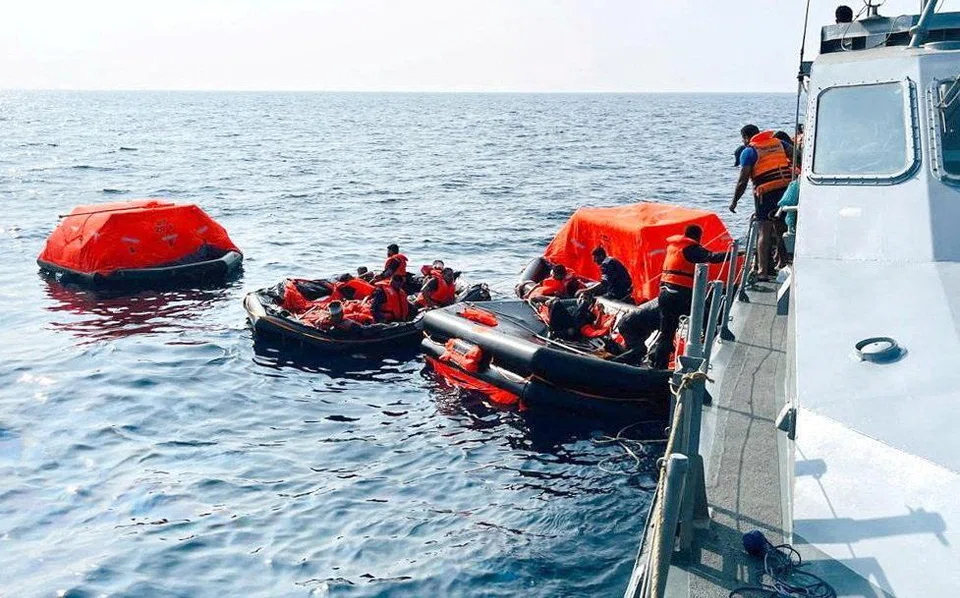
Quad supporters, however, find reason for optimism. They argue that it demonstrates practical cooperation, such as the Malabar military exercises conducted by the forces of the four partner-states. But here, again, the US recently stepped on India’s toes by sinking an Iranian frigate, the IRIS Dena, in international waters close to the Indian coast.
The Iranian warship was sunk after participating in a multilateral naval exercise in India, where Iranian sailors were warmly welcomed. Indian analysts argue that Washington’s torpedoing of the Iranian vessel had turned India’s neighbourhood into a war zone.
In the end, Iran’s likely defeat by combined US-Israeli forces will alter the politics of the Middle East, which may not suit India’s interests and could threaten its investments in Iran.
The evidence suggests that the Quad may not be fully accepted in South-east Asia and beyond, even as it garners support in some quarters. The image and perception deficits need to be addressed by the Quad itself.
The author is the editor-in-chief of the Rising Asia Journal, www.rajraf.org