

Budget 2026: With fiscal marksmanship now harder to achieve, tax changes need stronger justification
Amid growing uncertainty, it is safer to err on the side of fiscal caution – but the public will need to be convinced of this

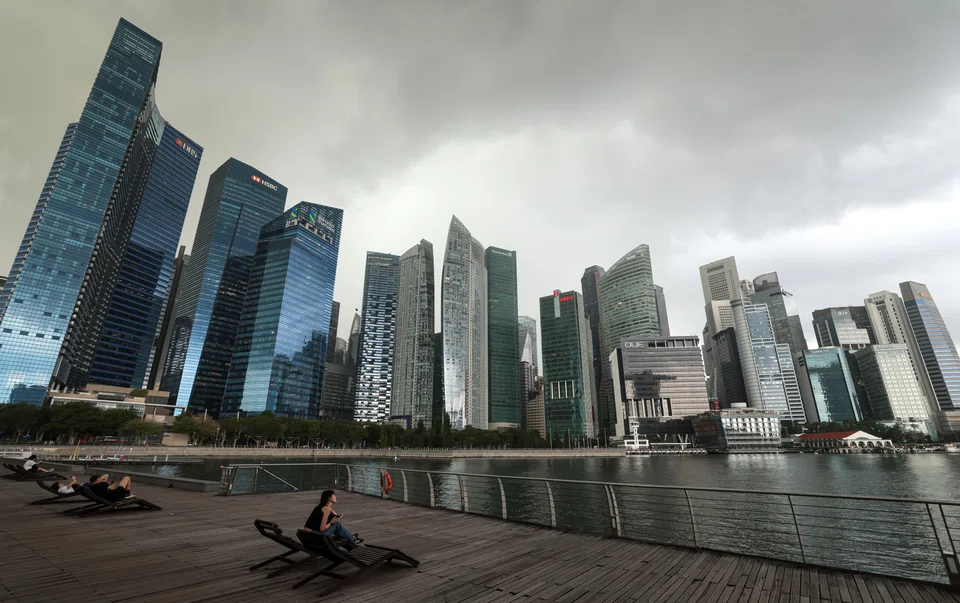
[SINGAPORE] The government announces a GST hike; ends up with an unexpectedly large fiscal surplus; and draws criticism. This describes not just this year’s Budget debate, nor just last year’s similar arguments, but an objection that goes back nearly two decades.
Criticism of the government’s fiscal projections has come up in recent Budget debates – but is far from new.
In Budget 2007, it was announced that the goods and services tax would be hiked to 7 per cent in July, from 5 per cent before. A year later, revised figures showed a S$6.4 billion surplus for the 2007 fiscal year, in contrast to the originally projected S$700 million deficit.
Eunice Olsen, who was a Nominated Member of Parliament then, charged that the government’s Budget “marksmanship” had declined. Then Workers’ Party (WP) leader Low Thia Khiang called for the planned GST hike to be shelved, given that money was not as tight as feared.
The next GST hike was confirmed in post-pandemic Budget 2022, taking place in two steps across 2023 and 2024.
Revised figures in Budget 2025 showed a better-than-expected surplus for the 2024 fiscal year – and the debate saw similar questions about the GST hike’s necessity, this time led by WP leader Pritam Singh.
This year, WP MP Gerald Giam called for the House to examine the “recurring pattern of overly conservative fiscal projections”, asking if the government is “unnecessarily hoarding funds”.
On Thursday (Mar 26), Finance Minister and Prime Minister Lawrence Wong reiterated the usual defence: The GST hike was necessary because long-term spending commitments cannot rely on uncertain revenue collections.
Noting that economic growth is a critical assumption in revenue projections, he suggested that this lies behind the repeated upsides, saying: “We have consistently performed better than expected. We should welcome that.”
Underpromise and overperform
That is part of a larger point: Revenue is hard to predict, not least amid heightened uncertainty.
PM Wong rejected the idea that projections are “overly conservative”, saying: “Our projections are prepared by MOF (Ministry of Finance) economists using the best available data at the start of each financial year.”
But perhaps one could go further and argue that even if official estimates play it safe, that is far better than overestimating revenue.
From Covid-19 to US President Donald Trump’s tariffs, the last decade has shown how suddenly economic shocks can happen. While higher-than-expected growth is also possible – as was the case for 2025 – pleasant surprises are of course better than unpleasant ones.
It would be a problem, of course, if fiscal caution came at the expense of the economy. PM Wong refuted the idea that a fiscal surplus means the government is “taking more from the economy and leaving households and businesses to bear a deficit”.
He highlighted the role of the net investment returns contribution (NIRC), which is investment income from the reserves.
Without the NIRC, public spending exceeds revenue, meaning the government is “putting money back into the economy”.
Tax and spend
In contrast to revenue, where economic surprises can mean significant overestimation or underestimation, expenditure is less likely to come in much lower than expected.
Expenditure predictions are more reliable as the government has greater control over its spending than its takings. But it is also more likely that unexpected spending needs arise, than that predicted spending needs disappear.
In every post-pandemic Budget from 2022, total expenditure has ended up higher than original estimates, though within a modest margin of error.
Given the certainty of spending needs and the uncertainty of revenue, it makes sense to err on the side of caution in fiscal projections. Yet, as this debate’s recurrence suggests, the public still has to be convinced of this.
Even if higher-than-expected surpluses are understandable, their existence may make it harder to justify future tax increases in terms of spending needs.
The government has consistently stressed the structural role of the GST, with PM Wong again noting its role as a “stable and reliable revenue base”.
But with global corporate income tax changes likely to bring structural revenue increases from FY 2027, any future insistence on GST hikes for long-term spending may be harder for the public to swallow.
On Thursday, PM Wong said tax hikes would be made “only when necessary – to fund structural spending needs, or to achieve clear policy objectives, like strengthening progressivity or addressing externalities”.
If the pattern of unexpected surpluses continues, public expectations about what is “necessary” for spending needs may shift accordingly. Policy justifications may then have to bear more weight in any future tax hikes.
TRENDING NOW

Government to bring forward raising of retirement age, give employers more financial support to create flexi-load jobs
Indonesia stocks suffer worst plunge in nearly 30 years as MSCI proposes standalone status
If Europe goes to war, the fallout will be felt in East Asia
Natural gas to stay for the long haul beyond 2050: Singapore International Energy Week panellists

