

Budget 2026: Scaling Singapore businesses’ global footprint amid rising risks
Navigating a more fractured trade environment requires a closer partnership between policy, capital and corporate enterprise
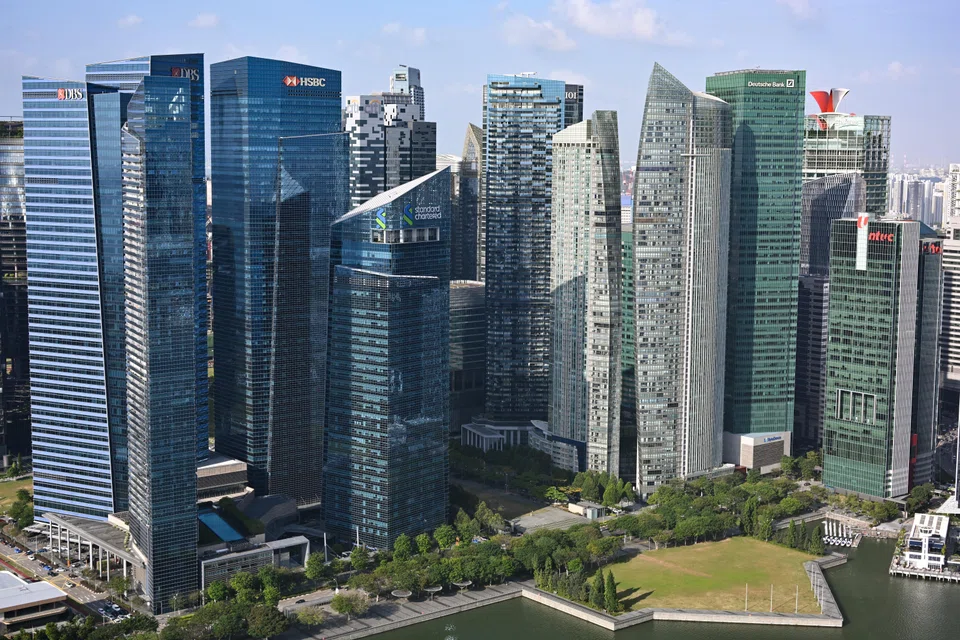
SINGAPORE Budget 2026 comes at a pivotal time. Despite greater geopolitical uncertainty, there are opportunities for companies here to expand overseas, but they need additional support and must have a risk-taking appetite.
To compete globally and seize new opportunities, these businesses will need more targeted support through financing, digital infrastructure and resilience frameworks.
This is especially so for sectors such as manufacturing, semiconductor and electronics, energy and pharmaceuticals, which are likely to face stronger global headwinds in 2026.
Businesses in Singapore still stand to gain abroad even if they face headwinds including tariff uncertainty, regulatory fragmentation and a shifting world economic order.
What’s holding companies back?
The path to global expansion is increasingly fraught with friction points. Singapore companies face several structural challenges.
A key issue is rising costs. A Standard Chartered survey of 1,200 corporate leaders in September 2025 found that seven in 10 Asean corporates expected costs to rise by 10 to 19 per cent as supply chains realigned.
Both tariff hikes and a shortage of skilled workers – at home and overseas – add on to the mounting pressure businesses face.
For small and medium-sized enterprises (SMEs), uneven digital adoption leaves them vulnerable to inefficiencies and fraud risks.
Limited access to financing options in new markets makes it hard to fund overseas ventures, especially for firms without track records or substantial contracts.
Regulatory hurdles and unfamiliarity with local rules further weigh on expansion plans. Together, these challenges deter Singapore businesses’ internationalisation effectively, especially as global trade reroutes.
Overseas expansion support
To navigate these mounting pressures, the Republic continues to cultivate an ecosystem of support, positioning itself as a strategic gateway to the region.
Supply chains are shifting and new trade corridors have emerged, with Asean becoming one of the world’s most important growth regions.
The bloc is projected to be the world’s fourth-largest economy by 2030, with intra-Asean trade and investment flows accelerating, and the region’s digital economy is expected to more than double to US$560 billion.
Singapore sits in the centre of this corridor, with its connectivity and expertise in digital and sustainable finance. In a fractured world, the city-state’s growth lies in helping its companies plug deeper into Asean and the global economy.
Its strengths are in its role as a trusted hub for finance, digital trade and resilience, among others. Already, it leads Asean efforts on the Digital Economy Framework Agreement, which will accelerate regional integration in digital trade, cybersecurity and cross-border data flows.
It is also advancing regional digital security and infrastructure resilience, with frameworks endorsed at the Asean Digital Ministers’ Meeting in January 2026.
Currently, Singapore companies looking to internationalise have access to a wide suite of government schemes designed to lower barriers, reduce risk and build competitiveness abroad.
They include the Enterprise Development Grant, the Market Readiness Assistance Grant and the Enterprise Financing Scheme.
These measures align with the broader objectives of the Economic Strategy Review (ESR) committees set up last August to drive Singapore’s long-term economic strategies.
The committees provided a midterm update in January, proposing seven recommendations on how the country can continue to achieve economic growth and create good jobs amid the complex global environment – topics also raised at the World Economic Forum in Davos.
In particular, the need to support local companies pursuing overseas growth was highlighted.
Global banks can enable breakthroughs
As global trade enters a more complex phase, the current policy toolkit must address emerging gaps, going beyond traditional grant funding.
In the past two months, business groups have urged the government to boost intellectual property (IP) financing, hasten Asean integration, and aid businesses in hiring and retaining older workers.
They have also called for measures to avoid raising government fees; extensions for support schemes to offset rising manpower costs; streamlined grant processes; and help for SMEs to adopt sustainability practices and artificial intelligence more quickly.
These calls echo the seven strategies outlined by the ESR committees, which emphasised the need for firms to take calculated risks to seize opportunities, strengthen innovation and speed up sustainability adoption.
We welcome the measures the government is proposing to support firms here. International banks can also help to plug some key gaps.
They provide liquidity and supply chain finance to cushion rising costs, deploy digital tools such as predictive analytics and fraud monitoring to strengthen resilience, and offer sustainability-linked financing to help firms meet global environmental, social and governance standards.
As super-connectors, banks connect businesses via their extensive networks across Asean and other promising global markets such as North Asia, the Middle East and Africa to facilitate trade, finance and expansion opportunities.
This is how companies can market innovative technological solutions and navigate complex regulatory requirements more quickly. The alignment and risk-sharing between government, banks and companies also boost confidence.
The value of this partnership shows up clearly for companies on the ground. For instance, Standard Chartered supported Singapore-founded Rotary Engineering, which provides oil and gas infrastructure services, when it sought to expand to the United Arab Emirates.
Local SMEs such as Total Facility Engineering have leveraged the bank’s network to establish operating accounts quickly as they entered a new market.
Standard Chartered also supported Wilmar International in January 2023 with a US$200 million sustainability-linked trade finance facility, as well as low-carbon energy utility group Engie through the bank’s first Green Banker’s Guarantee in Singapore.
Building on strengths
For a globally connected economy like Singapore, the competitiveness of local businesses increasingly depends on engagement beyond our shores.
Budget 2026 presents an opportunity to build on the strong foundation laid in recent years, and to double down on digitalisation and sustainability as key drivers of long-term growth.
By acting decisively to strengthen IP financing, accelerate Asean integration and invest in digital and green capabilities, policymakers can help shape a future-ready economy that enables local firms to innovate, scale and compete with confidence on the global stage.
The writer is chief executive officer, Singapore, Asean and South Asia, at Standard Chartered
For more of BT’s Budget 2026 coverage, go to bt.sg/budget26

