

Buying homes near unannounced MRT stations: What informed the decision?
Why the National Bureau of Economic Research working paper may be drawing the wrong inference
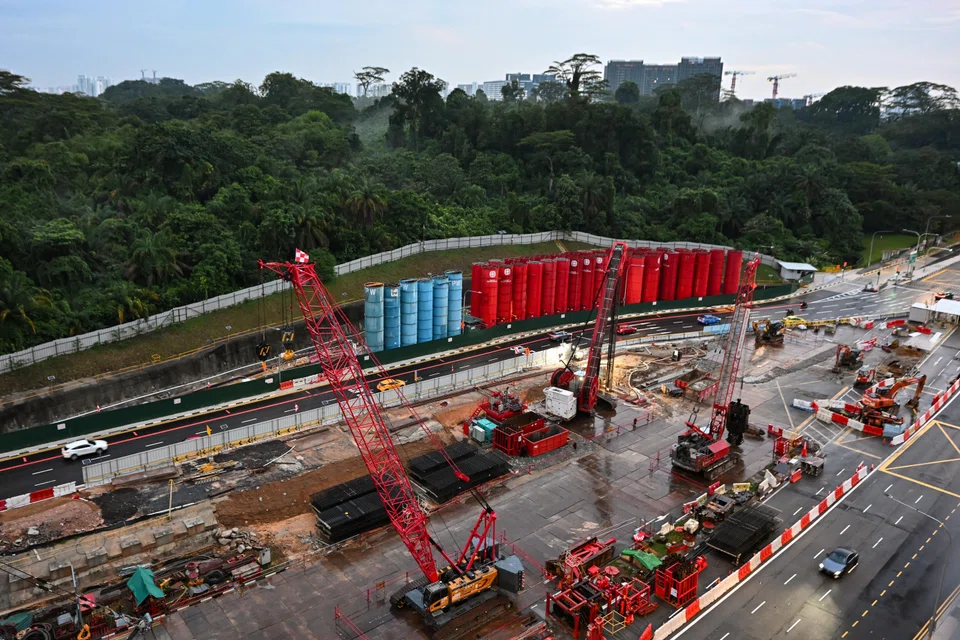
IF SOMEONE buys a home near an MRT station two years before the station is announced, two explanations immediately come to mind: They knew something others did not, or they were simply better at connecting the dots.
A new National Bureau of Economic Research working paper has attracted attention for finding that Singapore civil servants bought private properties disproportionately close to future MRT stations one to two years before station locations were publicly announced.
The effect was strongest among mid-level officials and those working in planning agencies. The authors interpret this as evidence consistent with the misuse of privileged information.
While the finding seems interesting, the inference appears less clear. The core issue here is that “not publicly announced” is not the same as “not publicly predictable”.
Singapore plans infrastructure years, even decades, ahead. Broad transport corridors, development nodes and land-use priorities are often made public long before individual station locations are confirmed.
A property buyer does not need to know precisely where the station entrance will sit. If the likely corridor is already known, and one understands surrounding land use and development plans, one may already have a good chance of buying within 1 km of the eventual station.
However, the study largely treats the period before the formal station announcement as one in which the relevant information was non-public. That may overstate how much confidential information was needed in making the purchase decision.
The choice of comparison groups also deserves scrutiny.
The researchers test whether civil servants might simply be better at processing public information by comparing them to real-estate agents and corporate board members. Neither group showed the same pre-announcement pattern of purchases.
However, neither real-estate agents – whose buying patterns may be driven by developer discounts and active trading – nor corporate board members are the most appropriate benchmark.
Developers, private-sector urban planners, transport consultants, civil engineers, architects and infrastructure specialists spend their careers examining Urban Redevelopment Authority (URA) plans, government land sales sites, plot ratios, transport corridors, population forecasts and development signals.
If anyone outside the government can piece together those breadcrumbs and estimate where a future MRT station is likely to emerge, they would probably come from this group.
This points to an omitted-variable problem. MRT stations are not randomly sprinkled around Singapore. They are built where population, employment, development and transport demand justify them. Those same factors also attract developers and homebuyers.
Therefore, the relevant question is not simply whether civil servants bought before the announcement, but whether their purchases cannot reasonably be explained by public planning signals and professional market analysis.
Developers complicate the story further because they move before individual homebuyers do.
Developer foresight
The study covers new sales, subsales and resales. If a developer had already acquired land, launched a condominium and opened a showroom in an area where public planning signals suggested better future connectivity, a civil servant buying there might simply be choosing from developer-curated inventory.
One useful robustness check would therefore be to separate new launches from older resale properties.
If pre-announcement purchases are concentrated in new developments, the developer-foresight explanation becomes more plausible.
If civil servants disproportionately bought older resale properties near future stations, the case for privileged information becomes stronger.
The finding that officials in planning-related agencies were more likely to buy homes near future stations also cuts both ways. While it may be consistent with privileged access, it is equally consistent with superior ability to infer outcomes from public information.
Urban planners, transport economists and engineers are trained to interpret land use, travel patterns, population density, development constraints and geospatial information.
Given the same transport plan and land-use map, the experienced planner would likely be able to predict station placement with greater accuracy than an ordinary buyer.
One finding is worth a closer look: The pre-announcement buying pattern largely disappears after enforcement was tightened around 2011 to 2012. (This tightening entailed legislative updates such as the 2012 Securities and Futures Amendment Act and Official Secrets Act revisions, alongside heightened public sector anti-corruption scrutiny.) The authors read that as deterrence.
That is plausible, yet the causal story is under-identified. Enforcement tightened after 2011, but many other things had changed at the same time. The MRT network matured, the property market changed and more planning information became public.
For instance, as the MRT network became denser and amenities increasingly clustered around established transport nodes, it may have become easier for ordinary buyers to infer where future stations were likely to go, narrowing the gap with civil servants.
Hence, while enforcement may have mattered, it was not the only moving part.
My own experience as a former senior economist in Singapore’s Ministry of Trade and Industry and Economic Development Board makes me especially cautious about assuming that “planning officials” broadly possess confidential information.
Sensitive policy information is compartmentalised and closely guarded: A middle-management officer in one ministry rarely has access to another agency’s internal decisions.
That distinction is particularly important here. Detailed MRT station decisions would logically sit within a relatively narrow circle involving agencies such as the Land Transport Authority, Ministry of Transport, Ministry of National Development and URA.
Someone working in a planning-related role elsewhere in government may possess useful analytical skills without possessing the station coordinates.
The paper establishes something narrower but still noteworthy: Some civil servants bought disproportionately near future MRT stations prior to formal announcements. However, what it has not yet cleanly established is why.
Before labelling the behaviour as a form of insider trading, we need to separate “knowing something the public could not know” from “seeing something in public information that most people did not see”.
The writer, a seasoned economist, adviser and entrepreneur, is an affiliate lecturer at Nanyang Business School and Singapore Management University
TRENDING NOW

He built the Vingroup empire. Now South-east Asia’s richest man is handing some key roles to his sons
Quarter of Singtel special discounted shares sold ahead of CPF Board transfer

Why Tan Aik Keong of digital solutions specialist Agmo wants to make himself less indispensable
Asia needs new energy security architecture

