

Bye-bye America First?
Trump’s reversal on Ukraine may reflect a change in tenor and policy
US PRESIDENT Donald Trump’s decision to join Israel in its war with Iran and to strike at the Iranian nuclear programme has shocked the neo-isolationist members of the Maga (Make America Great Again) movement. They have counted on him to remain committed to his America-First pledge of refraining from intervening in Middle Eastern wars.
But then the same “America Firsters” were applauding leaked news reports indicating that the Trump administration would be denying Ukraine much needed weapons, including Patriot air-defence and Hellfire missiles, the excuse being that US stockpiles of these arms were in short supply.
The driver of the Ukraine arms denial was Elbridge Colby, the undersecretary of defence, one of the leading neo-isolationists in the administration. He has argued that the US Patriot stocks were too low and that American resources must be preserved for a possible war with China.
The weapons denial came at a precarious moment for Ukraine, which has been pummelled by Russian cruise missiles, drones and decoys aimed at exhausting the country’s defences.
For months, Russia has courted Trump with promises of economic cooperation and pledges of its desire for peace in an effort to splinter Western support for Ukraine.
Such efforts, paired with Trump’s willingness to engage with Russia, appeared to initially pay dividends. The US held its first high-level talks with Russia in Saudi Arabia in February, and Moscow sent officials to Washington to discuss potential cooperation between the two countries.
For a while, it seemed that Trump’s America First non-interventionist strategy of attempting to disengage from the Russia-Ukraine war and distance itself from Kyiv was paying off.
But the Russians didn’t seem to budge when it came to the idea of peace talks with Ukraine. With no breakthroughs, Trump – who has kept beseeching Russia’s President Vladimir Putin – may have finally come to the conclusion that the Russian leader keeps stringing him along.
During their recent phone conversation, the US president attempted again to coax the Russian leader to agree to a ceasefire. But then he was “very disappointed” with the conversation and admitted to reporters that he “didn’t make any progress” with Putin.
“I’m not happy about that,” Trump insisted. “I don’t think he’s looking to stop the war, and that’s too bad,” he added of Putin. The Russian leader hit Kyiv with one of the biggest drone and missile attacks of the war the same night of his conversation with the US president.
The reality was that Putin thought that he was winning the war and would make more gains if Trump would stop deliveries of US weapons to Ukraine.
Neo-isolationists have argued that if, indeed, the Russia-Ukraine war reaches a stalemate, Trump should merely wash his hands of Ukraine. In practical terms, that would have allowed Putin to crush the Ukrainians.
Instead, Trump, critical of continued Russian airstrikes, reversed course, and announced that he planned to overrule the neo-isolationists at the Pentagon. He would send additional Patriot air defence systems to Ukraine.
Trump, giving one of his clearest indications yet that his relationship with Putin was deteriorating, admitted during a Cabinet meeting that the Russian president was insincere with the US. Yes, Putin was “nice” but a lot of what he said “turned out to be meaningless”.
The United States is “going to send some more weapons” to Ukraine, Trump explained. “We have to. They have to be able to defend themselves. They’re getting hit very hard.”
Behind him, Defense Secretary Pete Hegseth nodded, despite the contradiction of the administration’s announcement days earlier of military shipments being stopped.
A Pentagon spokesperson later said that “at President Trump’s direction, the Department of Defense is sending additional defensive weapons to Ukraine to ensure the Ukrainians can defend themselves while we work to secure a lasting peace and ensure the killing stops”.
The about-face came days after a call from Ukrainian leader Volodymyr Zelensky to Trump, in which the Ukrainian leader said the two men spoke of joint weapons production, and air defence.
In a way, with Trump’s comments on arming Ukraine, there is now a reversion to the policies of his predecessor, of opposing Russian aggression.
President Zelensky urgently needs more Patriot interceptor missiles, which are the only way of taking down Russian ballistic missiles.
Trump has spoken with German Chancellor Friedrich Merz, who has offered to buy Patriots from the US to supply Ukraine. That led Zelensky to declare that his phone call with Trump was “the best conversation we have had during this whole time, the most productive”.
Moreover, Trump said that he was not “very strongly” considering supporting a bipartisan Senate bill that would impose severe sanctions on countries that purchase Russia oil. These countries include China, India and Brazil.
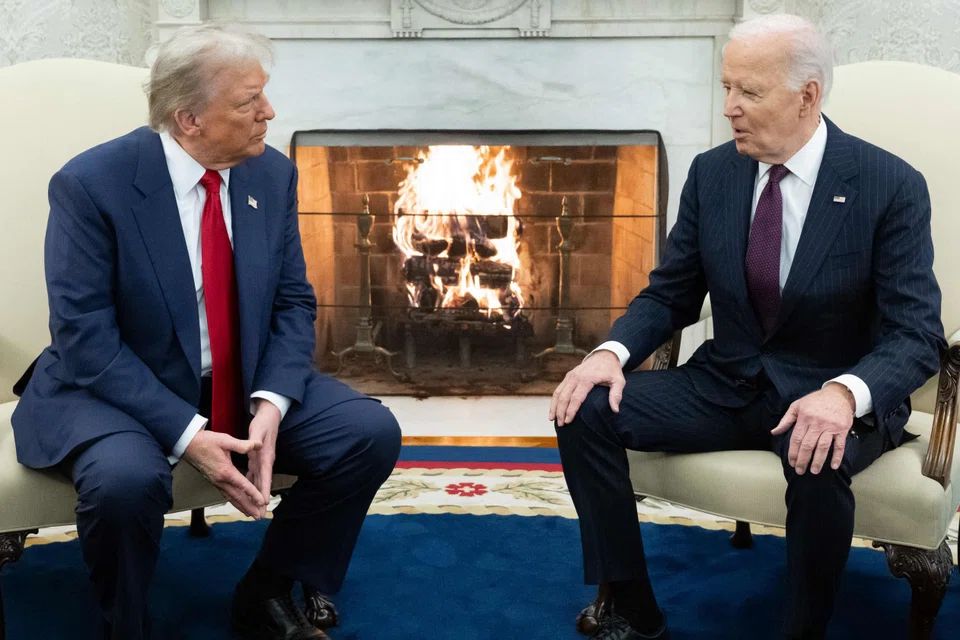
After six months in office, Trump finds himself back where Biden always was, after trying almost everything else as he sought to disengage the US from the Russia-Ukraine war.
But this America First approach of playing nice with Putin has failed, doing nothing to change Putin’s position. Trump learned slowly that the Kremlin does not want peace and has reversed course.
The US president has demonstrated his sense of realism while disappointing once again his Maga enthusiasts with their non-interventionist dogma over Iran and Ukraine. To put it in simple terms, from Trump’s perspective, America First means what he wants it to mean.
TRENDING NOW

Could stablecoins be the future of money?
Vietnam’s northern provinces, not Hanoi or Ho Chi Minh City, are powering near 10% GDP growth

The Assembly Place expands beyond co-living as it targets 10,000 keys by 2030

Once staunchly pro-China, Malaysian Chinese businesses are now distancing themselves from Beijing

