

Can Washington treat its allies like adversaries – and still keep them?
Trump’s shifting rationales for US tariffs are causing friction with partners
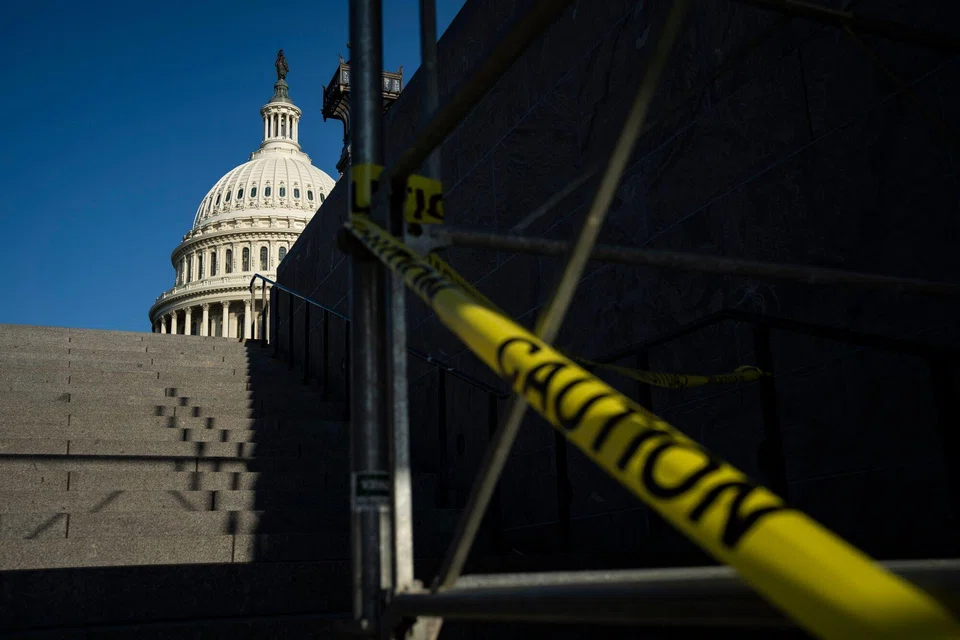
US PRESIDENT Donald Trump’s tariff campaign has entered a new, more entrenched phase. On Jul 24, the US imposed fresh 10 to 12.5 per cent duties on 60 trading partners – including allies such as Canada, the UK and India – after the temporary 10 per cent global tariff expired.
The move follows a chaotic year and a half in which the administration’s original “Liberation Day” tariffs were struck down by the Supreme Court in February 2026. The court ruled that the International Emergency Economic Powers Act does not authorise sweeping, unilateral tariffs.
Trump has largely worked around the ruling by pivoting to other legal tools, including Section 232 national-security provisions, Section 301 unfair-trade-practice probes and Section 338 anti-discrimination authorities.
What’s notable in this latest round is not just the rates, but the framing: Officials now justify tariffs partly on labour and human-rights grounds (preventing imports tied to forced labour). This rationale gives the policy greater legal durability than the invalidated emergency-powers approach.
The administration has also allowed the US-Mexico-Canada Agreement – the free-trade pact Trump himself renegotiated in his first term – to lapse into a 10-year wind-down after failing to secure immediate renewal terms with the two partners.
Simultaneously, Washington hit Ottawa with a 50 per cent tariff hike on select goods and threatened steeper measures if Canada coordinates retaliation with the EU.
The case for Trump’s tariff strategy
Supporters argue tariffs are being used as leverage, rather than an end in themselves – a continuation of the transactional “Art of the Deal” strategy where pressure produces better terms.
There’s some evidence for this: the EU reached a deal with the US in July 2025 that capped its tariff exposure at 15 per cent in exchange for opening its market to more US industrial and agricultural goods, leading the European Commission to offer what Reuters has dubbed a “guarded welcome” to the Jul 24 rates as consistent with prior agreements.
Backers also point to supply chain restructuring. For example, the administration’s new incentive programme lets companies get reduced aluminium tariffs in exchange for US smelter investments, illustrating how tariffs can serve broader industrial policy.
After decades of allies running trade surpluses with the US under looser terms, proponents argue that some diplomatic friction is a reasonable price for rebalancing terms.
The case against Trump’s trade offensive
Critics counter that treating tariffs as a universal cudgel against adversaries and allies alike corrodes longstanding relationships for uncertain gain.
Canada and the US have been treaty allies for generations. Trade economists note Canada’s economy is far smaller and more dependent on US trade, which gives Washington leverage, but they also argue that leverage is being spent in ways that push a reliable partner to hedge elsewhere.
That hedging is already visible: Canada struck a “strategic partnership” with China in January 2026 that eases tariffs and opens its roads to Chinese electric vehicles, the kind of realignment that trade hawks in Washington have spent years trying to prevent.
European officials have made similar noises about diversifying trade ties, and some analysts argue that an unpredictable US elevates China to a more stable counterparty, even for countries that don’t share Beijing’s political position.
Sceptics also question the legal durability of these measures. Reconstituting struck-down tariffs through alternative statutory authorities appears less like a coherent trade strategy than an attempt to preserve maximum executive discretion.
Economists across the spectrum broadly agree that tariffs also act as a tax passed through to domestic consumers and importers, giving allies rhetorical and economic grounds to argue that US policy inflicts mutual pain.
The harder-to-resolve issue
Underneath these disputes is a genuine disagreement about what tariffs are for. If the goal is narrow and transactional – extracting specific concessions, protecting specific domestic industries such as autos, aluminium, or pharmaceuticals – the EU deal and the aluminium-investment programme are plausible partial successes.
But if the goal is a broader structural reordering of US trade relationships to reduce reliance on any single country or bloc, then alienating Canada while straining relations with the EU and the UK is counterproductive, since it narrows rather than widens the coalition of partners needed to balance China.
Both readings find support in the administration’s shifting rationales, which alternate between reciprocity, fairness, national security and leverage over other policy disputes such as digital taxes.
This ambiguity is itself part of what allied governments cite as the source of friction: It’s difficult to negotiate a stable long-term arrangement with the US when the policy’s stated purpose keeps changing.
What happens next likely hinges on a few concrete tests: whether the Aug 19 Canadian tariffs take effect as scheduled or get negotiated down, whether the EU’s “guarded welcome” withstands the United States Trade Representative hearings in September, and whether other US allies follow Canada in diversifying towards China.
Each would be a reasonably clear signal of whether Washington’s pressure campaign is producing deals or fracturing its alliances.
TRENDING NOW

The only common thing in S-E Asia is that we all eat rice: Cisco’s Asean president

‘How many will survive?’: Bubble fears arise as China’s humanoid robotics face reality check
Green fuels, autonomous ships: How Singapore is future-proofing its shipping industry

Could stablecoins be the future of money?

