Canada’s energy sector is its gateway to Asia
With economies like South Korea, Japan and Singapore importing almost all their oil and gas, Asia presents a huge opportunity for Ottawa
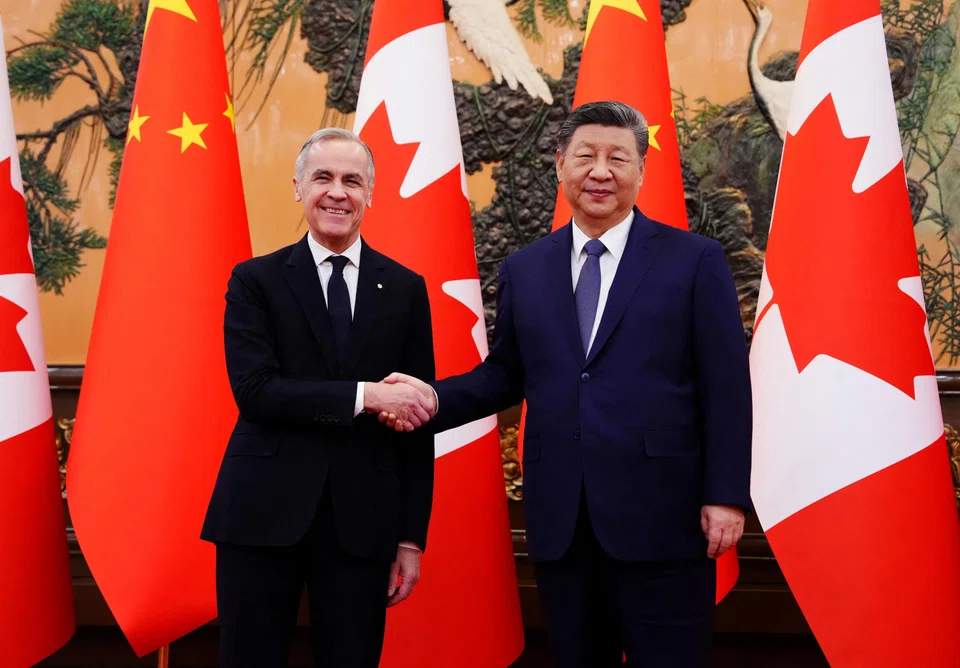
CANADA has a lot to gain in Asia. From his attendance at the Asean Summit in October 2025 to his January 2026 visit to Beijing, Prime Minister Mark Carney’s diplomatic trips to Asia show that Canada has both an interest and a need to enter the huge Asian market.
The Indo-Pacific region is now the world’s main economic engine, contributing up to 60 per cent of global growth. While Japan and South Korea recorded growth rates of between 1 and 2 per cent for 2025, China is maintaining a growth rate of 4.2 per cent, India of 6.6 per cent and the Asean nations, 4.3 per cent.
Asian countries may have different goals – some are working to establish economic momentum and others are striving for high-income status. But they all share the common goal of finding reliable, accessible and operational energy sources.
On the first day of Carney’s trip to China on Jan 13, Canada agreed to deepen cooperation with China on both clean and conventional sources of energy.
In the coming years, the stability and diversification of energy suppliers will be key issues. The needs are real and will only increase.
Redefining the geopolitical landscape
In February 2025, US President Donald Trump declared a trade war on Canada and Mexico, even before turning his attention to China, a long-time American foe. From that point on, economic diversification became a strategic priority for Ottawa.
'%3e%3cpath%20d='M12.1475%2025.5262C13.7713%2025.4295%2014.94%2023.913%2014.94%2021.8832C14.94%2019.5359%2013.474%2018.093%2011.5917%2018.093C11.3745%2018.093%2010.9582%2018.093%2010.8393%2018.1413V25.2086L11.8891%2025.5745C11.8891%2025.5745%2012.207%2025.5262%2012.1475%2025.5262ZM11.4934%2017.6281C13.2567%2017.6281%2014.3843%2016.4292%2014.3843%2014.4501C14.3843%2012.372%2013.275%2011.2973%2011.4339%2011.2973H10.8393V17.6305H11.4934V17.6281ZM6.66078%2025.6482L7.39265%2025.5492C8.02617%2025.4502%208.26403%2025.3053%208.26403%2025.1097V11.6149C8.26403%2011.4193%208.1451%2011.3709%207.23484%2011.249L6.68137%2011.173L6.6219%2010.7588H11.9508C15.7153%2010.7588%2017.0624%2012.0797%2017.0624%2014.1578C17.0624%2015.9666%2015.7748%2017.1909%2013.4969%2017.6305V17.7041C16.111%2017.948%2017.6571%2019.5382%2017.6571%2021.7636C17.6571%2024.3318%2015.8937%2026.0417%2012.1109%2026.0417H6.60132L6.66078%2025.6482Z'%20fill='%232B2B2B'/%3e%3cpath%20d='M20.6287%2025.6505L21.5596%2025.5515C22.1725%2025.4779%2022.4104%2025.3076%2022.4104%2025.112V11.249H21.9346C20.073%2011.3479%2018.982%2013.0095%2018.408%2014.6227L18.1907%2015.5018H17.6555L18.1701%2010.7588H29.3837L29.6421%2015.4787H29.1664L28.9491%2014.6227C28.3728%2012.8645%2027.3047%2011.2743%2025.5002%2011.249H24.9856V25.1856C24.9856%2025.3812%2025.1251%2025.4548%2025.9965%2025.5515L26.7695%2025.6505L26.829%2026.0417H20.5693L20.6287%2025.6505Z'%20fill='%232B2B2B'/%3e%3c/g%3e%3cdefs%3e%3cclipPath%20id='clip0_5242_21648'%3e%3crect%20width='24'%20height='16.8'%20fill='white'%20transform='translate(6%2010)'/%3e%3c/clipPath%3e%3c/defs%3e%3c/svg%3e)
Elected in April 2025 on a promise that he was the right man to handle Trump’s threats, Carney used completely different language from that of his predecessor, Justin Trudeau, on the importance of economic issues. In his election victory speech, Carney said he wanted to turn Canada into an energy superpower, both in clean and conventional energy.
This shift towards the economy, national security and pragmatism is well aligned with the needs of Asian countries, who are also seeking to diversify their supply chains and find stable and politically credible trading partners.
From grain to energy
Statistics Canada has indicated that combustible minerals (including oil, natural gas and coal), mineral oils and their derivatives accounted for a quarter of Canadian exports in 2024. In fact, energy resources are Canada’s leading export.

However, 89.3 per cent of these resources are shipped to the US; Canada’s largest export to Asean countries is grain.
If Canada wants to become an energy superpower, as Carney hopes, it will need to develop trade partnerships and, above all, energy partnerships with countries other than the US. The rapidly growing Asian market, which is seeking stability and energy security, could represent a viable long-term opportunity.
Asia’s growing demand for energy
Dependence on fossil fuels remains the norm in the region. Data from the International Energy Agency (IEA) indicates that industry and transport account for the largest share of energy demand. This will continue to grow as industrialisation and urbanisation accelerate, particularly in emerging markets.
Coal remains by far the main source of energy, accounting for 49.3 per cent of primary energy consumption in the Indo-Pacific region, and 57 per cent of electricity generation. However, coal resources are starting to run out.
Developed economies such as South Korea, Japan, Taiwan and Singapore import almost all their oil and gas. China, the world’s largest importer of crude oil and gas, hit the import record of crude oil in 2025, at 11.5 million barrels per day. This means Indonesia and Malaysia are able to export their fossil fuels.
Indonesia is the world’s leading exporter of coal, and Malaysia is a major exporter of liquefied natural gas (LNG). Nonetheless, the Asean Oil and Gas Updates 2024 report showed that South-east Asia was facing a gradual depletion of its oil reserves, and is expected to become a net importer of gas by 2027.
The region’s governments are in almost unanimous agreement about two major priorities. The first is ensuring and preserving their energy security, defined by the IEA as the uninterrupted availability of energy sources at an affordable price. The second is transitioning to cleaner forms of energy, other than coal.
To achieve these two objectives, countries are stepping up their energy diversification initiatives and investing heavily in infrastructure construction. In South-east Asia, new regasification and liquefaction plants are multiplying.
In 2023, the region had a total regasification capacity of 57.76 million tonnes per annum (mtpa) and a liquefaction capacity of 64.1 mtpa; ambitious expansion plans are in place for now to 2030, particularly in Indonesia, Thailand, Vietnam and the Philippines.
In China, LNG infrastructure is scaling much faster and at far greater volume, with 161 mtpa of regasification capacity operational and a further 110 mtpa under construction.
Canada scales up
Canada recently equipped itself with the means to compete with the US, which has been exporting LNG on a massive scale since 2016 from terminals in the Gulf of Mexico, although these shipments transit through the Panama Canal, a costly detour.
From that perspective, Canada has a considerable competitive advantage, with a port terminal directly accessible from its west coast. In July 2025, the first ship carrying Canadian LNG to Asia departed from the Port of Kitimat in British Columbia.
Of the five multinationals that contributed most to this project, four are Asian: Petronas (Malaysia), PetroChina (China), Mitsubishi Corporation (Japan) and Kogas (South Korea).
Carney has also said that the country will produce 50 million tonnes of LNG each year – supplying Asian markets by 2030.
On the oil side, despite delays and soaring construction costs, the expansion of the Trans Mountain Pipeline network has increased Canada’s export capacity to 890,000 barrels a day, paving the way for exports to Asian partners from the country’s west coast.
With more Asian oil customers now, Canada has seen the price per barrel rise rapidly in just months.
Even though it did not export any LNG before 2016, the US became the world’s leading exporter in 2023 and its exports continue to break records. The market is there. The question is: Who will benefit? THE CONVERSATION
The writer is a PhD researcher in the department of political science at the Universite de Montreal, Canada
Decoding Asia newsletter: your guide to navigating Asia in a new global order. Sign up here to get Decoding Asia newsletter. Delivered to your inbox. Free.
Share with us your feedback on BT's products and services