

Centrist voters are political orphans
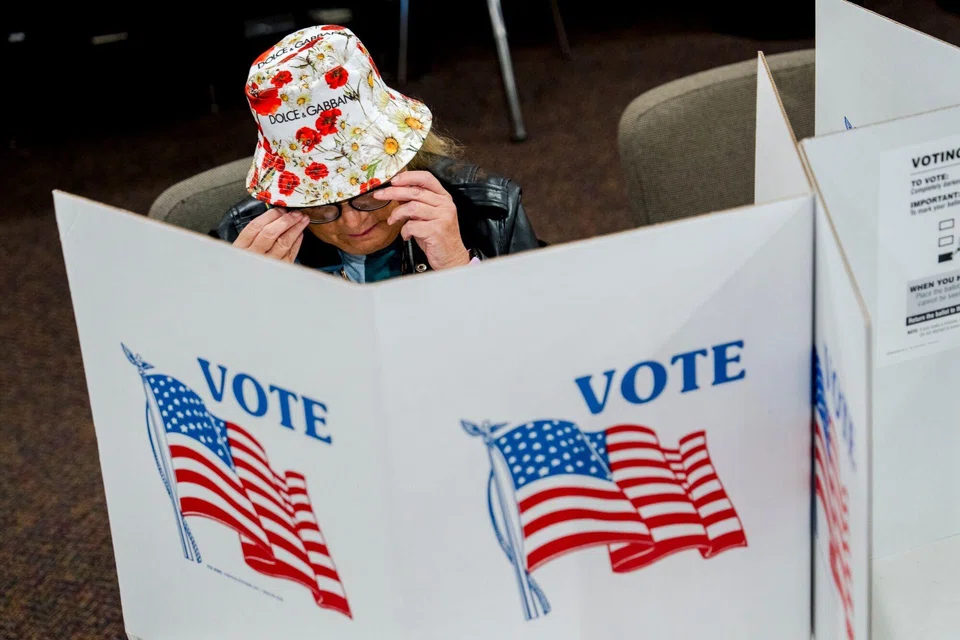
IT MAY be difficult to imagine in our age of political polarisation. But there was a time in America when it was not uncommon for a voter to “split the ticket” during elections – for instance, vote for a Republican candidate in a Senate election and for a Democrat in a presidential race, or vice versa.
Indeed, when the ideological divisions were not as deep as they are today, elections offered the opportunity for voters to make a pragmatic choice between candidates and to decide whether they were competent enough to deliver on their commitments. Rarely were they tagged as being on the “left” or the “right”. Indeed, both the Democratic and Republican parties were dominated by centrist political leaders who were seeking to win elections, not to gain the upper hand in an ideological struggle between “good” and “bad” guys.
These days, you have people advertising that that they won’t date someone who supports the other party. The competition between the Republican and Democratic parties has been transformed into a zero-sum game between two ideological entities, each trying to impose its world view, if not its way of life, on the other side.
In a way, US politics today resembles the European model of left versus right rather than the traditional American paradigm that reflected the sense of pragmatism of the country that tended to direct the system to the political centre where most voters found themselves.
Today it seems that both parties have been moving away from that political centre. In the Republican Party, the old guard represented by moderate conservatives such as the two Bush presidents, or the two former presidential candidates, Mitt Romney and the late John McCain, is leaving the scene as the Grand Old Party (GOP) has become Donald Trump’s party.
Hence, the Republican Party, that once upon a time was committed to liberal democratic principles and the free market, free trade and open immigration, has now embraced the Trumpist tenets of the “Make America Great Again” agenda: anti-democratic sentiments, crony capitalism masquerading as economic nationalism, protectionism, xenophobia and a touch of isolationism, and even racism.
On the Democratic side, that President Joe Biden is retiring from politics marks the end of an era when that party’s centrist and pragmatic guard was in charge, and political ideologues were marginalised.
The Democratic presidential ticket now consists of two members of the party’s progressive wing – presidential candidate Kamala Harris and her running mate, Minnesota Governor Tim Walz.
Left-leaning Democrats tend to subscribe to principles of identity politics with its emphasis on the need to promote ethnic, racial and gender interests in the form of diversity, equity and inclusion; each group is entitled to receive a piece of the cake.
And like their counterparts in the GOP they are suspicious of the free market and globalism, pressing the more centrist Democrats to abandon their traditional commitment to free trade.
The ideologues in each party can count on the support of an electoral base that would vote for it even if it picked Mickey Mouse as its presidential candidate.
But that leaves behind a substantial part of the electorate – moderate and centrist voters who are searching for practical solutions to their problems, not ideological agendas.
Expect many of them to stay at home on election day on Nov 5.






