
China should seriously consider a 2% inflation target

This old idea has shortcomings, but it’s better than penalising investors for justifiably bearish views
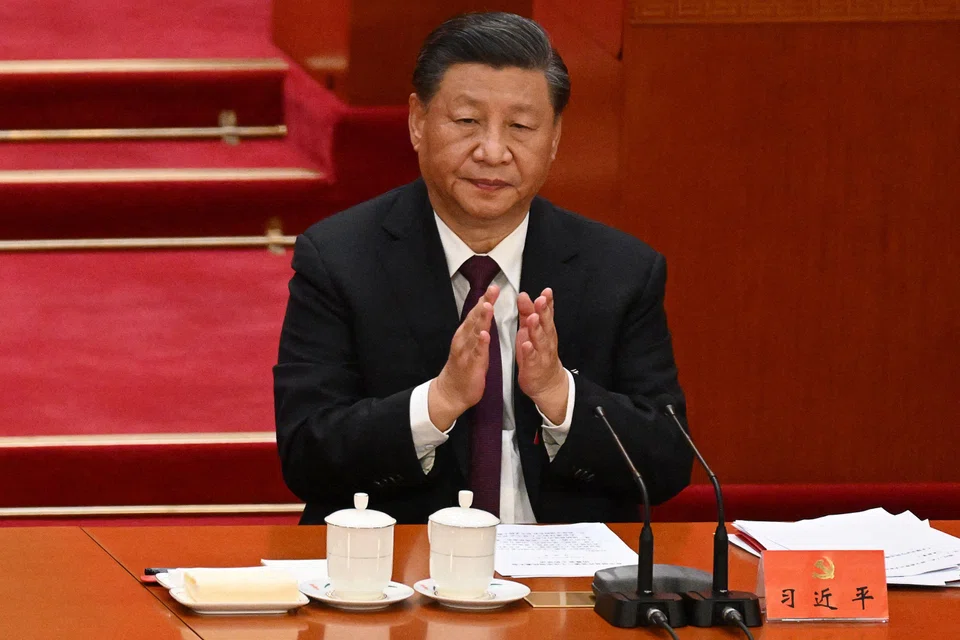
    • President Xi Jinping gets a lot of economic advice. Beijing is urged – or admonished – to boost consumer spending, rein in exports, curb overcapacity, and clean up local-government debt.
    • President Xi Jinping gets a lot of economic advice. Beijing is urged – or admonished – to boost consumer spending, rein in exports, curb overcapacity, and clean up local-government debt. PHOTO: AFP
    Published Wed, Aug 14, 2024 · 07:30 PM

    THE achingly slow pace of consumer price increases in China has led to amplified calls to juice the economy, and Beijing has taken some modest steps in the right direction. But a dramatic concept recently surfaced: elevating an economic icon of the 1990s.

    It’s not the breakneck expansion of that decade when the country’s gross domestic product soared. Instead, an influential adviser to the central bank suggested the adoption of a compulsory 2 to 3 per cent inflation target. Introducing and endeavouring to adhere to such a goal was an idea that spread quickly in the final decade of the 20th century. New Zealand was the early mover. Soon came the UK and Australia.

    When the euro began life a few years later, the European Central Bank was handed a price-busting mission with a 2 per cent target. The Federal Open Market Committee coalesced around that figure, but delayed a formal pronouncement until 2012.


    Didn’t most policymakers who adhere to targets recently suffer from much higher inflation? Yes, and in large part, authorities failed to react sooner because price gains were consistently below their objective in the years before Covid. Central bankers wanted to be convinced that the surge in late 2021 was real. The point is that aiming for a particular number drives policy – both up and down. Fans say that it adds predictability over the long run: If households and businesses know that, say, 2 per cent, is the goal, then they will adjust their behaviour accordingly.

    Like all approaches, this isn’t flawless. It is better than punishing investors for a justifiably bearish perspective on the economy. China takes a dim view of the bond-market rally and has threatened to intervene to prevent yields dropping too low. Economists are being urged to refrain from using terms like “deflation”. Too colourful descriptions of market weakness are also likely to invite sanction.

    China’s problem isn’t too much inflation; it’s the opposite. Consumer prices picked up slightly in July, according to figures released on Friday (Aug 9). While any increase is good news at this point, broad deflationary forces still predominate. Factory-gate prices extended a decline that began in 2022. This is a long way from what a former People’s Bank of China (PBOC) chief called a “central banker’s dream”: 2 per cent inflation. Officials are clearly attracted, in theory, by some of the ideals behind a target. They have aimed for 3 per cent in the past, though more as a ceiling, not necessarily something that must be met.

    President Xi Jinping gets a lot of economic advice. Beijing is urged – or admonished – to boost consumer spending, rein in exports, curb overcapacity, and clean up local-government debt. And please tackle the risk of deflation and be less timid in cutting interest rates. China has gone from guaranteed superior performance to being stuck with poor outcomes. Leaders typically bristle at what they see as Western critiques aimed at hampering the world’s second-largest economy, and some of them do fit that description.

    That’s what makes comments from Huang Yiping, dean of the National School of Development at Peking University and a member of the PBOC’s monetary policy committee, so intriguing. While careful not to mention the “D-word”, Huang is clearly alive to the dangers of sluggish demand and floated the 2 to 3 per cent target. “The economy is now easy to cool, but difficult to heat up,” he said. “If it really falls into the low inflation trap, the consequences will be serious.”

    One potential stumbling block is politics. Central-bank independence tends to go hand-in-hand with defined inflation objectives. If you are directing officials to hit goals, better they be free to do so without fretting about the political considerations that beset finance ministers and legislatures. An added advantage is that, if policy fails, the central bank can be hung out to dry. An independent anything in Beijing is problematic; Xi has consolidated power like no leader since Mao Zedong.

    But that shouldn’t detract from the merit of the idea. There’s also room for nuance. The Bank of England, for example, was given an inflation objective in 1992, five years before the Blair government bestowed autonomy.

    Politics isn’t divorced from borrowing costs even in the contemporary era. In Australia, the top bureaucrat at the Treasury sits on the Reserve Bank board, and two respected former RBA chiefs have argued against changes that would remove the ability of the Cabinet to veto decisions. US Federal Reserve policymakers are wary of getting Congress offside. Former chair Ben Bernanke took soundings on the target in 2009, and met with resistance, Sarah Binder and Mark Spindel wrote in their book The Myth of Independence: How Congress Governs the Federal Reserve. Bernanke would need to wait for more favourable conditions.

    An inflation target for China along the lines of what’s practised elsewhere is a stretch. The substance of the idea shouldn’t be. Anaemic prices aren’t great for China and weigh on the global economy.


