China’s energy future still runs on old technology
The country already has the power grid of the future; the problem is it’s being used in a grossly inefficient manner
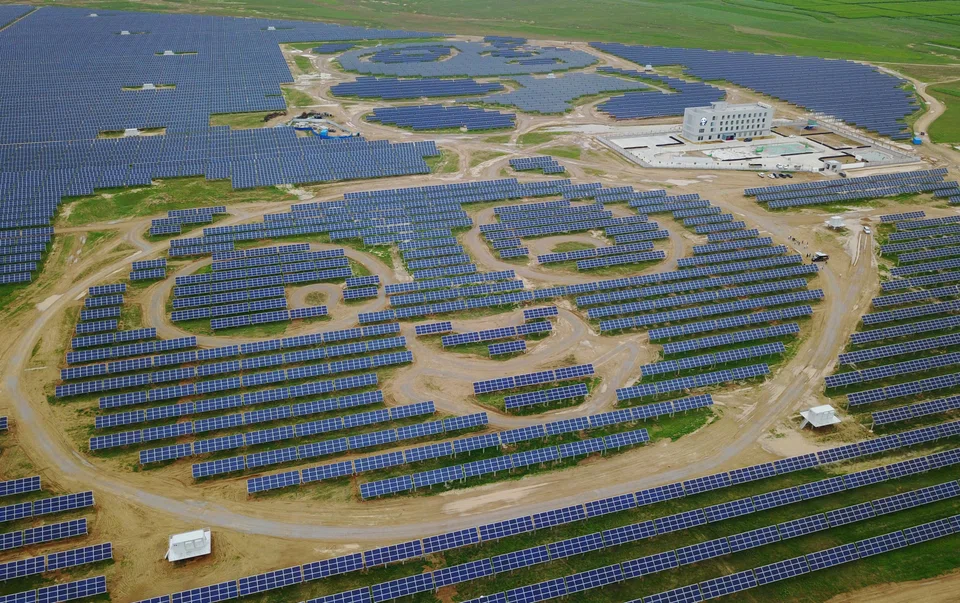
FROM the way some talk about it, China sounds like a vision of a zero-carbon future: A clean utopia churning out millions of electric vehicles (EVs) and billions of solar panels, connected by bullet trains, high-voltage power lines and sparkling metro systems, powered by an endless expanse of photovoltaic farms and wind turbines.
That portrait – of a solarpunk electrostate as rooted in the future of energy as the petrostates of the Gulf are wedded to the past – is not entirely wrong.
China’s clean energy industry justifies most of the superlatives you could throw at it. But there is still a troubling amount of 19th-century technology propping up this 21st-century reverie.
Take the forecasts put out last week by the China Electricity Council, a trade association for the power sector. More than 300 gigawatts of clean generation will be built in 2026, while consumption will grow by between 5 and 6 per cent.
Put those two numbers together, and you have a problem.
All those new solar panels and wind turbines should generate a massive amount of clean electricity – over 400 gigawatt-hours (GWh), roughly sufficient to power Indonesia, Mexico or Saudi Arabia.
In almost any year up to 2020, it would have been enough to cover all the growth in China’s own electricity demand, too. Times have changed, however.
Snuffing out coal
China last year consumed about a third more grid power than it did in 2019. Even with a headlong renewables build-out, the country will need close to 600 GWh to meet electricity growing at the pace the council envisages.
Any shortfalls end up being met by China’s coal generators, responsible for nearly one-sixth of the world’s carbon dioxide emissions. Goodbye, solarpunk; hello, steampunk.
There are alternatives that might bridge the gap. Eight nuclear reactors are slated to be connected this year, sufficient to add about 64 GWh.
A return to more rainy conditions in the Yangtze basin after a run of drought years might squeeze out another 100 GWh. Small-scale solar that tends to get missed in the council’s forecasts could easily add a further 100 GWh.
“If China got as much electricity out of each kilowatt of wind and solar as America does, it could cut fossil generation by about a third. If it got half as much economic growth out of each kilowatt-hour as the European Union does, it could slash such power by half.”
Still, keeping solid fuel off the grid in the face of voracious hunger for energy requires an awful lot of things to go right.
Furthermore, China right now needs to be not simply holding coal generation steady, but cutting it rapidly.
To meet President Xi Jinping’s target of net-zero emissions by 2060 without implausible offsets or carbon capture, coal output needs to fall by about 150 GWh every single year.
Last year, it dropped by about 100 GWh, but it will get harder to repeat the trick as electricity demand increases.
And yet, that target is frustratingly within reach.
Since 1985, the industrialised countries of the Organisation for Economic Co-operation and Development have increased their electricity consumption at a far slower pace, just 1.5 per cent, even as incomes have doubled in real terms.
That is a natural outcome as countries grow rich, and switch from energy-intensive manufacturing towards consumption and services.
If China – an industrialised nation itself these days, and one that uses more grid power per capita than Europe – were to switch to that growth pace, its planned renewables build-out would be more than sufficient to snuff out coal.
A solarpunk vision
That does not mean giving up on the electrostate.
While electricity usage by future-facing industries such as EV charging and data centres is growing fast – up 49 per cent and 17 per cent, respectively in 2025, according to the council – the picture is still being shaped by old-style heavy industries traditionally used by local governments as a tool of economic management.
The growth in demand from metals, building materials and chemicals last year will have come to about 50 terawatt-hours (TWh), not much less than the roughly 70 TWh increase for every EV and data centre in the country.
The renewables build-out could benefit from more government commitment, too.
On the council’s numbers, installations in 2026 will fall roughly a quarter compared to their levels in 2025, with solar dropping by one-third. That is mostly a result of regulatory tweaks last year that dumped costs on clean power and pushed subsidies towards fossil fuels.
New rules announced last month, allowing grid batteries to be paid for being on standby in the same manner as coal plants, are a sign the pendulum might be swinging back in a cleaner direction.
China already has the power grid of the future. The problem is that it is being used in a grossly inefficient manner.
If it got as much electricity out of each kilowatt of wind and solar as America does, it could cut fossil generation by about a third. If it got half as much economic growth out of each kilowatt-hour as the European Union does, it could slash such power by half.
Do both, and fossil fuels could be eliminated from the grid altogether.
That is what a solarpunk future looks like, and it is almost within China’s grasp. BLOOMBERG
TRENDING NOW
Three ex-employees of Envy group join Ng Yu Zhi in bankruptcy
He built the Vingroup empire. Now South-east Asia’s richest man is handing some key roles to his sons
Grab CEO’s wife Chloe Tong on life with Anthony Tan and finding her purpose
Incidence of civil servants buying property near unannounced MRT stations ‘a concern’, but may not establish misconduct: PSD