
Chinese cars are loaded with dazzling features. That could spell trouble
Content is king, until it isn’t
THE car industry has a gift for language, though at times that language is gobbledygook. In this business, a car’s body has a “beltline” and a “shoulderline” but for some reason, the belt sits higher than the shoulder.
Either car designers’ grasp of anatomy is akin to Picasso’s, or the trade sees fit to play fast and loose with words.
What, then, to make of a word like “decontenting”? The term refers to the practice of taking things out of a car to save money, hoping that no one will notice.
Examples include swopping out a spare tyre for an inflation kit, using harder plastics in the cabin or replacing a gear lever – once lavishly trimmed with leather and polished wood – with a small electric switch.
If all that escaped your attention, then it was done well. Decontenting is only successful if it preserves customer contentment.
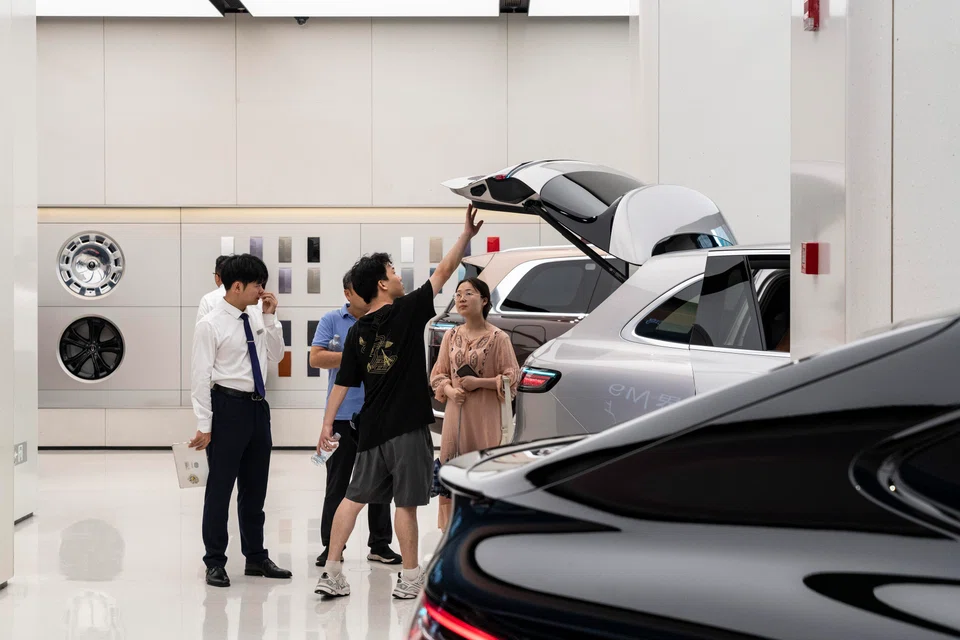
As with so many things, the Chinese play this game in an altogether different way. While traditional carmakers are busy trying to delete as much content as they can get away with, cars from the Middle Kingdom are invariably packed with dazzling features.
For instance, the Avatr 11 and Zeekr 7X, two electric SUVs with premium aspirations, have doors that open and close electrically, like those of a Rolls-Royce Phantom. Until now, no one expected to see magic Phantom portals on cars that cost one-seventh as much.
Smaller examples abound, too. The new BMW iX3, an electric car that is the pride of its maker’s engineering department, has a wireless charging pad for phones. That would have been fine once, except Chinese cars that cost half as much routinely come with two such pads.
So it is with cooler boxes, flip-down screens, camera-based rear-view mirrors and all manner of frills that no one knew they wanted until the Chinese showed up with them.
Though it seems otherwise, legacy players such as BMW and Mercedes-Benz haven’t completely skimped on content. What has really happened is that Chinese brands have raised expectations about what features a respectable modern car ought to come with.
China’s brutal electric vehicle market
Then again, they have had little choice. With a brutally competitive home market and largely unknown names abroad, Chinese brands have used lavish content as the quickest way for their products to earn a second look.
The risk is that cramming ever more features into cars without pricing them accordingly is hardly a road to sustainable profits. According to the China Passenger Car Association, the industry’s sales margin slumped to just 3.2 per cent in the first quarter of 2026.
Toyota, still the biggest of the bunch by volume, boasts numbers more than double that. Even a minnow such as Suzuki Motor enjoyed an operating margin of 9.9 per cent last year.
There lies the trap the Chinese set for themselves. Content is easy to copy yet hard to charge for. A second charging pad wins customers only until the next brand fits one too, at which point it stops being a differentiator and becomes another cost to bear.
Legacy players should resist being drawn into the same pitfall, but will need to be judicious about decontenting. Too much, and buyers could abandon them for brands with feature-rich cars. Too little, and shareholder discontentment sets in.
TRENDING NOW
Grab executives buy back shares after stock hits 3-year low on Atome deal
Simba admits exceeding spectrum limits amid failed M1 deal; parent company Tuas’ full-year profit surges 277%
He built the Vingroup empire. Now South-east Asia’s richest man is handing some key roles to his sons
StarHub, Keppel confirm talks over potential M1 deal



