A choreographed detente: Reading the Trump-Xi summit
Xi’s move to host Russia so soon after Washington’s visit suggests Beijing plans to maintain its full portfolio of relationships
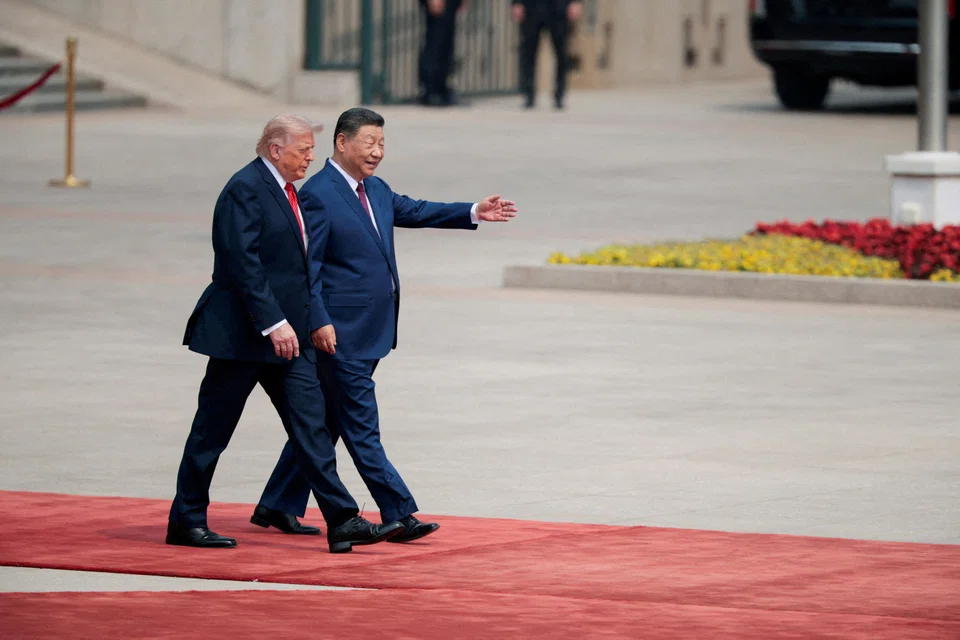
THE two-day summit that ended in Beijing on Friday (May 15) was the first state visit by a sitting American president to China in nearly a decade.
On the surface, it produced exactly what both leaders needed it to: handshakes at the Great Hall of the People, a stroll at the Temple of Heaven, a state banquet and a joint commitment to build what the Chinese readout called a “constructive China-US relationship of strategic stability”.
Beneath the choreography, however, the summit was less a turning point than a managed pause, a continuation of the detente reached at Busan in October 2025, dressed up for the cameras and stretched thin across three issues where the two governments still want very different things.
That Chinese President Xi Jinping will host his Russian counterpart Vladimir Putin in Beijing on May 19 to 20, less than four days after Air Force One departs, only reinforces the impression that Washington’s visit was one engagement among several, not a realignment.
Taiwan: A warning wrapped in a welcome
Xi used the formal opening of the talks to deliver what was, by the standards of these set-piece meetings, a fairly blunt warning: that Taiwan independence and peace in the Strait of Taiwan are “as irreconcilable as fire and water”, and that mishandling the issue would put the entire bilateral relationship in “great jeopardy”.
Foreign Minister Wang Yi went further in the post-summit briefing, telling Chinese state media that Beijing had “sensed” the US side does “not support or accept Taiwan moving towards independence”, a careful rewording of longstanding American formulations that, if it stands, edges Washington closer to Beijing’s preferred language.
US President Donald Trump’s response was characteristically loose. He told Bret Baier on Fox News that pending arms sales to Taiwan are being held “in abeyance” and described the issue as “a very good negotiating chip”.
He repeated the geographic argument he has made before, that Taiwan is “59 miles away” from China while the US was “9,500 miles away” – and urged both sides to “cool it a little bit”.
Secretary of State Marco Rubio, who somewhat remarkably travelled to Beijing while still under Chinese sanctions, insisted US policy on Taiwan is “unchanged”, and Taipei’s foreign minister leaned hard on that line in the hours afterwards.
The substantive question is which signal Beijing chooses to amplify. The Rubio version, with strategic ambiguity preserved, is the one Washington always retreats to. The Trump version, Taiwan as a chip, arms sales pending the president’s mood, is the one Beijing prefers to quote.
That gap is the real story. The president’s habit of treating arms sales as discretionary leverage gives Xi something to work with that no previous American leader has voluntarily offered.
The Iran war: a shared sentence, two different meanings
The summit unfolded against the 77th day of the US war with Iran and the blockade of the Strait of Hormuz, an event that has reshaped global energy markets and rattled China’s import-dependent economy more than Beijing likes to admit.
The White House readout suggested that Trump and Xi converged, stating that “both countries agreed that Iran can never have a nuclear weapon” and that Hormuz “must remain open”. Trump told Fox News that Xi said this “very strongly”.
Rubio added that China opposes both militarisation of the strait and any “tolling system” Teheran might try to impose.
However, the convergence dissolves with the Chinese readout.
Beijing’s statement makes no direct mention of Iran at all, referencing only “the Middle East situation” and calling for a “political settlement” that “accommodates the concerns of all parties” – language carefully drafted to avoid endorsing the American war or naming Iran’s nuclear programme as the problem.
Xi reportedly offered to “be of help” and pledged not to supply Iran with military equipment, but stopped well short of agreeing to lean on Teheran in any concrete way. Days before Trump landed, Wang had hosted Iranian Foreign Minister Abbas Araghchi and publicly reaffirmed the China-Iran strategic partnership.
The point is sharpened by Putin’s arrival in Beijing on May 19, four days after Trump’s departure. Russia remains Iran’s principal military partner and the supplier most able to replace or upgrade what Teheran has lost so far in war.
Whatever the eventual readouts from Moscow or Beijing might be, a Xi-Putin meeting in the immediate wake of the Xi-Trump summit makes clear that China’s hedging is not theoretical: the Sino-Russian-Iranian alignment will likely be reaffirmed, in the same city and almost the same room, before the week is out.
Trump’s pledge of Chinese pressure on Teheran has, in effect, a 96-hour expiration date built into Xi’s own calendar.
The honest reading is that Trump did not extract much.
Beijing shares the US interest in a functioning Hormuz, but is unwilling to be seen pressuring its strategic partner on Washington’s behalf, and is unwilling to bless a war it views as destabilising to the regional order it has tried to broker.
The Trump administration’s pre-summit framing that the US “doesn’t need China’s help” on Iran will, in hindsight, look like expectations management. The war will end on terms set in Teheran and Washington, with Beijing watching the price of crude.
Trade and investment: headline numbers, modest deliverables
The trade ledger is where the summit was always likeliest to produce something, and it did, though the deliverables came in below what the administration had floated.
Trump told Sean Hannity that China had agreed to order 200 Boeing jets – a real number but well below the 300 some analysts expected and below the recent Airbus order it was meant to counter.
US Trade Representative Jamieson Greer pointed to “double-digit billions” in agricultural purchases over three years, building on the October 2025 commitment to 25 million tonnes of American soybeans annually through 2028. Treasury Secretary Scott Bessent flagged a forthcoming “Board of Investment” track focused on non-sensitive US sectors, though nothing concrete materialised on day two.
Rare earth metals, arguably the single most important strategic dependency in the relationship, were discussed but not resolved. Beijing’s spokesperson offered only that China is “committed to keeping global supply chains stable and secure”.
That is not a concession; it is a holding pattern, and one Beijing prefers, because the rare-earths chokehold is precisely what gives Xi confidence at the negotiating table.
As Scott Kennedy of the Center for Strategic and International Studies noted before the meeting, China arrived in 2026 “far more confident than in 2017”, and rare earths are a large part of why.
The Busan tariff truce, which runs to November 2026, looks likely to hold, perhaps to be extended when Xi visits Washington in the fall.
The optics of the trip, with Elon Musk, Tim Cook, Larry Fink, Jensen Huang, and Kelly Ortberg in the delegation, were designed to reassure American chief executives that the China market is still open for business, and on that narrow goal the summit largely succeeded.
What it adds up to
The most candid framing came from Xi himself, who asked Trump whether Washington and Beijing could avoid the so-called Thucydides Trap. That the question was posed at all is a reminder that the relationship is now structurally adversarial in a way it was not in 2017.
What Beijing wants from this period is stability and predictability, fewer surprise tariffs, fewer technology shocks, and more space for its economic project.
What Washington wants is leverage, purchases, and Chinese pressure on third parties. Those agendas overlap just enough to produce summits like this one.
The deliverables – Boeing jets, soybean tonnage, agreed-upon language on Iran’s nuclear programme, an upcoming Xi visit to the United States – are real.
The unresolved questions are larger – the future of arms sales to Taiwan, the actual mechanics of any Iran de-escalation, the rare-earths choke point, as well as the looming end of the tariff truce.
Beijing leaves the summit with what it most wanted – a Chinese readout it can frame as historic, a softer American line on Taiwan it can quote selectively, and no concessions on Iran. Washington leaves with headline numbers, business-class optics, and a war it is still fighting alone.
That Xi will host Putin within four days of Trump’s wheels-up is itself a kind of answer to the Thucydides question the Chinese president posed: Beijing intends to maintain its full portfolio of relationships, and the choreography is the message.
A “constructive relationship of strategic stability” is a fine phrase. Whether it survives the next provocation, in the Strait of Taiwan, the Strait of Hormuz, or a Washington tariff investigation, is the only question that actually matters.