



A clean sweep: How China won the war for your living room floor
The Roomba’s predicament shows how the US is the worse off for its trade dust-up with its peers
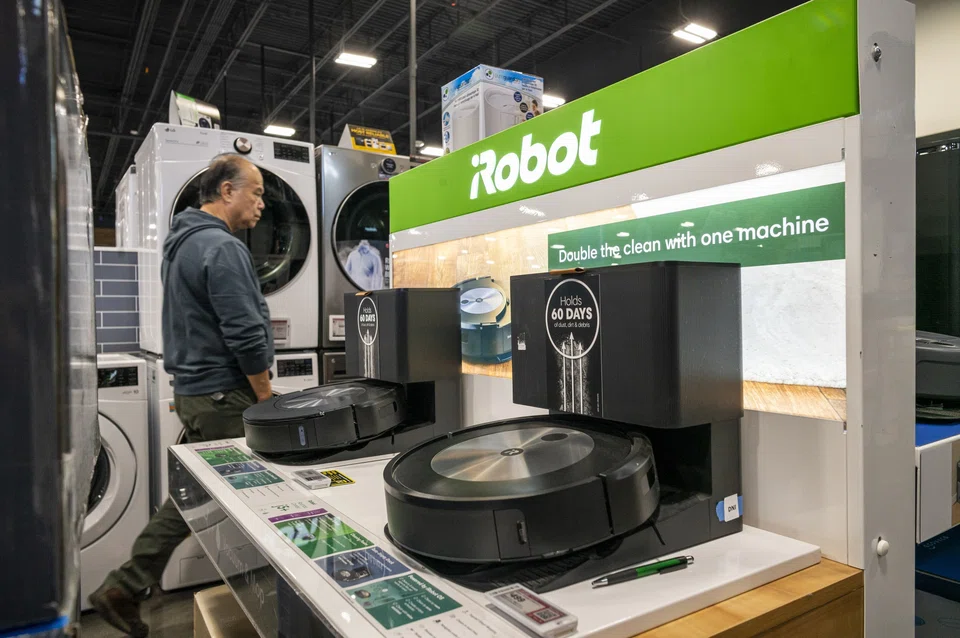

I DON’T know what kind of 2025 you’ve had, but China’s year has been triumphant – just look at the Roomba, the little American robot vacuum cleaner that will soon be American no more.
Earlier this month, iRobot, the Roomba’s maker, puttered sadly into Chapter 11 bankruptcy protection in a stunning reversal of fortunes for a company that had pioneered an entire product category. As recently as 2021, the firm had been valued at US$3.56 billion.
Its impending fate must be nightmare fuel for American firms everywhere – as part of the restructuring process, iRobot will be bought over by its primary manufacturer, Shenzhen-based Picea Robotics. The loss-making firm is expected to live on, but under Chinese ownership.
As the dust settles on 2025, it is increasingly evident that American efforts to forestall China’s progress have instead accelerated it. iRobot’s undoing might have been its Chinese competitors – faster, cheaper and at times, better – but its demise was hastened by American protectionism that has rebounded instead on domestic enterprises.
Earlier this year, the US imposed a 46 per cent levy on imports from Vietnam – where iRobot makes vacuum cleaners bound for the American market.
All told, US tariffs drove the company’s costs up by US$23 million in 2025 and made future planning harder even as its Chinese rivals were closing in.
iRobot’s plight is a microcosm of a larger pattern. The more you try to hobble the Chinese, the harder they run. Kept out of the American market, for example, Chinese carmakers simply made aggressive inroads elsewhere, and BYD is now the world’s largest electric vehicle manufacturer. Today, China makes more than three-quarters of the world’s lithium-ion batteries.
In the semiconductor space, American export controls have created the conditions for China’s Cambricon Technologies to flourish – the firm is aiming to more than triple its production of artificial intelligence chips in 2026.
America appears ill-equipped to slow China down, anyway. China is being driven forward by a decade-long industrial master plan, “Made in China 2025”, focused on transforming itself into a global high-tech powerhouse across 10 key industries. The US, meanwhile, is being run by lawmakers who are preoccupied with next year’s midterm elections.
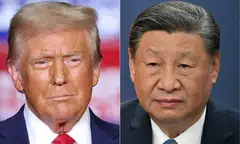
Compounding matters, American innovation and divergent thinking, which have long given the country an edge over unwieldy Chinese central planning, are being undermined from within. The Trump administration has cut funding for critical research and made the country a less probable destination for the learned, the talented and the curious. The nation risks no longer hoovering up talent and capital as it once did, in a way that made it great the first time around.
As with China’s ascent, the conditions for America’s current state did not emerge overnight. Decades of festering inequality and polarisation have produced a populist climate with corrosive consequences for policy and planning – where there is any planning to speak of. Given all that has gone wrong for the US and right for China, it’s a wonder that iRobot puttered on as an American company for as long as it did.
Decoding Asia newsletter: your guide to navigating Asia in a new global order. Sign up here to get Decoding Asia newsletter. Delivered to your inbox. Free.
Share with us your feedback on BT's products and services
TRENDING NOW
Why US$100 oil, 5% US yields affect Singdollar, ringgit differently vs other Asean currencies
Anthropic to open Singapore office in October, sees it as ‘standout market’ for Claude

Singapore’s covered bond boom is largely a DBS story
Malaysian developer Eco World tops bids for Sin Ming area housing plot with S$1,612 psf ppr offer

