

Climate action needs a reset. COP31 offers a crucial window for that
A new approach grounded in economic logic, financial realism and energy primacy must guide the next phase
OVER centuries, the world has learnt that change is the only constant. Yet when change arrives, our instinctive response is to resist it. Climate change is no exception.
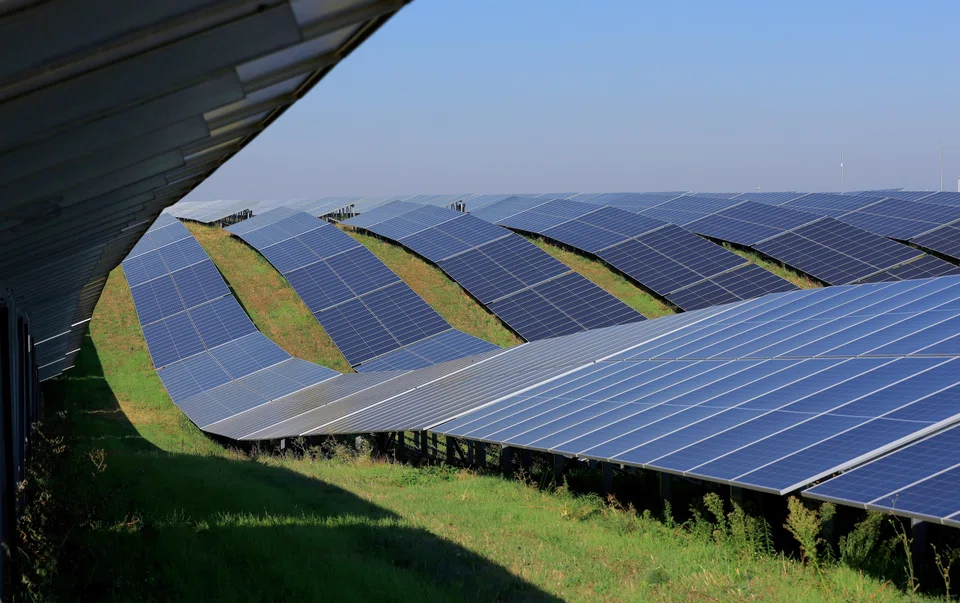
Faced with rising temperatures, the global community attempted to stall the change: abandon fossil fuels, accelerate solar and wind, and push for a rapid, wholesale transition to renewables.
Massive solar and wind capacities were created. Energy efficiency improved. Economies increasingly adopted low-carbon pathways. But the climate did not stabilise. People in Paris jumped into canals to escape the killer heat during the recent summer.
The uncomfortable truth is that resisting change does not work. Singapore’s success in navigating its own constraints and thriving amid changing economic conditions and geopolitical circumstances spotlights how change can be mastered.
The city-state did not attempt to alter realities – be it the hot and humid climate, water scarcity or an absent hinterland – but strategised to adapt and adjust to secure successful outcomes.
In the world’s zeal to put brakes on global warming, it overestimated its capacity to unlock clean energy at scale and underestimated the complexity of replacing coal and hydrocarbons.
Historically, energy transitions have never been driven by diplomatic negotiations, policy pressures or financial incentives. They happened because new technologies offered superior convenience, reliability and economics.
Coal and steam replaced horses in England not because of imperial decrees. Likewise, electricity and petrol spread because the underlying economics made overwhelming sense.
Yet, we have not learnt from these transitions. Instead, we attempted to engineer a shift through ever-inflating ambition at successive Conferences of the Parties (COPs), high-decibel activism and peer pressure through trade and other policies.
Three global collective constraints
This approach has run into three global collective constraints that neither rhetoric nor sheer ambition can easily overcome.
The first constraint is finance. The trillions required for climate action are simply not flowing. “Billions to trillions” has remained a slogan.
The United Nations Framework Convention on Climate Change’s (UNFCCC) financial mechanism has not delivered scale. Even if some global magic suddenly unlocks trillions of dollars, the world lacks viable project pipelines to absorb such capital.
Second, climate fatigue has become a reality. The shift in narrative from “global warming” to “climate change” has broadened the agenda, but the underlying singular thrust on carbon stays.
The optics have grown grander: delegates representing countries, technically called parties, at COP1 in Berlin in 1995 numbered in three digits; the count went up nearly 70 times by COP28.
Yet initiatives such as Just Energy Transition Partnerships and early retirement of coal plants remain feel-good stories. The cancelled retirement of Cirebon-1, a 660 megawatt coal-fired power plant, in neighbouring Indonesia is a case in point.
The third constraint is energy primacy. Global energy demand is booming. Electrification is spreading in industrial sectors, households and mobility. Artificial intelligence and burgeoning data centres are driving electricity demand sharply upwards.
Adaptation to higher temperatures will strain electricity grids further. And when demand spikes, no one cares whether the electrons come from coal, diesel or bunker fuel – they care that the lights stay on.
Governments can fall if electricity supply falters too often. This is why countries are now racing to become “electro-states”.
These three constraints require a fundamental redesign of global climate strategy. We must be realistic. Coal and hydrocarbons are not disappearing anytime soon. Energy demand will surge.
The priority should be adding cleaner energy sources at scale alongside traditional assets, rather than creating policy frictions that disrupt traditional energy supplies.
An ultra-supercritical thermal plant often carries lower localised ecosystem and safety risks than a high-impact hydropower development. Nuclear energy cannot remain a pariah, if grids must depend on a mix of sources to remain resilient.
Since global climate finance is limited, the UNFCCC should use what it has to support technology innovation.
Technology that will help us produce ample green energy; technology that will help us deal with the millions of solar panels and wind turbine blades that will be discarded in the coming decades; technology that will deliver more efficient carbon capture, or perovskite-based solar solutions that eliminate panels altogether.
The COP needs a redesign that reinforces its technology mechanism, supports execution within countries in line with their nationally determined contributions and tones down public theatrics.
Finally, the singular focus on carbon will not work. Diplomatic negotiations cannot suppress the ballooning energy needs of growing and advanced economies. Nor can they control wildfires, which inject billions of tonnes of carbon dioxide into the atmosphere.
Working like Sisyphus – pushing the same boulder uphill – will not deliver results. We need wins over a shorter horizon.
Tackling methane, for instance, may be difficult in agriculture, but flaring in oil and petrol can be stopped quickly and cheaply. This has the potential to cool the planet within a decade or so rather than a century plus required to tackle carbon.
With nations increasingly moving to a new ESG – economy, security and geopolitics, as opposed to environmental, social and governance – lens to protect and advance their priorities, the world appears more inclined to adopt realistic options.
The next phase of climate action must be grounded in economic logic, financial realism and energy primacy.
The pre-COP31 in Fiji and the COP31 in Antalya, Turkey, offer an opportunity to rethink the global approach.
Turkey will host the main summit and Australia will act as the president of negotiations, leading the official climate talks. Fiji will host the pre-event. This unique combination can show the way.
A COP focused on execution in vulnerable countries, in the Pacific and elsewhere, with scaled-down optics and no grandiose announcements, may be the right first step.
In 1995, then German chancellor Helmut Kohl urged COP1 to use the globally available funding as effectively as possible. That advice remains valid.
We must optimise and design for climate change, keeping in view the available financial, technological and energy resources, as well as the collective constraints we face.
The writer is a former vice-president of the Shanghai-headquartered New Development Bank. He previously served as CEO of the State Bank of India in Singapore from 2009 to 2014.
TRENDING NOW
Companies still in search of AI use cases with worthwhile ROI, says Broadcom’s CEO

Malaysian king buys stake in Singapore-listed mining firm expanding into rare earths

Once staunchly pro-China, Malaysian Chinese businesses are now distancing themselves from Beijing

Singapore’s wealth management success should extend to everyday families

