Climate talks always fail, but they are failing better
All the treaties and coalitions are merely tools to meet the end of emissions reduction
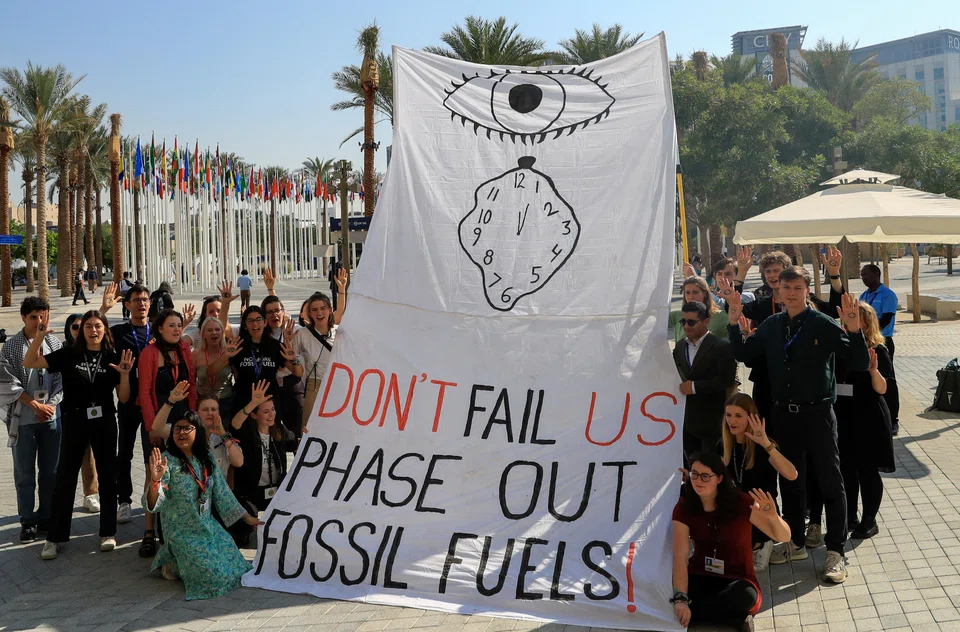
ANOTHER 12 months have passed. Another 36.8 billion metric tonnes of carbon dioxide have been spewed into the atmosphere. After three decades of climate meetings, emissions are still increasing, when they should be falling. At the COP28 summit in Dubai, there’s more interminable arguments over the wishy-washy verbiage in a treaty that most of the world seems determined to flout.
Welcome to the world of climate diplomacy. Every two steps forward is accompanied by one or two steps back. There will be many more tame promises and milquetoast deals before this process is done.
Here’s the good news: The draft text released Monday evening (Dec 11) in Dubai calls for a rapid decline in coal usage, and a reduction in all fossil fuels at the speed necessary to achieve net-zero emissions by 2050. Coal, oil and gas will be progressively squeezed out of our power systems if the text’s exhortation to triple renewable capacity globally and double the rate of energy efficiency improvements is met.
These achievements sound modest when set against the urgency of climate action. Modifiers water down almost every paragraph to give polluters a get-out clause. The text is “clearly insufficient”, according to the European Union’s climate commissioner, and was described as a “death warrant” by the Marshall Islands, a low-lying country threatened by rising sea levels that’s been a leader in pushing more ambitious action on greenhouse gases.
If you think the draft language is weak, it’s worth considering how far the United Nations Framework Convention on Climate Change (UNFCCC) has come. It wasn’t until the Glasgow climate pact two years ago that fossil fuels were even mentioned in a summit agreement. Prior to that, the preferred language was always “emissions”, as if the exact cause of such pollution was a profound mystery.
The text was being voted on Tuesday by all 198 parties to the UNFCCC, and the event’s president, Sultan Ahmed Al Jaber, is likely to win the political game. It’s unlikely that oil exporters will wreck the process by voting down the agreement, given that it’s been convened by one of their own — Al Jaber is also the chief executive officer of Abu Dhabi National Oil Co, the United Arab Emirates’ state-owned petroleum company.
On the other side, small islands and developed countries disappointed by the absence of a clearer call to phase out fossil fuels may threaten a walkout, but have far more to lose from a failure of the COP process. The 2009 Copenhagen conference, when splits between developed and developing countries resulted in no text being agreed at all, is still remembered bitterly as one of the lowest points in three decades of meetings. No one who wants to advance climate action will wish for a repeat.
If you consider what these agreements actually are — international treaties with quasi-legal weight, where a single obstreperous country can veto the whole thing — it’s less surprising that they are so underwhelming. The process has been advanced fastest by those like the Pacific islands that have understood the COP as a sort of parliament, where you only get things done by building alliances to push the envelope on what is possible.
The High Ambition Coalition founded by the Marshall Islands in 2014 was instrumental in clinching the 2015 Paris Agreement, the first to bind every country to a greenhouse target. The Fossil Fuel Non-Proliferation Treaty that’s been endorsed by the EU parliament and Colombia as well as 10 small island states offers a further tool to push for emissions reductions outside the UNFCCC process.
For all the fuss about a meeting with 100,000 delegates that is perpetually billed as the last and only chance to prevent devastating climate change, these treaties and coalitions are merely some of the tools available to meet the end of emissions reduction. Progress may be faltering, but the five-year growth rate of emissions is now running at its slowest pace since World War II. Only a small further push is needed to drive that number negative, and move the world on a path towards net zero.
The eternal tragedy of politics and diplomacy is that every project is destined to fall short, as it comes face to face with the reality of opposition. Roughly a quarter of UN members are highly dependent on oil and gas. Turkeys don’t vote for Christmas, so it’s always going to be a struggle to get fossil-fuel producers to promise to destroy their own economies.
That doesn’t stop fossil fuel consumers doing far more to cut their demand by switching to cleaner, substitute sources of energy. It’s those decisions by elected governments and investors that will make more difference than the wording of a climate treaty. The ambition of climate diplomacy shouldn’t be to succeed so much as to fail — but to fail better with each passing year, until finally the arc of history bends. BLOOMBERG