

Collapse of Putin’s regime would cause commodity price spike, hampering inflation control efforts
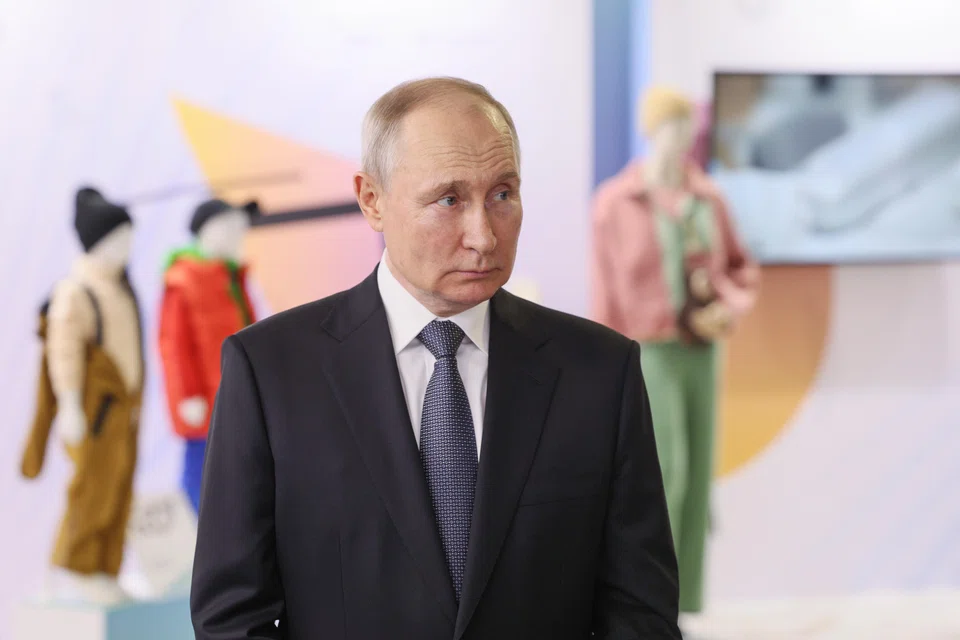
YEVGENY Prigozhin’s march on Moscow last month hinted at one way President Vladimir Putin’s regime could come to an abrupt end, and foreshadowed the blow such an event would deal to the global economy.
“While it may not quite be the equivalent of the end of World War II, it would be gargantuan,” said Kent Engelke, the chief economic strategist at Capitol Securities.
Oil futures rose sharply after the now-exiled leader of Russian mercenary group Wagner staged a brief mutiny and exposed cracks in Putin’s grip on power. In a sign that those cracks are widening, Belarus President Alexander Lukashenko claimed Prigozhin had violated the terms of the surrender that Lukashenko negotiated and returned to Russia.
If Putin is somehow ousted, his fall would instantaneously jolt commodity prices worldwide. That, in turn, would change the course of inflation, central-bank policy and economic growth.
The manner in which Putin falls from grace would determine how catastrophic the event is for the global economy. Prigozhin’s head-on approach could result in a civil war in the world’s largest and most resource-rich country – the worst-case scenario from an economic perspective.
If the Russian elites persuade Putin to go quietly, and he declines to stand for re-election in 2024, there would still be significant ramifications for economic growth. In this case, commodity prices would likely move in volatile fashion until Putin’s successor is identified.
Russia is one of the world’s largest oil producers, and has a similarly dominant presence in the aluminium, steel and grain markets.
The initial spark of the now-raging global inflationary inferno came from the adjustment of global supply chains to the end of the pandemic. The biggest pressure on households and businesses all over the world came from the spike in food and energy prices. Both of these were caused by Putin’s invasion of Ukraine in February 2022.
One strategist said Putin’s fall would jar oil markets even more violently than his rise. “I think oil’s going to hit US$150 a barrel,” said Capitol Securities’ Engelke. “If that happens, what will it do to inflation expectations?”

A recent threat to shut down production in parts of Libya could drive oil futures up by 15 per cent, he said.
“If a shortfall coming from a third-rate producer such as Libya can have that impact, what happens if we have disruptions at a top-rate producer such as Russia?”
The impact on oil and, hence, on global rates of inflation could be even more radical. If Putin were ousted in the chaotic fashion that Prigozhin looked set to pull off, a civil war would likely ensue – paralysing production activity in Caucus oilfields and Siberian smelters. Prices of various commodities would initially soar.
“Whenever you have a strongman fall from power, (there will be) anarchy,” said Engelke. “Look at what took place in Libya, Iran and Iraq.”
The first bout of inflation caused the 2022 recession, and triggered the ongoing campaign of aggression from global central banks. Another round could push interest rates up even further, bringing global growth to a halt.
The last time there were repeated oil spikes and sustained inflation was in the 1970s – the dreaded decade of stagflation.
The only chance for the global economy might be a peaceful transition through an election or negotiated exit. In this event, any spike in oil prices would likely be short-lived. A new leader anointed by the oligarchs could quickly stabilise oil production.
A new leader might also end the Ukraine war, a conflict that was Putin’s brainchild. Even the warlike Prigozhin hinted that he considered Ukraine a dead end.
As the beginning of the war brought on a recession in Eastern and Central Europe, so the end of the war could bring on a renaissance for the region. Germany’s reliance on Russian energy meant that the manufacturing hub of the eurozone bore the brunt of the economic fallout.
The rebuilding of Ukraine and the likely incorporation of the grain and natural gas-rich nation into the eurozone could revive the sclerotic European economic project. Ukraine has already struck a deal with Bulgaria to buy nuclear reactor equipment in order to expand its formidable nuclear-power capacity.
In the aftermath of the Second World War, Europe saw an economic boom as grants poured into the continent from the United States. Prosperity in France spread to an unprecedented percentage of the population, such that the 1960s are still remembered fondly by French economists.
Engelke gives Putin a 50-50 chance of avoiding an abrupt fall from power. Put simply, the odds of an oil spike throwing the world into a tailspin are roughly equivalent to the toss of a coin.
Decoding Asia newsletter: your guide to navigating Asia in a new global order. Sign up here to get Decoding Asia newsletter. Delivered to your inbox. Free.
Share with us your feedback on BT's products and services
TRENDING NOW

First Resources blames El Nino, outside fires for Kalimantan hotspots amid haze scrutiny
High Court rules against Julius Baer’s Singapore trust arm in US$50 million family trust dispute
Singapore key exports jump by higher-than-expected 68.4% in September, led by non-electronics

MSCI proposes downgrading Indonesia to standalone market status

