The Fed’s speed of rate hikes essential to fight inflation, but puts growth in jeopardy
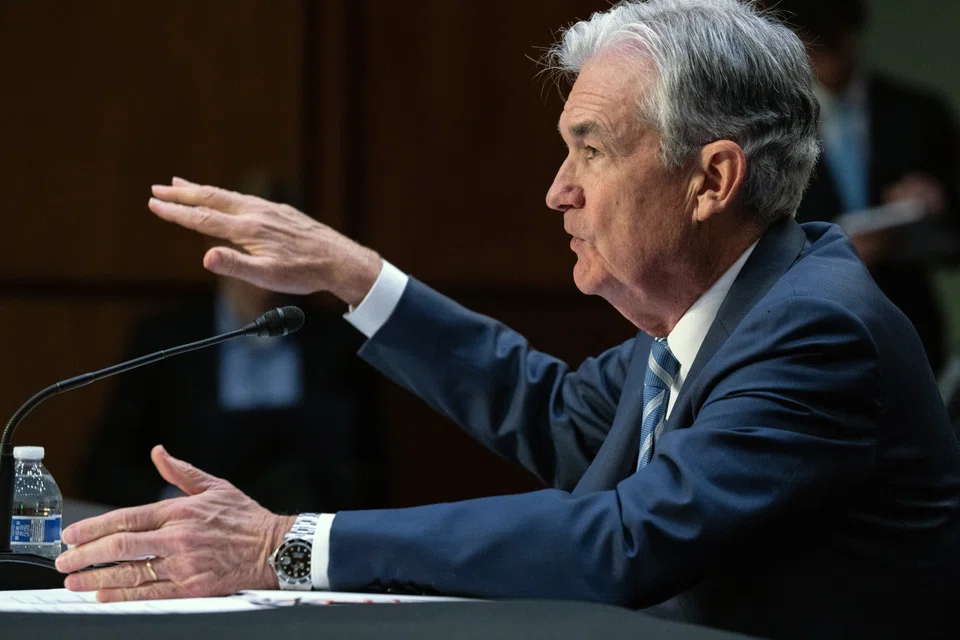
It’s typical of the financial markets’ dysfunctional relationship with the US Federal Reserve that the same action that had petrified markets just a month ago could well be met with a sigh of relief and even a stock-market rally after the Fed’s next meeting is over on Wednesday (Jul 27).
The markets would almost certainly be relieved by a monstrous 75-basis point increase because, for the first half of July, an even beastlier 100-basis-point hike seemed all but likely. The move was anticipated after data showed that US consumer prices rose a staggering 9.1 per cent the previous month from a year earlier.
After all, Fed chairman Jerome Powell had orchestrated June’s shocking 75 basis-point move in a direct response to the report that consumer prices rose 8.6 per cent in May on an annual basis. On that occasion, however, Fed officials, including Powell himself, confirmed the Wall Street whispers about a three-quarter-of-a-percentage point move during the quiet period before the Fed meeting.
This time, however, there has been no attempt to prepare the markets for a similar shock.
“The Fed has thus far not come in during the blackout period as they did previously to change that view,” said Quincy Krosby, the chief global strategist at brokerage LPL Financial.
Even if the hike is “only” 75 basis points, the Fed is moving at stunning speeds, going to 2.25 from zero in the space of 7 months - a Ferrari-like acceleration for a major central bank. To grasp that speed, consider that the average 30-year mortgage rate, which tracks central-bank benchmarks, has more than doubled to 5.5 per cent so far this year. That has completely changed the math for home financing.
The speed of rate hikes was necessary to fight inflation but it puts growth in jeopardy. Like a sailboat traveling in high-speed winds, any course correction from the Fed at this stage is likely to be disruptive. Most Wall Street economists doubt the Fed will be able to carry the economy smoothly to a new cycle, and is more likely to stop this cycle with the bang of a recession.
If the Fed delivers the 75 basis-point increase as anticipated, much will hang on the policy statement and “dot plot” schedule of board-members’ projections of future rate moves.
“The question will be how hawkish is their statement,” said Krosby. “Does Powell telegraph less hawkish?”
The latest whispers on Wall Street concern how the US central bank will signpost its next “pivot.” Powell could use the statement to start winding down the all-out war on inflation and hint at a new monetary easing campaign.
Some strategists say there is already enough troubling economic data, including dwindling retail sales, industrial production, housing starts and mortgage applications for the central bank to start dropping hints about rate-cutting plans later this year or in early-2023.
Walmart is among the corporate giants that has slashed its growth expectations because of inflation fallout. If the Fed’s statement emphasises the apparent growth slowdown, Wall Street could interpret this as the beginning of a pivot.
“We expect the Fed to change course only next year, when the economic effects of rate rises become clear,” said strategists at money manager Blackrock’s Investment Institute.
Hopes that the Fed will soon relent have created a market situation where “bad news is good news,” said strategists at brokerage Barclays. Unfortunately, they added, the bad news is not bad enough to be much good yet.
The “best hope” for stock owners is for economic worries to get worse, as strategists at Jefferies have said. Jobs data, which the Fed weighs most heavily in its economic-growth assessment, remains in the pink of health. The Barclays strategists warned that the central bank is unlikely to “sound dovish” on Wednesday, as America’s overriding concern remains inflation.
The Fed could even bluntly acknowledge that the only way to make sure that the virus of inflation is eradicated would be to kill its host, the US economic cycle.
“Reducing inflation to 2 per cent would mean slamming spending down so hard it would stall the economic restart,” said the Blackrock strategists.
Treasury yields and mortgage rates have pulled back slightly in anticipation of an economic slowdown bringing out the Fed’s dovish side. If the Fed doubles down on its hawkish strategy despite slowing growth, much of the recent stock rebound is likely to fade away.