

Did Ye and Adidas just collapse the ‘influencer’ market?
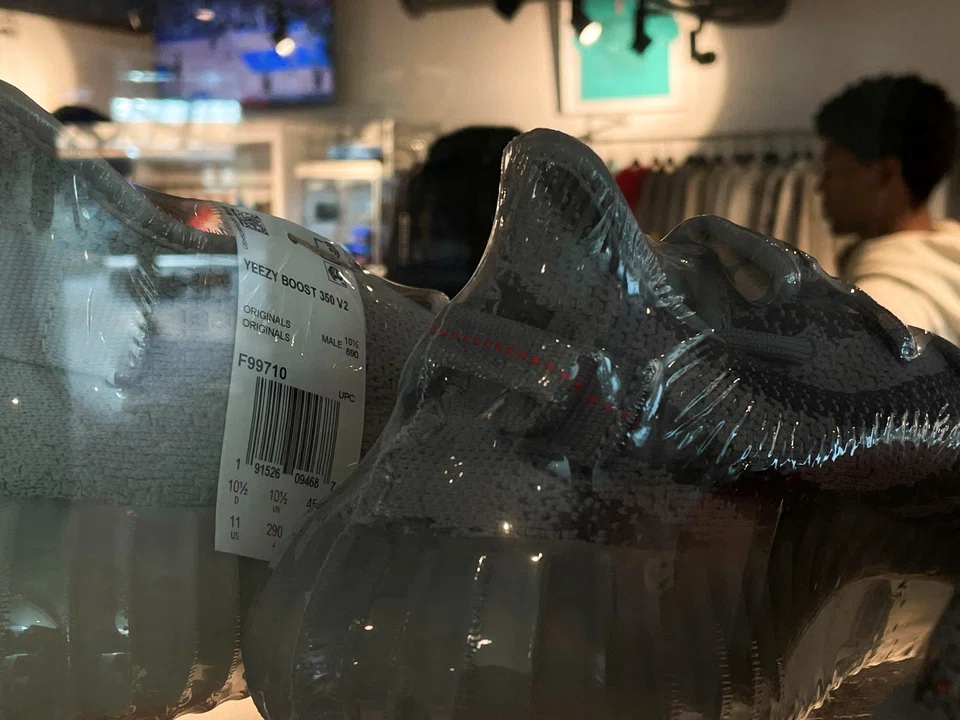

IT’S NOT often a giant, global story offers a prime example of what can go wrong when a company lacks full control of its intangible assets.
But the recent public outbursts from music artiste Ye and their impact on Adidas do exactly that.
On Tuesday (Oct 25), apparel brand Adidas ended its contract with the American rapper to sell his “Yeezy” line of footwear. The sportswear manufacturer’s reason for dropping Ye (previously known as Kanye West) was a series of publicity stunts by the musician that offended multiple groups of people.
Adidas joined a growing list of companies that have stepped back from associating with Ye. High-end fashion house Balenciaga, talent scouts Creative Artists Agency and investment bank JPMorgan Chase also cut ties with Ye earlier this month. Film and television production company MRC also said it will not be airing a documentary on the rapper and Facebook owner Meta restricted Ye’s Instagram account.
The Adidas-Ye partnership, which started back in 2013, was highly profitable for both parties. In 2020, the “Yeezy” deal generated nearly 1.8 billion euros in revenue for the Germany-based Adidas, according to Bloomberg, and was due to expire in 2026.
Adidas said it expected to see a “short-term” impact of 250 million euros (S$351.1 million) in revenue this year. Shares in Adidas fell as much as 8 per cent after the announcement, but have since pared those losses. The revenue dip will be a blow to Adidas, which earlier this year warned its profit margins and sales were suffering as stock accumulated in warehouses due to slowing consumer demand.
The financial hit has also struck the rapper. According to Forbes magazine’s list of billionaires, Ye’s net worth has dropped from US$1.5 billion to US$400 million after the Adidas announcement.
No back-up plan
This story is packed with lessons about the value of intangible assets. But more importantly, it is a great example of the risks of not managing those assets properly.
Ye was the full package for Adidas. He had star power, a history of success and incredible charisma. Adidas and Ye made a lot of money selling millions of shoes and other clothing.
While it is unfair to blame Adidas for failing to predict the future (no company has that kind of insight), there is always a risk of uncertainty when dealing with humans. As the old adage goes, past performance does not indicate future returns. Ye might have had a certain outlook on life when Adidas signed the Yeezy brand, but his worldview has clearly changed since.
While we don’t know the details of the confidential agreement between the two parties, it likely did not include a clause covering what would happen if the intangible asset of Ye’s brand lost value.
That’s the first lesson for companies watching this saga: if the relationship with a brand ambassador falls apart, does your company have a backup plan to ensure business continuity or at least claw back the value lost by a broken branding partnership?
No matter how good the deal looks, or how much revenue it may have generated, human uncertainty can never be fully factored in. The last thing a company wants is to send a conciliatory press release to a hungry media.
Over-reliance on “influencers”
But Adidas was always going to suffer immensely from the Ye saga because the apparel brand had backed itself into a corner.
Market analysts Morningstar estimated that Yeezy sneakers (which retail for between US$200 and US$700 a pair) brought in US$2 billion annually for Adidas, making up 9 per cent of the company’s revenue.
No matter which way these figures are sliced, that kind of exposure to a product line that turned out to be heavily reliant on the public image of its founder was a terrible marketing strategy. No company should ever find itself in such a compromised position.
Indeed, what happened between Ye and Adidas this past week must be making the boards of many companies profoundly nervous.
Since reaching maturity in the past 10 years, social media technology has allowed for networks of millions of people to follow high-profile people or celebrities, creating the so-called “influencer” phenomenon.
This dynamic has been a gold mine for many companies. By deploying a simple marketing strategy, companies asked celebrities to use or wear their products as they went about their day, taking selfies and attending parties.
Companies that engaged in this strategy couldn’t believe how easy – and cheap – it was to generate high returns on investment with such a light marketing touch.
Check your intangible assets
However, many companies should have known better that celebrity endorsement always risks creating dangerous business bottlenecks.
The problem with depending on an “influencer” marketing strategy is that, should the company lose the nod of approval from a celebrity for whatever reason, the product or service likely does not have any defining feature to clearly distinguish it from competitors.
In other words, with Adidas having lost an endorsement, the average consumer may now have no compelling reason to buy the Yeezy (or other Adidas) product since the sneakers look remarkably like all the other options on the store shelves.
Ultimately, while the Yeezy brand was fantastically lucrative for Adidas over the years, the company learned too late that it never truly controlled one of its most valuable intangible assets. That’s a sobering lesson for every company.
Public blow-ups like this will certainly speed up the recalibration (and some might say decline) of the age of the “influencer” as a default marketing strategy.
Yet it should also act as a red flag – or at least an orange flag – for every company to take another look through their own baskets of intangible assets, to check if they do have full control over critical factors such as brand, relationships, design and the network effect.
Craig Margolius is managing director, corporate finance at EverEdge Global, a global intangible asset advisory, valuation and corporate finance specialist.
TRENDING NOW

Two Singapore-listed palm oil firms named in Greenpeace report on Indonesian plantation fires

Singapore Airlines flight returns to San Francisco after ‘unruly’ passenger incident

Singapore looking into which companies responsible for haze-causing fires: PM Wong

Deluge IPO 3.86 times subscribed ahead of SGX debut

