

SGX’s Global Listing Board needs a few strong listings right out the gate
A poor showing might attract comparisons between the bridge and the Spac initiative

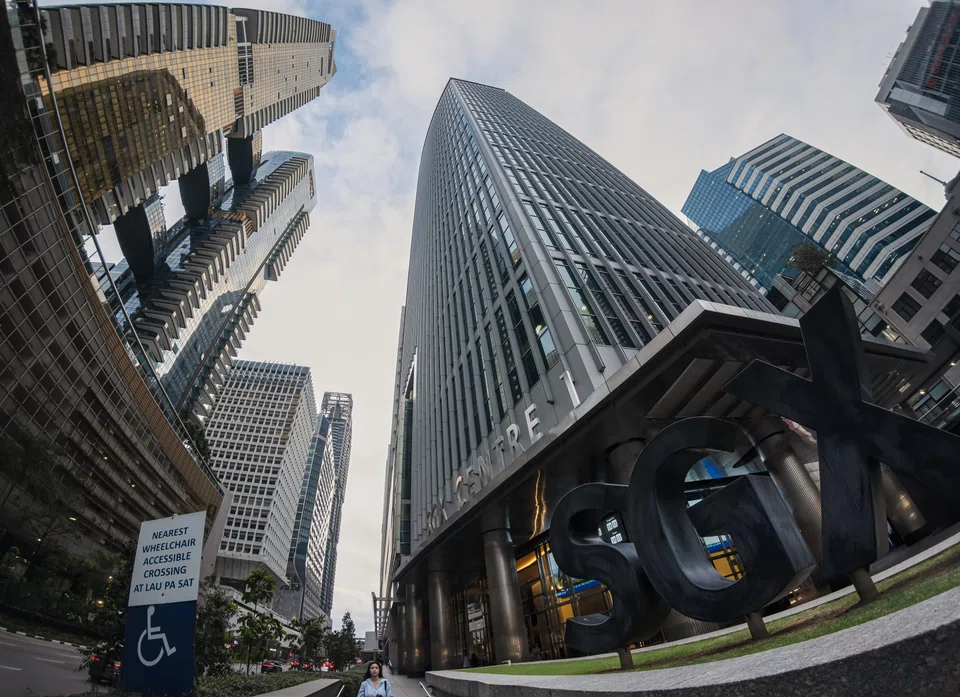
[SINGAPORE] After all the effort that has gone into engineering the Singapore Exchange’s (SGX) dual-listing bridge with Nasdaq, the first few companies that debut on the Global Listing Board (GLB) will be under tremendous pressure to deliver a strong performance.
A poor post-listing showing would not just be bad news for shareholders of these companies, it might also be even worse news for SGX, as it could result in the GLB being compared to the last big initiative to draw exciting new listings to Singapore: the special-purpose acquisition companies (Spacs).
SGX gave Spacs the nod in 2021, to catch the wave of hot companies that were tapping these vehicles to list quickly and with greater certainty. Among the companies that took this route to market in the US were Richard Branson’s Virgin Galactic and Singapore’s own Grab.
By the time Spacs actually made it to the Singapore market, however, enthusiasm for them was waning. Of the three that listed, only Vertex Technology Acquisition Corp (VTAC) made it to a business combination.
Unfortunately, the company that VTAC swallowed – live-streaming platform 17Live , a portfolio company of Vertex Ventures – has not performed well enough to justify its valuation of S$1.2 billion at the time of the deal.
After the combination, 17Live’s share price fell from S$3.15 on Dec 8, 2023. It hit a low of S$0.47 in July 2024, a far cry from S$4.35 on Nov 24, 2023 – just before the combination was approved by shareholders.
For 2025, 17Live reported a 16.8 per cent fall in revenue to US$158.8 million, as losses narrowed to US$924,000 from a loss of US$3.3 million in 2024. Its shares closed at S$0.83 on Tuesday (Jun 9), putting its market capitalisation at S$145.4 million.
What lessons can be drawn from the Spacs experience? What more can be done to ensure GLB succeeds?
Spacs and investor interest
The post-listing financial performance of 17Live was certainly not helped by its failure to quickly garner a strong investor following when it hit the market.
Close to two-thirds of VTAC’s shareholders opted to redeem their share capital rather than remain as investors after the combination. This had a cascading effect on 17Live, leaving it with reduced financial resources to scale and strengthen its live-streaming business by attracting and retaining popular personalities on its platform.
To be sure, the inability of 17Live to draw investor interest from the outset was itself a reflection of its less-than-impressive business profile.
The company said it had locked in live-streamers on contracts, with the platform having about 550,000 monthly active users in the first half of 2023. Compare this with live-streaming giant Twitch – which is owned by Nasdaq-listed Amazon – which has more than 105 million monthly visitors on average.
In the first half of 2023, Twitch had more concurrent viewers each month than the average monthly users that 17Live had in the same period. Twitch also has a much wider global reach than 17Live, which is focused on key markets of Taiwan and Japan.
Furthermore, 17Live may have been hampered by negative perceptions related to its attempt to list on the New York Stock Exchange in 2018 as M17 Entertainment. The company withdrew the listing plan after an investor failed a know-your-customer check, Tech In Asia reported.
Different times
Unlike the Spacs, however, the GLB does not put SGX in competition with Nasdaq for hot new listings.
Under the scheme, companies will be able to simultaneously list on Nasdaq and SGX with a single set of listing documents, enabling them to secure a strong valuation in the US market while remaining accessible to investors in Singapore.
The minimum S$2 billion market capitalisation requirement could also help preclude many companies from listing before they are ready to develop a strong analyst and investor following.
To ensure the scheme works, SGX is harmonising the GLB’s listing rules with those of Nasdaq. Whereas with Spacs, SGX had tried to address risks posed by the structure, by putting in place a framework to reduce excessive dilution and the rush by sponsors to “de-Spac”.
Meanwhile, local market sentiment has been primed by initiatives such as the S$6.5 billion Equity Market Development Programme, and the S$30 million Value Unlock scheme.
The recent June reviews of the Straits Times Index and the iEdge Singapore Next 50 Index have shown double-digit total returns for the period between January and May 2026.
Big stakes, bigger reward
Still, the stakes are high for SGX. Even as Spacs have seen a resurgence in the US, there seems to be no such revival here. Investors and sponsors are understandably wary after 17Live’s weak performance.
SGX should do everything it can to ensure that confidence in the GLB initiative is not similarly tainted. While overvaluation and price volatility are unavoidable, it should try to ensure that the companies coming to the Singapore market via the GLB are relevant to local investors and have ambitions to become global giants.
Grab – a company that could arguably have been a good candidate for the dual-listing bridge – debuted on Nasdaq in 2021 by combining itself with Altimeter Growth Corp at a valuation of US$40 billion.
While its current market capitalisation is only US$13.6 billion, it is still among the 10 largest components of the MSCI Singapore Index.
By many accounts, there is strong interest among companies to use the GLB to dual-list on SGX and Nasdaq. It is crucial that the first few out of the gate sustain that interest.
TRENDING NOW

Malaysian king buys stake in Singapore-listed mining firm expanding into rare earths

Family offices ‘kept captive’ by relationship managers turn to independent advisers, direct deals

Once staunchly pro-China, Malaysian Chinese businesses are now distancing themselves from Beijing

Could stablecoins be the future of money?

