SIA’s 420,000 discounted tickets may wow holidaymakers but investors are likely to stay grounded

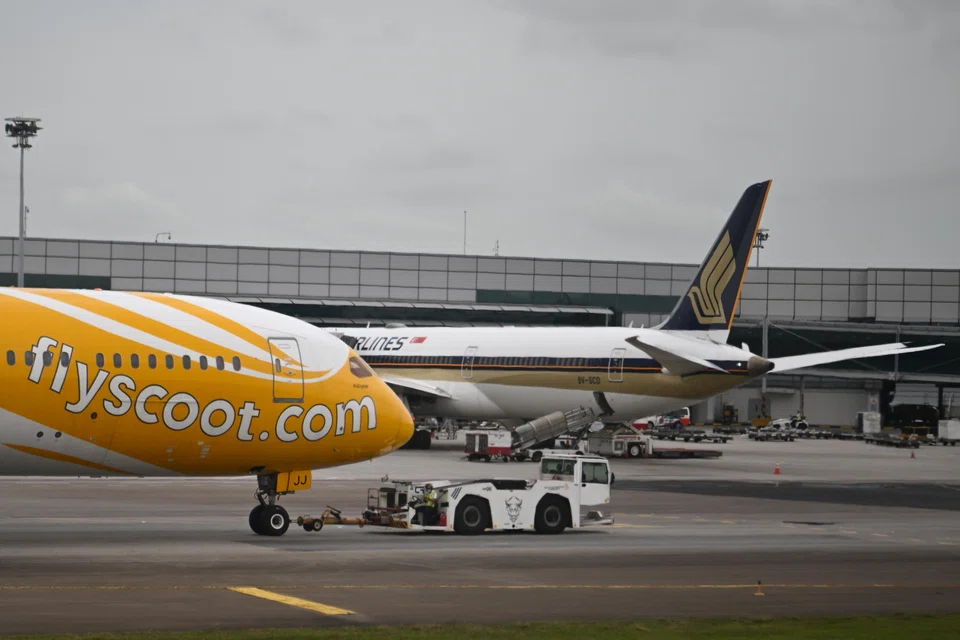
THE offering of more than 420,000 discounted air tickets by the (SIA) group at its upcoming travel fair might excite holidaymakers, but investors need not get carried away by the move because it is unlikely to move the needle on the airline’s financials.
To be sure, SIA and its low-cost carrier Scoot have not announced the magnitude of the discounts, or the specific destinations for the discounted tickets.
But the number of tickets is unprecedented. SIA itself will make available more than 200,000 business class, premium-economy class and economy class round-trip tickets from Singapore to 78 global destinations.
Some 220,000 ScootPlus and economy-class one-way tickets to 57 destinations will be offered by Scoot at the travel fair.
The discounted tickets will be available through its digital platforms, travel agents and at the Time To Fly fair at Suntec City from Oct 25 to 27.
Indeed, SIA’s chief commercial officer Lee Lik Hsin had said that this year’s edition of the fair is the group’s largest yet.
In total, the crop of discounted tickets to be offered this year by SIA and Scoot is about 13.5 per cent more than last year. SIA is offering about 30,000 more discounted tickets than in 2023, nearly 20 per cent more; Scoot is offering some 20,000 more tickets, which works out to an increase of about 10 per cent.
Last year, an analyst had noted that the bonanza accounted for only about 1 per cent of SIA’s annual sales.
This year’s offering should also be read in the context of higher capacity by the group in 2025.
Financial literacy website Beansprout told The Business Times that it is unable to ascertain the impact of this year’s discounted offering on SIA group’s yields, given that the discount quantum has not been announced.
SIA and Scoot hope to lock in some base loads for their seats through the travel fair, Beansprout noted, so that they would be able to price the remaining seats at better yields, closer to market rates.
“This is somewhat similar to the bigger hotels. This base load also allows resource planning. I think it is a tactical move that most airlines employ,” Beansprout said.
The load factor – defined as the percentage of available seating capacity filled by paying passengers – at SIA and Scoot has been falling year on year since December 2023. The declines in the airline group’s load factor ranged from 0.3 to 4.2 percentage points during this period.
If SIA and Scoot are able to get firmer rates on the remaining seats, it may offset the discounts offered at the travel fair, in Beansprout’s view.
In addition, it cannot hurt SIA’s image to be rolling out discounted tickets to its local home base of passengers. An oft-heard complaint these days is that the national carrier’s tickets cost more than those of its competitors’. Such a move is likely to be popular among those shopping around for a trip overseas.
SIA had earlier warned that increasing capacity from competitors will put downward pressure on yields.
Passenger yields were 6 per cent lower year on year for the first quarter of FY2025 to June for SIA and Scoot. The carrier group will release its yields and financial results for the second quarter on Nov 8.
In any case, SIA did not appear to expect the discounted ticket bonanza to be market-moving, given that it was announced before market close on Oct 9.
The counter closed 0.2 per cent or S$0.01 lower at S$6.49 on that day. In comparison, the benchmark Straits Times Index rose 0.6 per cent.
Meanwhile, SIA has become the top shorted counter in Singapore with short interest amounting to 6.7 per cent as at Oct 4, S&P Global Market Intelligence data showed. Short interest is defined as the percentage of outstanding shares on loan.
In the year to date, the shares of SIA have fallen 2.6 per cent; they closed at S$6.39 on Tuesday (Oct 15). With dividends reinvested, the counter has generated a total return of 3.3 per cent – falling short of the STI’s year-to-date total return of 11 per cent.