Singapore is bracing itself for a super-ageing society
The special bonuses for nurses in the city-state are a nod to big population challenges confronting Asia
NEVER mind the legions of imported bankers, engineers, stevedores and nannies. Singapore’s attraction for these pillars of a successful hub is well documented. However, it obscures the country’s shifting labour needs.
The next front in the battle to recruit and retain talent doesn’t target elite brains or sweaty brawn, but reflects its profile as a rapidly ageing society. The new hot commodity is healthcare.
Singapore’s punishing demography, and the need to address it, was underscored on Wednesday (Feb 28) when a minister revealed that a key measure of fertility had tumbled to yet another record low.
Japan and South Korea are the poster children for this type of decline – rich economies that aren’t churning out enough kids, even as the ranks of seniors multiply. More recently, China’s dwindling population added to the gloom surrounding the former juggernaut. Singapore gives it a run for its money.
Unlike China, Singapore grew rich before becoming old. And setting the city-state apart from Tokyo and Seoul has been its longstanding policy of topping up local headcount with workers from abroad, workers whose skills the island could use. While this approach has always had caveats, and has ebbed and flowed with domestic politics, seldom has it been more valuable.
When the government announced special retention payments for nurses last week, it had two objectives – to acknowledge the vital work done during the pandemic, and to prevent people from leaving for more lucrative opportunities.
The payouts of up to S$100,000, staggered over 20 years, were also a nod to a broader challenge.
Asia’s rapidly greying population
While a young workforce was a huge boost to development generations ago, Asia is greying quickly, and having more than two children counts as a large family. Critically, the pay boost was open to foreign nurses already employed in Singapore, depending on the length of time spent in the country. Many of them are from the Philippines.
The city-state is no stranger to existential struggles. The journey from an impoverished backwater in the 1960s to one of the richest nations on earth is among the Republic’s main narratives. Top ministers often evoke a sense of struggle against the odds when trying to get citizens to focus on big hurdles. The demands of an ageing society and efforts to boost the birth rate have been getting much attention lately.
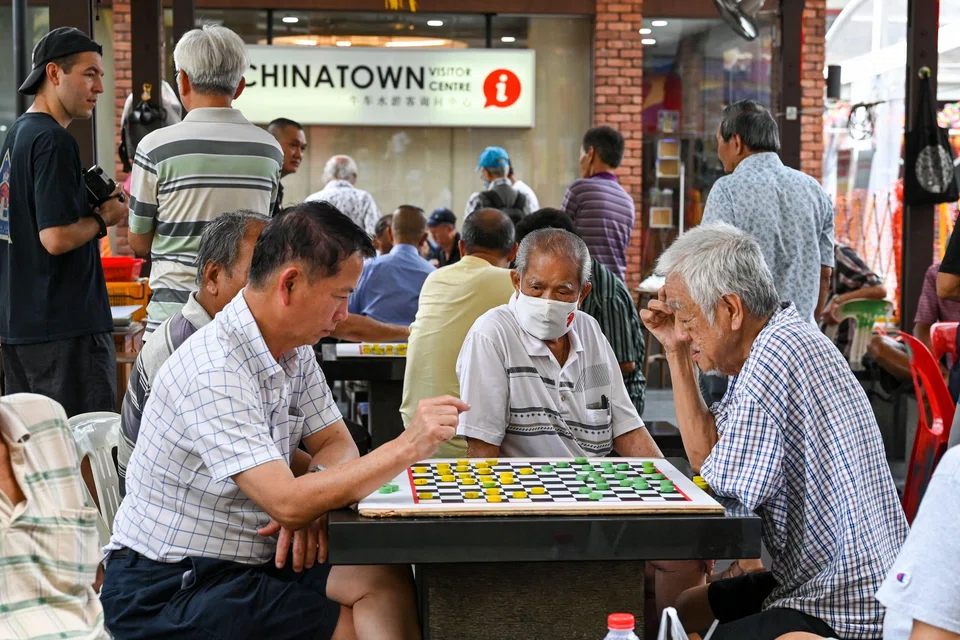
By 2030, the government projects that almost a quarter of the population will be 65 or over. It makes perfect sense to reduce dependence on income tax. And consumption tax rates have been rising the past few years; the goods and services tax was raised to 9 per cent in January. Contributions to the Central Provident Fund were lifted for those aged between 55 and 65.
“We are an aged society; soon we will be a super-aged society,” Prime Minister Lee Hsien Loong said at last year’s National Day Rally. “This has massive social and economic implications. We have much to do to help our seniors age well.”
There is a gentler side, too. The state regularly dangles incentives on couples to get busy. Paid paternity leave was extended to four weeks. The budget for the fiscal year beginning April, unveiled last week, included subsidies for Singaporeans aged 40 and older to get a diploma or enrol in undergraduate programmes. One great initiative that was rolled out in 2022 were posters, featuring kindly looking cartoon giraffes, at subway stations promoting dementia go-to places.
The financial incentives for nurses also touched another nerve in East Asia’s jobs market. The Philippines, which sends most of its nurses abroad, wants to keep them closer to home. But while several efforts are underway to improve their pay and benefits, they can’t compete with the lure of significantly higher salaries overseas. At the peak of the pandemic, the Philippine government banned nurses from departing.
During a reporting trip last year, I met several nursing students and faculty at Manila Central University. All remarked on aggressive recruitment campaigns from foreign hospitals, including those in Singapore. For some, the ability to make a home and bring family with them determined which way they would jump. Others were candid about purely financial incentives.
In Singapore, nurse Herrera Jacqelene Kaye Zubieto said the government’s payouts made the difference between putting down roots or venturing further afield, possibly to the UK. “If there was a chance to go overseas, I think I would have gone,” she told The Straits Times. “But now, with this news, I’m glad to stay here in Singapore.”
Strains in the labour market aren’t limited to Singapore. South Korea, where the total fertility rate plummeted to an all-time low of 0.72 last year, faces industrial disruption. Trainee doctors walked off the job last week to protest plans to dramatically raise the intake in medical schools.
The country has a chronic shortage of physicians, as it does of people, generally. (A fertility rate of 2.1 is the level at which a population naturally replenishes itself. Singapore’s rate fell to 0.97 last year, according to a preliminary estimate.)
To some extent, Singapore is a victim of its own success. Family-planning posters from the 1970s on display at the national museum urged couples to stop at two kids. Incentives were doled out to put a brake on reproduction.
The approach worked too well, as it did in South Korea, where leaders saw smaller families as a way to eradicate poverty after the Korean War. Prosperity also tends to bring smaller households, regardless of location.
An ageing planet is bringing a recalibration of what work is valued and why. Sure, robots and artificial intelligence will carry some of the load. Currency traders and technology executives are all well and good. What they won’t do is care for the growing ranks of the elderly or the precious few arrivals in maternity wards.
The next chapter in the Singapore story is being written, and it’s carrying a clipboard.