

Space race tightening for the spoils of the moon
Estimates put the current space economy at about US$600 billion
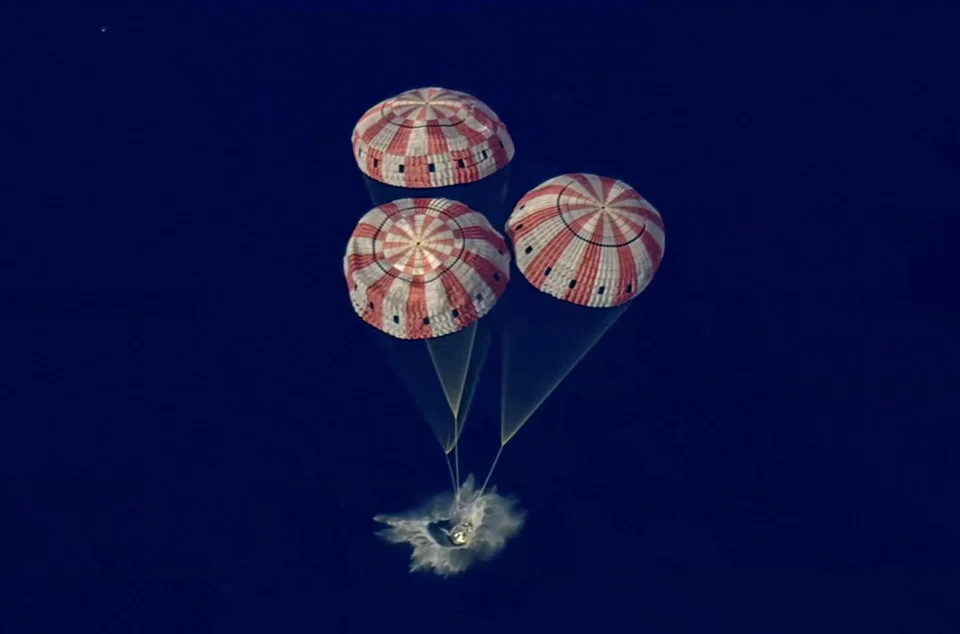

THE successful 10-day Artemis II mission earlier this month, in which the Orion spacecraft went around the dark side of the moon, marks another event in the tightening space race between the US and China.
It was America’s first successful moon mission since the Apollo series in the 1970s.
Beijing is pushing ahead with its own plans to set up an unmanned research base station on the moon by next year, eight years earlier than previously scheduled.
So why are they racing to the moon?
Apart from the prestige of pulling off such a feat, there is a lot of money to be made in satellite manufacturing and launching, as well as in exploiting the resources of the moon itself. Estimates put the current space economy at about US$600 billion. Of course, there is more at stake than just money.
Up until a few years ago, China’s space programme was conducted at its own pace with Beijing saying that they were not interested in a race with the US.
Since then, upheavals in the international political order have China working together with Russia on space ventures because both Moscow and Beijing fear that Washington is about to take and hold on parts of the Moon’s surface as its own national territory.
In support of this contention, they point to the Artemis Accords that is supposed to set the rules for all future space exploration. The articles will allow governments (and private companies) to protect their facilities by setting up safety zones that forbid the entry of others.
Such zones are meant to be “ultimately” temporary. But then who gets to decide the duration of “temporary” in the circumstances?
Both Beijing and Moscow oppose the accords on the grounds that it violates existing space treaties, including the 1984 UN Moon Agreement which holds that the “moon and its natural resources are the common heritage of humankind and that an international regime should be established to govern the exploitation of such resources when such exploitation is about to become feasible”.
Washington’s next step in the quest to return to the moon is the Artemis 3 mission next year.
In the meantime, two spacecraft are scheduled for launch this year to land somewhere near the rim of Shackleton Crater, near the moon’s south pole that has an immense reservoir of water ice.
The Endurance spacecraft, built by Jeff Bezos’ space company Blue Origin, will become the largest lunar lander in history. Elon Musk hopes to raise well over US$1 trillion from his SpaceX initial public offering for his own quest. China’s Chang’e 7 mission will feature a smaller lander, but the project also includes an orbiter, a rover and a hopper drone to scout for hidden ice deposits.
The US, China and Russia are all planning permanent bases on the moon. Americans and the Chinese are focused on going to the moon and, later, to Mars. The Russians seem to be reviving their interest in Venus.
As has been noted, great powers will always pit themselves against the other and find ways to trip up each other.
In the end, it won’t matter what earthly rules say. The party that can take hold and defend that territory will get ownership.
Just as well then that this contest will take place well away from Earth. There is enough strife on this planet as it is.
TRENDING NOW

LTA proposes combining car COE categories, adding rebate-surcharge system

StarHub to acquire MyRepublic’s mobile business amid ongoing telco consolidation

DBS, OCBC, UOB rout lops billions off STI as inflation, rate concerns spook investors

Grab CEO’s wife Chloe Tong on life with Anthony Tan and finding her purpose

