
The world economy is in the shadow of war, and the warning signs are flashing
Global growth is now projected to slow to 3.1% in 2026 and 3.2% in 2027
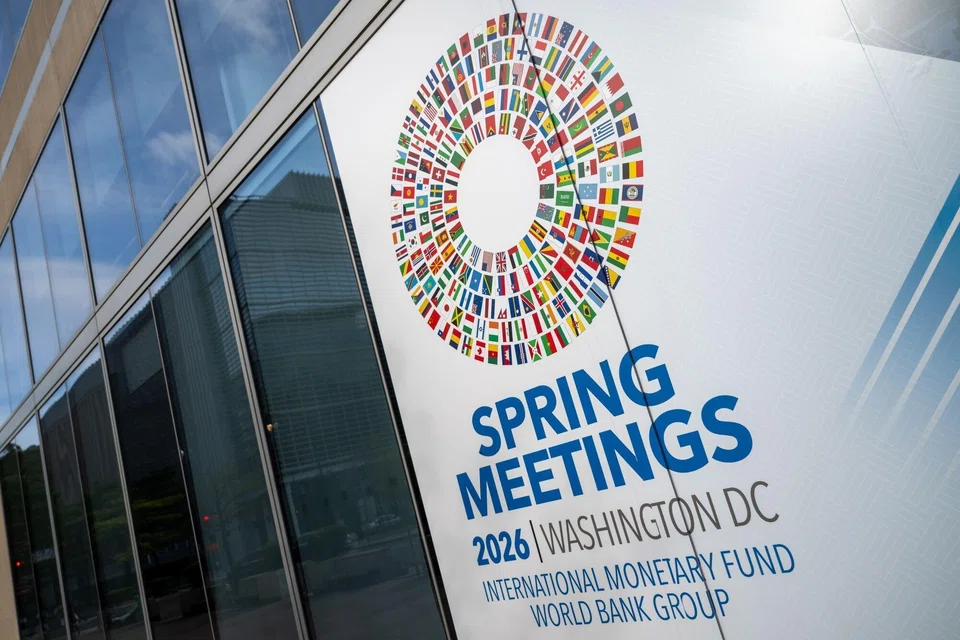
EVERY spring, the International Monetary Fund (IMF) gathers the world’s finance ministers and central bankers in Washington to take the planet’s economic pulse. This year, the diagnosis is deeply sobering.
The IMF’s two flagship Spring 2026 reports, the World Economic Outlook and the Global Financial Stability Report, paint a picture of a global economy that was finally finding its footing, only to be knocked back again by the outbreak of war in the Middle East.
The title of this year’s World Economic Outlook says it all: “Global Economy in the Shadow of War”.
A recovery interrupted
For the past two years, the global economy had shown surprising resilience. Inflation was cooling. Interest rates were edging downwards. Technology investment, especially in artificial intelligence, was providing a genuine tailwind. Things were, cautiously, looking up.
Then, at the end of February 2026, conflict erupted again in the Middle East. The consequences were swift and far-reaching. Oil, gas and fertiliser costs have surged.
Traffic through the Strait of Hormuz, through which roughly 20 per cent of the world’s oil and liquefied natural gas supplies travel, has slowed significantly.
The IMF’s response was to downgrade its global growth forecast. Global growth is now projected to slow to 3.1 per cent in 2026 and 3.2 per cent in 2027, while global headline inflation is expected to rise modestly in 2026 before resuming its decline in 2027.
These may sound like small numbers, but consider the context: This is slower than the recent pace of about 3.4 per cent in 2024–25, and well below the historical average of 3.7 per cent recorded between 2000 and 2019.
In plain terms: The world is growing more slowly than it should be – and the gap between the economies that grow and those that do not is widening.
Who gets hurt the most?
Not everyone feels this pain equally. The IMF is unambiguous that the burdens fall hardest on those least able to bear them.
Countries in the conflict region face particularly sharp revisions. Iran, for instance, had its growth forecast cut by 7.2 percentage points, resulting in an expected contraction of 6.1 per cent. Saudi Arabia’s growth outlook was slashed from 4.5 per cent to 3.1 per cent.
Beyond the immediate conflict zone, slowdowns in growth and increases in inflation are expected to be particularly pronounced in emerging market and developing economies.
These are countries in Africa, Asia and Latin America that import energy and food, carry high levels of debt, and have limited fiscal cushioning to absorb shocks. For their populations, rising commodity prices do not mean higher petrol bills. They mean choosing between meals.
The IMF has updated its growth forecast for emerging market economies to 3.9 per cent for 2026, down from the 4.2 per cent estimated in January. That 0.3 percentage point difference might seem abstract, but it translates into real consequences: fewer jobs created, more poverty, less investment in health and education.
The financial system: calm on the surface, fragile underneath
The Global Financial Stability Report adds a second layer of concern. Markets have so far absorbed the shock of renewed conflict, including energy supply disruptions and a spike in oil prices, with surprising composure. Yet, the IMF’s central message is unambiguous: This resilience is real but fragile.
IMF financial counsellor Tobias Adrian put it starkly in his briefing: “Risks have increased. Markets are adjusting to the war in the Middle East with higher energy prices and renewed inflation concerns. All of this has pushed bond yields up and weighed on risk asset prices. While markets have been orderly to date, global financial conditions could tighten more if the conflict persisted.”
The worry is not just what is happening now, but what could be triggered. The IMF pointed to what it calls “amplification channels”, that is, hidden fault lines in the financial system that can turn a manageable shock into a crisis.
High sovereign debt, growing leverage outside the traditional banking system and shifts in market structure can expose vulnerabilities across bond markets, funding markets and risk assets.
One underappreciated risk involves the rise of non-bank financial institutions, hedge funds, exchange-traded funds (ETFs) and investment funds – which now account for more than half of global financial assets.
Hedge funds and investment funds react more strongly to shifts in global risk than other financial actors, with passive mutual funds and ETFs showing the greatest sensitivity within the investment fund sector.
When fear takes hold, these entities can pull money out of emerging markets rapidly, triggering a vicious cycle of currency crashes, higher borrowing costs and financial instability.
The danger of complacency
Perhaps the most unsettling aspect of both reports is the warning against false confidence. That financial markets have not yet panicked is not proof that things are fine, it may simply mean the full reckoning has not yet arrived.
Downside risks dominate, even after the realisation of a risk event. Geopolitical tensions could worsen even more than they already have, turning the situation into the largest energy crisis in modern times.
The IMF’s economists have modelled scenarios that range from manageable to genuinely alarming. Under an adverse scenario, growth could be constrained to 2.5 per cent; under the most severe scenario, it could fall to 2 per cent – levels historically associated with periods of global economic contraction.
What should be done?
The IMF is careful not to be alarmist, but it is insistent that the time for action is now, not after the situation deteriorates further.
For governments, the prescription is painful but necessary. Policies need to be agile, carefully managing the trade-offs involved in ramping up defence spending while laying the foundation for a sustained recovery.
Spending more on security while keeping debt under control and protecting the most vulnerable populations is a difficult balancing act, but there is no shortcut around it.
For central banks, the challenge is especially tricky.
Unlike the inflation surge of 2022, which was driven by excess demand, this is a supply shock.
The key difference this time is that demand was strong back in 2022; now, we are dealing with a supply shock – which is a different case entirely. Raising interest rates too aggressively risks tipping already-slowing economies into recession. But allowing inflation expectations to become unanchored would be even worse in the long run.
For the international community, the Global Financial Stability Report’s message is one of cooperation over isolation. International cooperation is essential to close regulatory gaps, limit the propagation of shocks and address data gaps that prevent regulators from seeing vulnerabilities in time.
The bottom line
The IMF’s spring 2026 reports are not a prophecy of doom. They are something more uncomfortable: a clear-eyed assessment of a world that allowed itself to believe the worst was behind it, only to find new crises waiting around the corner.
War has always been the great disruptor of economic progress. The human cost in the Middle East is, of course, immeasurably more important than any gross domestic product figure.
But the economic consequences, slower growth, higher inflation, tighter financial conditions and deeper hardship for the world’s poorest are themselves a form of suffering that spreads far beyond the conflict zone.



