

With Xi Jinping expected to remain top leader, China’s zero-Covid policy is here to stay
In mid-October, more than 2,000 Chinese Communist Party members are expected to congregate in Beijing to affirm Xi’s consolidation of power and his policies
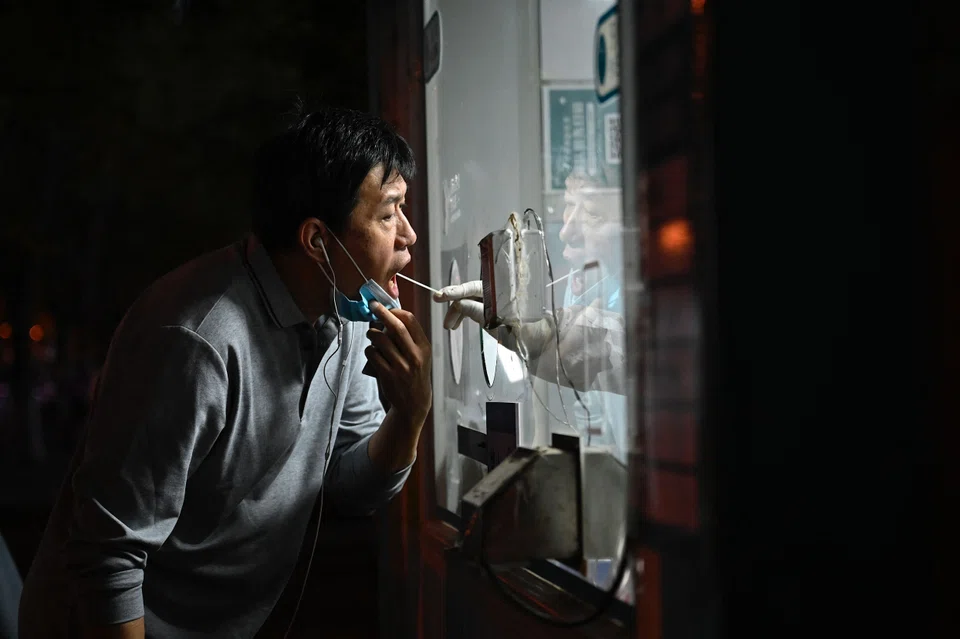
JUST over 2 weeks from now, Chinese President Xi Jinping is expected to take on an unprecedented third term as the most powerful leader of the world’s second-largest economy. That could mean that China’s controversial zero-Covid policy – Beijing’s pursuit to eliminate new infections – is likely to endure for a good part of 2023.
On Oct 16, more than 2,000 participants are expected to filter through Beijing’s Great Hall of the People to attend the week-long 20th National Congress of the Chinese Communist Party.
During the meetings, the delegates are asked to show approval for the party’s next slate of leadership, including a third 5-year term for Xi. Since the 1990s, China’s presidents have only served a maximum of 2 terms.
“The Party Congress is less about concrete policy, more about laying out party priorities,” Valarie Tan, analyst at the Berlin-based Mercator Institute for China Studies (Merics), told The Business Times.
“Xi has on more than 1 occasion insisted that China’s zero-Covid policy is correct and effective. To backtrack on the policy now is equivalent to admitting that it is no longer effective.”
Politics aside, there are epidemiological reasons for Beijing’s refusal to ease on zero-Covid, including low vaccination rates among the elderly and the central government’s insistence on using more conventional forms of vaccines such as Sinovac and Sinopharm. These kinds of vaccines are seen as less effective than the mRNA vaccines on which many economies around the world have relied on in their reopening.
The earliest window for Beijing to ease Covid restrictions would be the summer of 2023, said Alfred Wu, associate professor and assistant dean for research at the National University of Singapore’s Lee Kuan Yew School of Public Policy.
“Summer is better for disease control, whereas infectious diseases could be much more severe in winter,” he said.
A prolonged state of Covid-related lockdowns and movement curbs in China is likely to disappoint anyone who is hoping that China’s economy can get back up again. It only eked out year-on-year growth of 0.4 per cent in the second quarter.
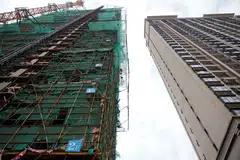

“It’s a huge impact on consumption. It doesn’t help the real estate sector too, because it drags down home sales,” said Alicia Garcia-Herrero, chief economist for Asia-Pacific at investment bank Natixis. China’s property sector contributes about a third to its gross domestic product.
“We’re estimating China’s growth rate this year to be about 3 per cent. It could have been 4.5, even 5 per cent, without Covid policies,” she added.
Some experts expect that Beijing’s zero-Covid focus could dampen China’s service sector growth and human capital development, which would prevent China’s economy from moving further up the global value chain.
“An exit from the zero-Covid policy could allow the country to work more constructively on freeing itself from the status of being a production-heavy economy. Relying on goods exports as a growth driver in the coming years is not advisable, even more so in times of looming global recession,” said Tariq Kamal Chaudhry, economist and risk researcher at Hamburg Commercial Bank.
Just as Xi’s expected third term in power is unlikely to bring a shift in Beijing’s zero-Covid policy, observers do not foresee the relaxation of other harsh policies that have defined Xi’s leadership.
China is likely to continue keeping a close eye on its burgeoning tech sector, which has produced the likes of TikTok, WeChat, and Taobao. This scrutiny is even more warranted at a time when China’s relationship with the United States is getting shakier.
The Biden administration has moved to limit American investments in Chinese technology firms and threatened to delist Chinese tech giants from American stock exchanges.
Xi’s government has in turn warned Chinese tech companies looking to list overseas to be mindful of data security, and encouraged the tech sector to beef up China’s capabilities in semiconductor chip production and precision engineering. Said Natixis’ Garcia-Herrero: “Any self-reliance strategy needs to deal with tech companies.”
Xi’s efforts to tackle corruption are also expected to continue. Without a central agency tasked with weeding out corruption among government officials – akin to Singapore’s Corrupt Practices Investigation Bureau or Hong Kong’s Independent Commission Against Corruption – the central government remains in charge of ensuring that its officials stay clean.
But Prof Wu observed: “If they want to achieve greater success on this front, they have to set up a permanent agency or watchdog, and set up best practices.”
With the congress focused squarely on the party’s new leadership, one big question is who the next premier – often seen as China’s economic and social czar – will be. Current Premier Li Keqiang is expected to retire in March.
Premiership is a key role in the party’s Politburo Standing Committee (PSC), which currently has 7 members and sits at the highest echelons of China’s political machinery. Front runners for the premiership include Wang Yang, 67, who sits on the committee; Hu Chunhua, 59, a vice-premier; and Li Qiang, 63, the current Party Committee Secretary of Shanghai.
“Hu may have an advantage over Wang in that he is younger and can possibly serve for 2 terms, whereas Wang, due to his age, can only serve 1,” Tan of Merics said, referring to the unspoken rule of “7 up, 8 down,” where a PSC member is expected to retire at the age of 68, but can remain if he or she is 67 or younger.
However, Li may yet emerge victorious despite Shanghai’s recent controversial lockdown. Said Tan: “Li’s close ties with Xi nevertheless put him as front runner for premier.”
Decoding Asia newsletter: your guide to navigating Asia in a new global order. Sign up here to get Decoding Asia newsletter. Delivered to your inbox. Free.
Share with us your feedback on BT's products and services
TRENDING NOW

First Resources blames El Nino, outside fires for Kalimantan hotspots amid haze scrutiny

High Court rules against Julius Baer’s Singapore trust arm in US$50 million family trust dispute

Singapore key exports jump by higher-than-expected 68.4% in September, led by non-electronics

MSCI proposes standalone status for Indonesia; Jakarta stocks plunge 8%

