

For a competitive circular economy, Singapore should measure what matters
Recycling rates alone offer an incomplete picture of resource efficiency
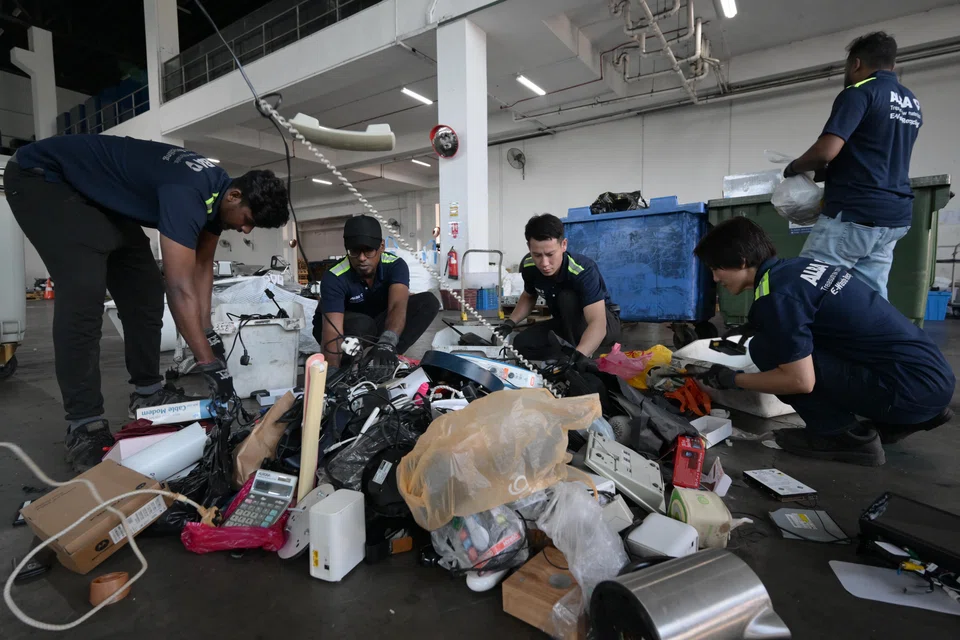
SINGAPORE recently announced that it would review its Zero Waste Masterplan, including how annual waste statistics should reflect progress in reducing, reusing, recycling and disposing of waste.
This is an opportunity to improve not only environmental reporting, but also the way policymakers and businesses assess resource efficiency.
Recycling rates are useful, but are an incomplete metric. They show how much material is recovered relative to waste generated, yet reveal little about the quality of that material, the energy needed to recover it or whether it can substitute for virgin feedstock.
For industry, those differences affect production costs, supply resilience and the commercial value of recycled inputs.
A tonne of clean aluminium cans is not equivalent to a tonne of mixed and contaminated packaging entering a sorting facility. The mixed, contaminated load requires more sorting, cleaning and processing, increasing cost and reducing productivity.
Treating both simply as tonnes collected does not capture major differences in economic performance.
The underlying reason is physical. Once materials are contaminated or combined, restoring them to a usable form requires work and energy. In industrial terms, better-organised waste streams can reduce processing burdens, energy use and material loss.
Manufacturers should care because the circular economy depends on reliable supplies of recycled feedstock.
Clean and consistent material streams are more likely to meet technical specifications, replace virgin materials and support higher-value production. Contaminated streams are more likely to be downcycled, require costly upgrading or be rejected.
Packaging companies also shape these outcomes.
Multilayer packaging, bonded materials and hard-to-remove components may improve a product’s performance during use, but they also raise costs of material recovery afterwards.
Designing packaging for efficient separation can reduce downstream processing requirements and improve the value of recovered material.
For investors and sustainability officers, reports of recycling rates present an incomplete picture. Two companies disclosing similar recycling rates by tonnage could achieve very different results.
One may recover high-grade material with modest energy use, while the other may rely on energy-intensive processing that produces lower-value output.
More useful indicators of resource efficiency
Singapore now has an opportunity to complement its existing recycling statistics with indicators that are more useful for business and policy decisions.
The first priority should be material outcomes.
Annual reporting could include the rejection rate for collected recyclables and, for major material streams, the proportion returned to manufacturing at an agreed grade or end use.
These measures would show whether recycling systems are producing commercially useful inputs rather than simply moving waste through facilities.
Energy should provide a second measure.
Where reliable data is available, reporting the energy used in collection, sorting and reprocessing, together with the energy avoided by replacing virgin production, would show whether recovery is delivering genuine improvements in resource productivity across the system.
These indicators would help policymakers compare collection systems, identify where infrastructure investment offers the greatest return, and design incentives that reward usable recovery rather than collection volume alone.
Manufacturers and investors would also have a clearer basis for evaluating recycled-content claims and circular-economy performance.
For Singapore, this has implications for industrial competitiveness.
A system that preserves material quality and reduces recovery energy can lower dependence on imported raw materials, improve the reliability of recycled feedstock and support more efficient manufacturing.
Better metrics could also help Singapore direct investment towards the technologies and systems that deliver the greatest economic and environmental value.
Ultimately, a circular economy should be judged not only by the amount of waste it diverts from disposal, but also by how effectively it converts discarded material into productive economic value.
By measuring that performance more precisely, Singapore can build a circular economy that is not only greener, but more resilient and competitive as well.
The writer is associate professor of mechanical design and manufacturing engineering at Newcastle University in Singapore
TRENDING NOW

DBS, OCBC, UOB rout lops billions off STI as inflation, rate concerns spook investors

Grab CEO’s wife Chloe Tong on life with Anthony Tan and finding her purpose

OCBC sheds S$8 billion in value as shares close nearly 6% down; analysts cautious on banks
Deal between tycoon friends sparks scrutiny of Philippine power sector

