Consider lowering homeownership barriers for some non-resident foreigners
Reduce ABSD rates for EP holders and expand HDB options for citizens with foreign non-resident spouses

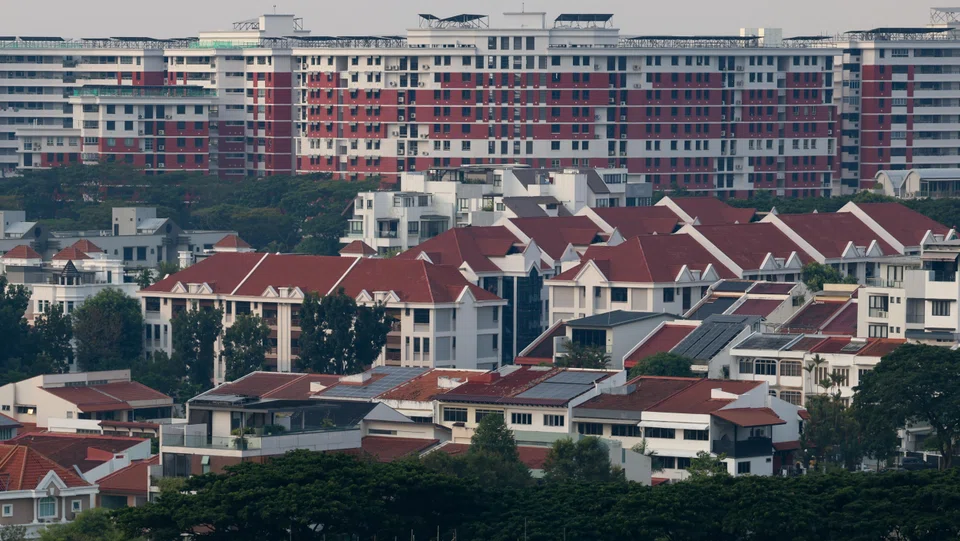
[SINGAPORE] Singapore has a high homeownership rate; about nine in 10 resident households own their homes.
However, people living and working here who are not Singapore citizens or permanent residents face huge obstacles when buying a home.
A non-PR foreigner buying any home pays 60 per cent additional buyer’s stamp duty (ABSD). ABSD does not apply to a citizen buying a first home, while a PR first homebuyer pays 5 per cent ABSD.
ABSD is paid in addition to buyer’s stamp duty, which is progressive and ranges from 1 to 6 per cent for homes.
The Republic is open to skilled foreign professionals; this enhances its attractiveness as a location for high value-add activities, and in turn supports better job opportunities for Singaporeans.
The Employment Pass (EP) allows foreign professionals, managers, executives and technicians to work here.
As at June 2026, there were 204,300 EP holders, up from 203,300 as at December 2025. Among the EP holders are people who have been living here for several years or more, and have not been able to secure PR status.
In perspective, a PR buying a first home for S$2 million pays ABSD of S$100,000, while an EP holder purchasing a home of similar value may have to pay ABSD of S$1.2 million.
Lower ABSD rates
Should transaction costs for EP holders buying homes here be lowered? Perhaps, for first home purchases, levy ABSD of 10 per cent on EP holders who have held such status for over three consecutive years.
Singapore is competing for high-quality foreign talent, especially in fast-growing or critical parts of the economy where there is a shortage of talent.
Letting an EP holder buy a home here without facing swingeing transaction costs could enhance the Republic’s attractiveness to skilled foreigners. And the stickiness from owning a home might better anchor EP holders to the country.
Moreover, it would appear fair for an EP holder – who has spent multiple years here – to not face far higher transaction costs than a PR, when buying a first home here for owner occupation.
Importantly, too, some non-PR foreigners buying a first home here for investment might not pay any ABSD.
Under respective free trade agreements (FTAs), nationals and PRs of Iceland, Liechtenstein, Norway and Switzerland as well as US nationals are accorded the same stamp duty treatment as Singapore citizens.
In short, a US citizen buying a first home here need not incur ABSD, for example.
Should EP holders from other countries pay much higher transaction taxes on first home purchases than nationals of the above countries with FTAs?
An EP holder who spends around S$6,000 a month in housing rent would incur about S$864,000 in rental expenses over 12 years. Using some or all of these funds to help buy a home here instead, should transaction costs not be punitive, can be enormously helpful to the said EP holder.
Over a 12-year period between Q3 2014 and Q3 2026, the Urban Redevelopment Authority’s property price index of private homes rose by about 50 per cent, while the rental index of private homes islandwide climbed by around 43 per cent.
HDB ownership restrictions
Another key difference in the housing market between PRs and non-PR foreigners is in Housing & Development Board (HDB) flat ownership.
For example, a couple comprising partners who have held PR status for at least three years can buy a HDB resale unclassified or standard flat, excluding 3Gen flats, whereas non-PR foreigner households cannot own HDB flats.
Consider allowing a couple, both EP holders, who have held such status for at least three years, to buy HDB resale unclassified or standard flats excluding 3Gen units. Perhaps, apply a resale levy to said EP holders when they sell their HDB units.
Having PR and other foreigner households live within HDB estates can possibly help such households better assimilate with Singaporeans.
Also, consider expanding public housing options for couples comprising a Singapore citizen and a non-PR foreigner.
Numerous Singapore citizens marry non-PR foreigners. In 2025, the number of marriages involving a citizen and a non-resident foreigner was 5,909. There were marriages involving a citizen and 4,189 non-resident brides, as well as 1,720 non-resident grooms.
Currently, subject to meeting various criteria, a couple comprising a Singapore citizen and a non-PR foreigner who holds a valid work pass or visit pass, and is hoping to buy a new HDB flat, is restricted to buying a two-room flexi unit.
In this case, the citizen looking to purchase a new HDB flat must be at least 35 years old. New HDB flats, unlike resale units, are sold at subsidised prices.
Possibly, lower the age requirement to buy a new HDB flat for a Singapore citizen who marries a non-resident foreigner spouse. Also, subject to meeting various criteria, let a couple comprising a citizen and a non-resident buy larger new HDB flats.
A larger two-room flexi flat is about half the size of a four-room flat. The former has one bedroom, while the latter has three bedrooms.
Rightly, housing policies here prioritise Singapore citizens over PRs and PRs over non-PR foreigners.
Indeed, a key perk for a rich foreigner becoming a Singaporean is the right to buy a home here cost-effectively. A newly minted citizen can buy a landed property including a detached house in a Good Class Bungalow Area. Ownership of landed homes, meanwhile, is generally restricted to Singapore citizens.
Hopefully, the Republic draws foreigners to become PRs and citizens, for reasons beyond just gaining Singapore citizenship or PR status which offers a cost-effective way to homeownership in safe haven Singapore.
Having foreigners who become Singaporeans because they treasure and contribute to the nation’s multiculturalism, social cohesion, rule of law, strong work ethic and economic dynamism among others would be great.
Meanwhile, let us be more welcoming to non-resident foreigners such as EP holders, and those who marry Singaporeans by easing homeownership barriers for EP holders, as well as couples comprising a citizen and a non-resident spouse.