Consumers still high on craft beer, but market is sobering up with belt tightening and closure of Archipelago, Trouble Brewing
Artisanal beer companies in Singapore also hit by surging malt costs and an overcrowded market

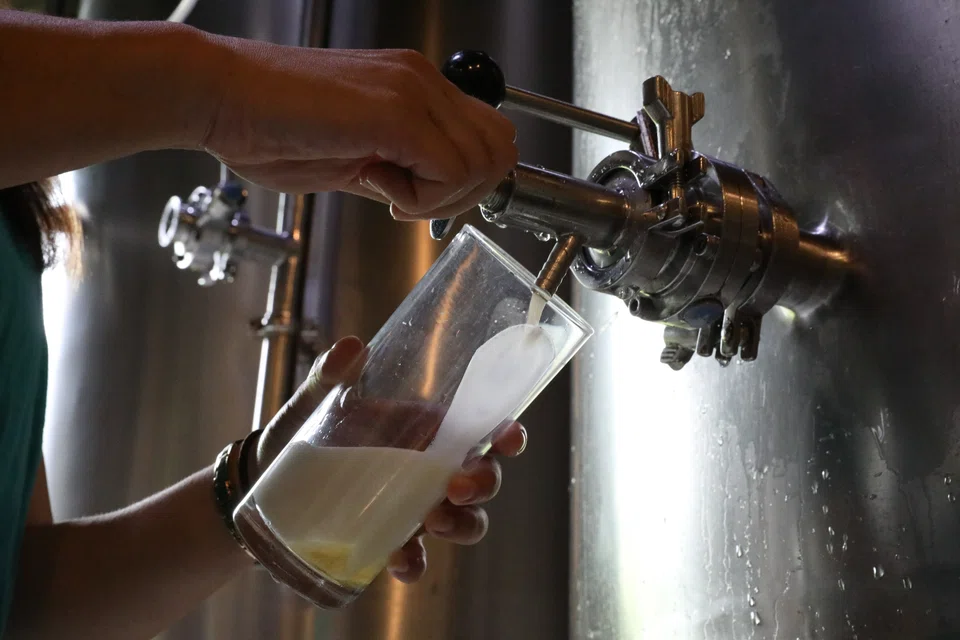
SINGAPORE’S beer drinkers are raising a toast to craft beer, as more consumers swap mass-market lagers for the nuanced flavours of artisanal brews.
Craft beer volumes and sales have generally risen year on year, with consumers increasingly turning to home-grown labels as their tipple of choice, industry players tell The Business Times.
Unlike other trends that surged during the pandemic but have since waned – such as bicycle sales or remote work arrangements – craft beer volumes have maintained momentum, they say.
However, concerns loom over market saturation in Singapore’s small beer industry, compounded by rising costs and tighter consumer budgets, which could hinder growth in the years ahead.
Steady growth
In the past year, some breweries have ceased operations. These include notable names like Archipelago Brewery, which closed in June, and Trouble Brewing, which posted an insolvency notice in September.
Archipelago, in particular, was a well-known name in the industry, owned by beer giant Asia Pacific Breweries Singapore.
Estimates vary, but industry players generally agree that Singapore is home to between 10 and 20 craft beer breweries, with the number of craft beer brands roughly double that.
Craft beer breweries are companies that own the equipment to brew their beer locally, while craft beer brands include these breweries, as well as those that outsource production to third-party brewers.
Despite the notable closures, consumption of craft beer in Singapore grew at a compound annual growth rate of 16 per cent from 2018 to 2023, reaching 4.2 million litres, says Nathanael Lim, insights manager at Euromonitor International, specialising in beverage products in Asia.
“This is due to the increase in availability of craft beer from local and foreign microbreweries, as well as craft beer festivals like Beerfest and Brewnanza Fest, which have increased consumer awareness,” he says.
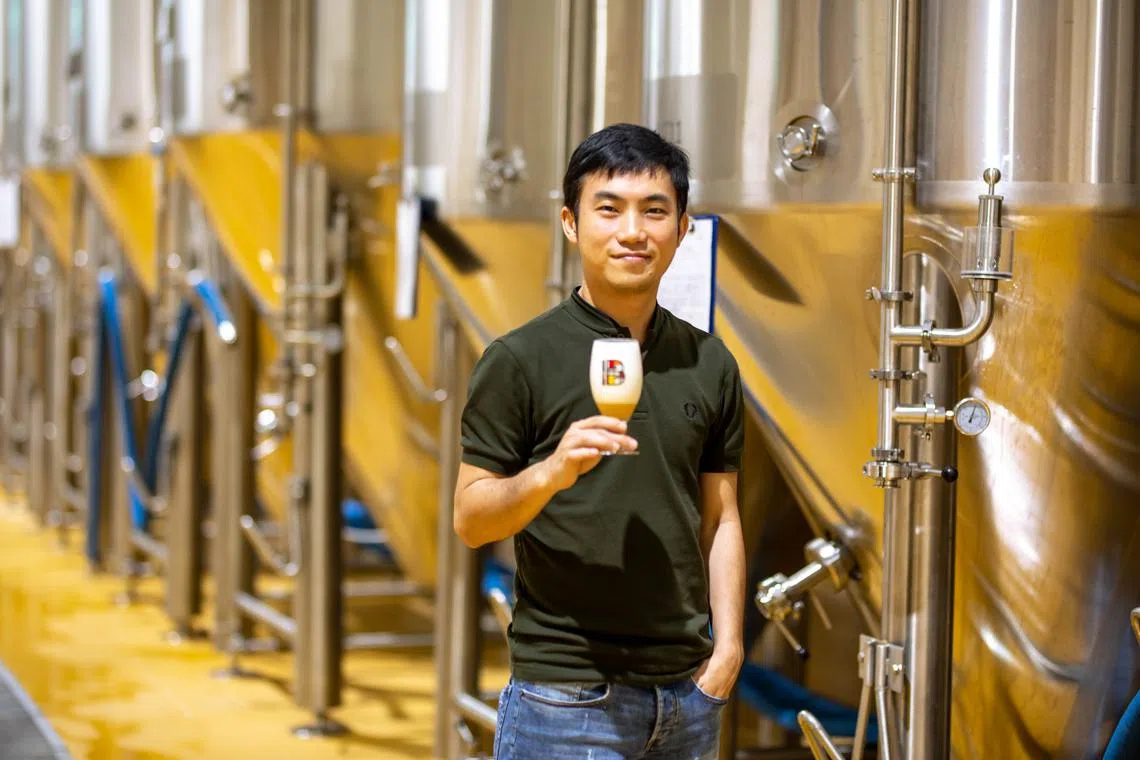
Clive Tan, founder and chief executive of Sunbird Brewing Company, notes he was “surprised” that sales in 2024 have outpaced the year-ago figure for the corresponding period. The company’s production volume is projected to reach approximately 60,000 litres this year, nearly twice that of the previous year.
“You get a lot of news – left, right and centre – of restaurants closing and how F&B is not doing well,” says Tan.
“When you hear this kind of news, everyone would say: ‘Oh, it’s doomsday’, because we rely a lot on F&B sales.”
But those same F&B operators are a key reason craft beer sales continue to thrive.
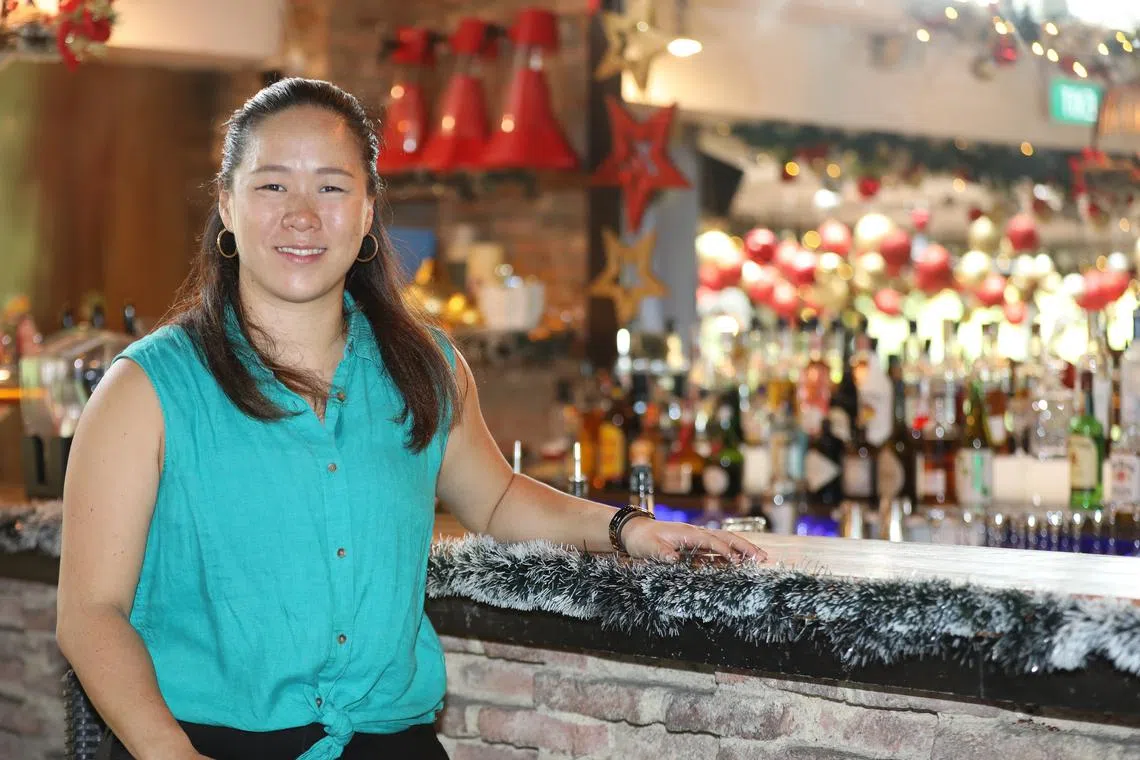
“There are more F&B operators that are opening or in the market now that want to embrace locally-made craft beers, which is driving my off-premise sales,” says Crystalla Huang, brewmaster of RedDot BrewHouse.
For craft brewery Brewerkz, which operates six restaurants in Singapore and two in Indonesia, production volumes are expected to remain flat following the closure of an outlet in October.
However, volumes are still up 30 per cent compared to pre-Covid levels, says Tan Wee Tuck, managing director of The Brewerkz Group.
Higher costs
But even as sales and production volumes rise, rising costs have significantly eroded the margins for the craft beer players left standing.
Over at Singapore’s largest craft beer producer, Brewlander, the cost of malted grains – a key ingredient in brewing beer – has gone up by 60 per cent over the past four years, notes its founder John Wei.
A tonne of malted grains which cost about £550 (S$933) in 2020 now costs roughly £880 a tonne.
“And at our scale, we are probably already purchasing these ingredients at a much better price than some of our peers,” Wei notes.
Depending on the type of beer produced, brewers generally require about 200 grams of malted grain to brew each litre of beer, estimates Sunbird’s Tan.
Malted grains, typically imported from grain-producing countries such as the UK, Germany, Australia and Ukraine, have become increasingly costly. Part of the reason for this surge is the ongoing Russia-Ukraine war, which has disrupted supplies, says Yeo Eng Kuang, co-founder and brewmaster of The 1925 Brewing Co.
“Ukraine supplies a large amount of malts to other parts of Europe, where they do the processing and prepare the malts for brewing purposes.
“And because of the war, a huge part of that supply was disrupted, which is why the prices went up. At the end of the day, malts make up 90 to 95 per cent of the ingredients in beer,” he adds.
Shipping costs have also risen sharply, adding further pressure to production expenses.
RedDot’s Huang adds that logistics costs have already gone up, and because everything needed by the brewers is imported, production costs have risen.
For Tan of Sunbird, who sources his malted grains from Australia, freight costs now account for about 15 per cent of the cost of each shipment – including the goods. This marks an increase from 10 to 11 per cent last year, he notes.
He attributes part of this increase to “a lot of congestion” at ports globally. Shipping companies sometimes pay extra to secure berthing slots to ensure timely deliveries.
“Sometimes, (the shippers) get back to us that they cannot get a slot, and we get delays of one to two months – that’s when we suffer the consequences,” he adds.
Tighter wallets

The premium pricing of craft beer, which supports the artisanal brewing process, could become a double-edged sword as consumers tighten their spending – a trend also observed across the F&B sector.
“The high cost of living has resulted in consumers becoming more price conscious, reducing their demand for craft beer, which is high in price,” says Euromonitor’s Lim. “Instead, they opt for mainstream beer, which is more affordable.”
Mainstream beers – referred to as commercial beers in industry parlance – continue to dominate Singapore’s beer market; well-known brands like Tiger, Heineken, Carlsberg and Guinness dominate the field.
“Times are tough for customers, and if you just received a pay cut or have just been retrenched, you won’t want to pay up to S$5 more for craft beer – as compared to commercial beer, which is still enjoyable,” says RedDot’s Huang.
She noted “a slight drop in consumption” among customers at the brewery’s restaurant in Dempsey Hill, though overall sales and volume growth were supported by demand from other F&B operators.
“When (customers) had more money, they would drink, maybe, three to five pints of beer. Now, with less money, they have maybe only two to three pints.”
More closures?
With the issues artisanal brewers face, is it likely that more will follow in the footsteps of Trouble Brewing and Archipelago Brewery?
Sunbird’s Tan, who was a brewer at Archipelago from 2016 to 2020, suggests that Archipelago’s closure was a commercial decision.
The 1925 Brewing Co’s Yeo agrees, saying: “I think it was more of a business decision, because Archipelago (owned by beer giant Asia Pacific Breweries Singapore) … was always part of a bigger machinery.
“That was (probably) more of a business decision than a case of: ‘Oh, craft beer is on the decline, therefore we shut it down’ – but that’s my personal point of view.”
Regardless, industry players expect the number of breweries and brands to shrink, as rising costs and Singapore’s small market will force an industry consolidation.
Says RedDot’s Huang: “I’m very lucky that we’re growing year on year, but the reality is that there are other breweries who are struggling.”
The number of craft beer brands in Singapore has gone up, relative to the pre-Covid years, with more than 30 now active, estimates Brewerkz’s Tan.
“My gut feel is that the craft beer market is definitely bigger now, but it’s spread over a lot more brands,” he says.
This increased presence, however, may lead to what Tan describes as the “natural order of things”, where more players are likely to shut down or be acquired by competitors in the years ahead.
“I would say, definitely, consolidation will happen,” agrees Brewlander’s Wei. As one of the larger players in the sector, the company “would not say no” to potential acquisition targets, though this would depend on the synergy to be reaped, he adds.
“We really need to look at how coming together makes both of us stronger, right? If it doesn’t, then this wouldn’t make sense.”