Crisis averted, but market gets wrong signals
DURING her testimony on Capitol Hill last week, Treasury Secretary Janet Yellen was asked by Republican Senator Bill Hagerty of Tennessee whether she was contemplating a unilateral government guarantee for all bank deposits, including those above the current US$250,000 limit for federal insured savings.
The Federal Deposit Insurance Corporation (FDIC) insures US$250,000 per depositor, per institution and for each account ownership category.
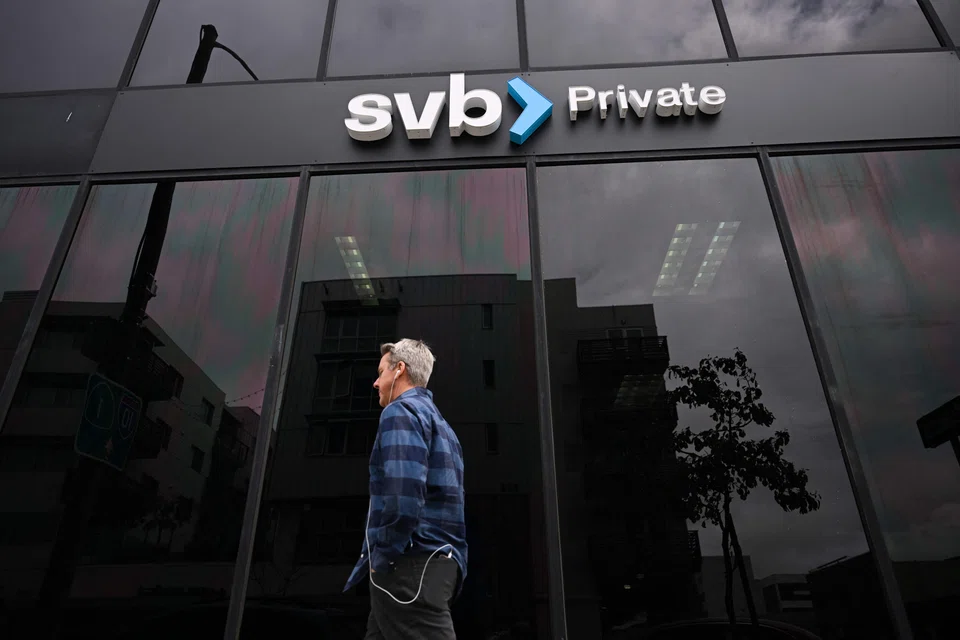
But after the recent collapse of Silicon Valley Bank (SVB), of Santa Clara, California, the second-largest bank failure in US history, the US Treasury, Federal Reserve and FDIC stepped in and said the government would back SVB’s deposits beyond the federally insured ceiling of US$250,000. They were addressing concerns around the fate of uninsured funds held at the country’s 16th-largest bank – which had US$209 billion in assets and more than US$175 billion in deposits.
Invoking a “systemic risk exception”, the announcement marked an extraordinary move, allowing financial regulators to step in without congressional action to rescue the bank’s corporate and startup clients. The action was aimed at calming the financial markets, by reassuring depositors that their money was safe.
But Senator Hagerty, like other lawmakers and market observers, was wondering whether the decision reflected a change in policy on the part of the government, by agreeing to expand the protection to practically all uninsured depositors, including in regional and small banks.
Secretary Yellen insisted the Biden administration would not go that far. “I have not considered or discussed anything having to do with blanket insurance to all banks,” she said.
Indeed, Yellen and Fed chairman Jerome Powell have spent recent days reassuring depositors that their money would be safe. They also said the government would prevent a broader banking crisis through emergency actions that respond to problems on a case-by-case basis. That included rescuing uninsured depositors at SVB, as well as at Signature Bank, and by setting up liquidity facilities to shore them up, but without changing the existing rules, a move that would require congressional approval.
But then, in another testimony before the House of Representatives, Yellen seemed to suggest that the administration could use the emergency tools again to prevent contagion. “Certainly, we would be prepared to take additional actions if needed,” she said, creating confusion about the government’s willingness to provide wider guarantees for uninsured accounts.
In a way, this confusion reflects the recognition that the role of the federal government as a lender of last resort (LOLR) has been part of an evolutionary process going back to the aftermath of the Great Depression. At the time, Washington had embraced the notion that the central bank needs to step in to backstop the financial system in order to prevent a panic-driven bank run.
The logic is simple: Operating based on the perception that the central bank is standing behind commercial lenders, depositors have less of an incentive to flee; that allows the financial system to overcome a potential crisis that dominated American banking in the 19th century.
The notion of the government as an LOLR, and the need for government intervention to prevent bank runs, became part of the reality of the American economy since the 1980s. Such was the case in the savings and loan crisis, and later on in the 1990s when the Fed came to the rescue of a troubled hedge fund.
Next came the huge government rescue plans this century, as trillions of US dollars were extended during the global financial crisis and the Covid-19 pandemic as loans and bailouts, to save thousands of financial institutions.
But the role of the government as an LOLR, which has continued to expand since 1929 – as demonstrated by the creation of numerous credit facilities for struggling banks – has been challenged by economists, who have warned about moral hazard. They argue that the expectations that the government would come to their rescue encourage irresponsible behaviour on the part of financial institutions and provide them with incentives to take risks, creating the seeds of the next crisis and bank run.
The government’s response to the SVB’s collapse, helping uninsured depositors avoid financial ruin, doesn’t amount to a major change in its policies.
But the move involved coming to the rescue of a bank that held illiquid, low-yielding assets while pursuing higher-risk businesses. As part of the rescue plan, the government ended up accepting government bonds at face value even though their market value has fallen, saving a bank that would otherwise be insolvent.
A bank run and an ensuing financial crisis may have been averted, but perhaps at a cost of sending the wrong signal to financial markets.