The dating game: Why a CapitaLand-Mapletree merger could turn into a marriage of inconvenience
A union of the two Temasek stalwarts would essentially bring together two different souls who have little cultural DNA in common

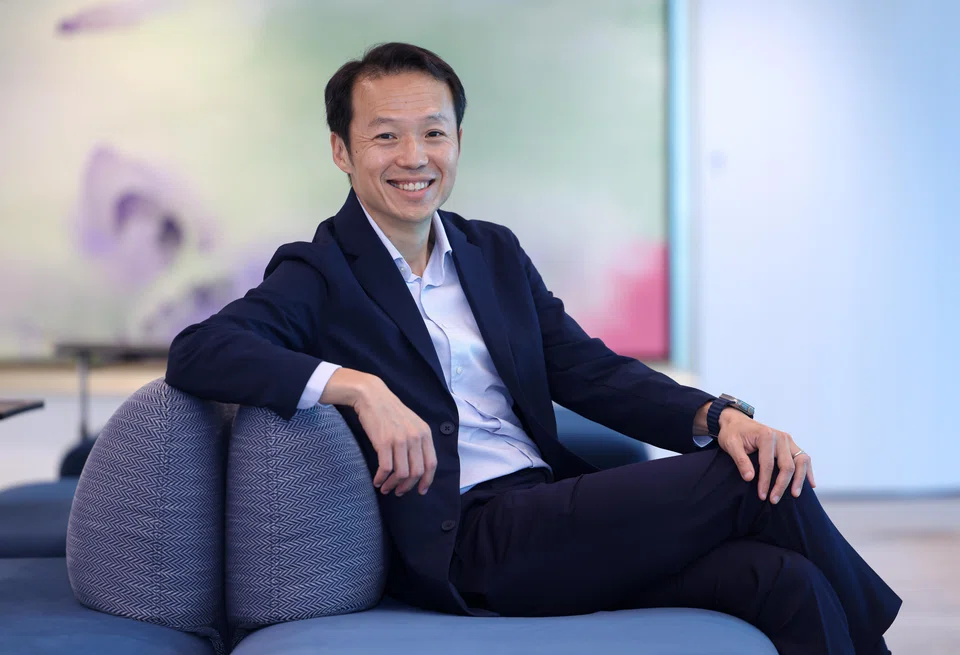
EVEN as the “China Dragon” breathed fire across the balance sheet of CapitaLand Investment (CLI) with a bruising S$142 million net loss for the second half-year ended Dec 31, 2025, group CEO Lee Chee Koon at the briefing last Wednesday (Feb 11) offered a metaphor more along romantic lines than one on corporate manoeuvring.
Fending off rising speculation about a mega-merger with Mapletree Investments, he said to a crowd of journalists and analysts: “It’s like dating.
“Sometimes you get married in a month, sometimes you take a few years, and sometimes when you are almost going to get married, you decide that you cannot (go through with it).”
While not naming Mapletree directly, his point was that any potential deal might take time and must make strategic sense.
The “dating” analogy might charm the gallery, but this particular marriage could end up more like a forced union of two very different souls.
Sure, the prospect of a S$200 billion real estate behemoth makes for a dazzling headline, but the reality for shareholders could be far less glamorous, at least in the near-term.
For Temasek, this is a strategic play to build a “global champion”.
It would certainly be in line with its T2030 strategy. The Singapore investment company – which holds a 54 per cent stake in CLI and wholly owns Mapletree – announced last August that it was sharpening its focus on its key portfolio segments and positioning itself for a new global environment.
But for the two companies involved, it is looking less and less like a match made in heaven.
On paper, the logic is as clean as Singapore’s reputation: Combine two Temasek stalwarts to create a S$200 billion global champion, just in time for the big Temasek reshuffle in April.
But such a marriage of convenience could end in a messy divorce of culture.
Forcing CLI’s agile, asset-light fund management DNA to bond with Mapletree’s more patient developer instincts may be akin to merging a Ferrari with a Mercedes.
Both are elite in their lanes, but together, they risk becoming a bloated behemoth that spends more time “navel-gazing” through internal restructuring than it does chasing yield in the 2026 recovery.
China asset drag
For one, the latest financial results from CLI have laid bare the sheer weight of the “China Dragon” – a structural drag that has fundamentally altered the narrative for any potential merger with Mapletree.
The results show a company living in two different worlds.
On the one hand, CLI’s “asset-light” engine is humming, and its core business is healthy and growing.
On the other, its physical China assets are pulling it under, with revaluation losses wiping out the bulk of its profits. And in this current market, it would be nearly impossible for CLI to divest these assets without booking a loss.
And the implications of these losses for a potential merger are significant.
Mapletree, too, has deep exposure to China. If the two combine their portfolios now, the new entity would hold a staggering amount of Chinese office and retail space at a time when valuations are still searching for a floor.
To mitigate the China drag, CLI is doubling down on a China-focused real estate investment trust (C-Reit) strategy.
By listing assets like Raffles City Shenzhen in local Chinese markets, CLI is trying to tap into onshore yuan liquidity in a market where investors have fewer global options.
However, these listings take time, and a merger would only increase the volume of assets needing this exit route.
Culture clash?
But the chatter is not just about the numbers; it is also about the names.
If CLI and Mapletree are to walk down the aisle, it would not merely be a merger of balance sheets; it would be the coming together of the most formidable, yet fundamentally different, leadership philosophies in Asian real estate.
Having spent the last half-decade aggressively rebranding itself as an asset-light investment manager, CLI’s culture is now built on the high-octane DNA of private equity – prioritising capital recycling, fee-income growth and global agility.
Mapletree, by contrast, remains the quintessential “developer-investor”. Its success is rooted in the “Five-Year Plan” mentality – a patient, disciplined approach to transforming industrial and logistics assets.
To merge the two entities would be akin to tying a sprinter to a marathoner in a three-legged race.
On one end of the table, there is Lee, the agile architect of CLI. On the other end sits veteran Hiew Yoon Khong, the steady hand who built the Mapletree empire from a local industrial landlord into a global powerhouse.
The merger of CLI and Mapletree would inevitably result in the departure of one of these giants. And losing either of these chieftains could well trigger a loss in investor confidence.
If CLI were to lose Lee, the market would immediately question the velocity of its transformation.
He is the face of CLI’s pivot from a “brick-and-mortar” developer to a global fund management powerhouse. His departure would leave a visionary vacuum – investors might fear a return to a slower, more traditional property model.
Hiew’s departure, on the other hand, would be about losing institutional ballast.
Now in his 60s, he has led Mapletree since 2003 and is credited for turning it into a reliable returns-generating machine for Temasek.
Indeed, if careful strategising does not take place, such a marriage might result in a bloated, distracted behemoth, and the market might conclude that staying single was the far more attractive option.
TRENDING NOW
Incidence of civil servants buying property near unannounced MRT stations ‘a concern’, but may not establish misconduct: PSD
Grab CEO’s wife Chloe Tong on life with Anthony Tan and finding her purpose
Income Insurance appoints former Manulife Singapore top man as new CEO
HDB reviewing ‘jumbo’ flat scheme after Telok Blangah unit listed for sale at S$2.18m