

Deals over principles: Trump’s China gambit in the shadow of Iran
Can the two great powers arrive at an agreement at the upcoming bilateral summit in Beijing?
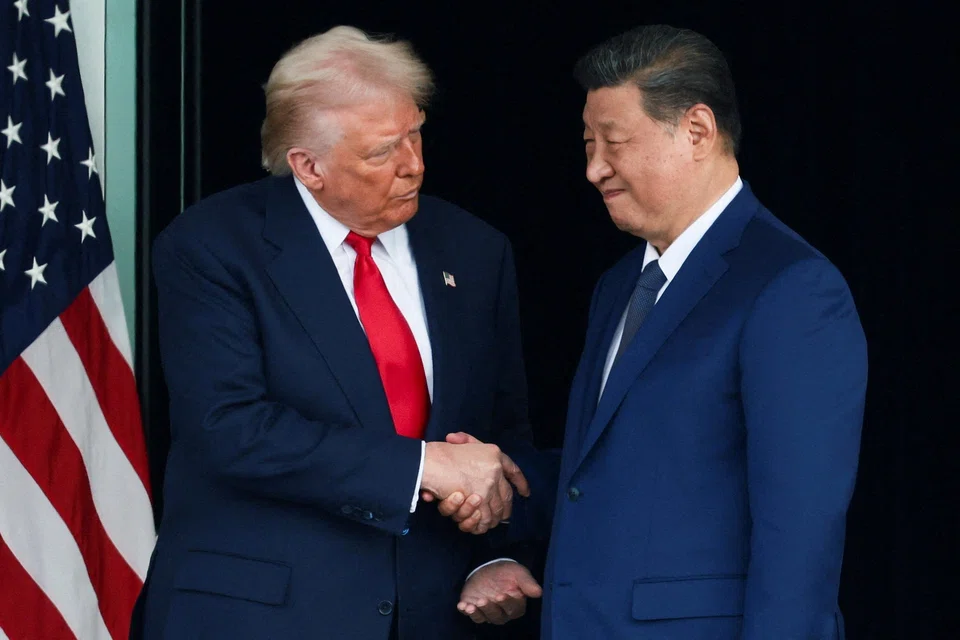
WHEN US President Donald Trump touches down in Beijing on Mar 31, he will arrive not just as a dealmaker, but as a president who has, in the span of weeks, overseen the killing of Iran’s supreme leader Ali Khamenei and the capture of Venezuela’s Nicolas Maduro.
It is a remarkable backdrop for what was supposed to be a trade summit – and it raises a question that neither Washington nor Beijing seems eager to answer: Can two great powers negotiate the price of soybeans and Boeing jets while one of them is reordering the Middle East by force?
The three-day visit, scheduled from Mar 31 to Apr 2, will be the first official trip to Beijing by a sitting US president since Trump’s previous visit in 2017.
It was arranged in a moment of relative optimism – following a fragile truce reached on the sidelines of the Asia-Pacific Economic Cooperation forum in Busan last October, when both leaders agreed to step back from the brink of an all-out trade war.
But the geopolitical ground has shifted dramatically since then.
On Feb 28, Trump announced that joint US-Israeli strikes on Iran killed Khamenei; weeks earlier, in early January, the US captured Venezuelan leader Maduro.
These are not minor diplomatic footnotes. They are seismic events that have, in Beijing’s view, further eroded the international order that China has long sought to defend – or at least exploit. Chinese Foreign Minister Wang Yi called the Iran conflict “a war that should not have happened” and reiterated Beijing’s calls for a ceasefire.
And yet, both the US and China appear determined to proceed with the visit. According to sources familiar with the preparations, the US-Israeli strikes have had a “very limited” impact on the summit’s planning, with both sides acknowledging that theirs is “the world’s most consequential bilateral relationship today”.
That phrase is telling. It speaks to a pragmatism – some would say cynicism – that defines how both Trump and Xi approach statecraft. Principles bend; interests don’t.
Can commerce paper over conflict?
For China, the Iran war presents a genuine dilemma. Beijing does not want to see regime change in Teheran under foreign pressure, and will likely attempt to support whatever anti-American leadership emerges there, while also helping Iran rebuild some conventional military capacity.
This puts Xi in the uncomfortable position of hosting a president whose military just killed an axis partner, while still wanting the economic benefits of a stable US-China relationship.
The optics are awkward. The incentives, however, are powerful.
For Trump, the visit is about legacy and leverage. The US goods trade deficit with China shrank to US$202 billion in 2025, the lowest in more than two decades, and a further deal on agricultural purchases, tariffs, perhaps energy, would be a signature achievement he could wave before his base.
The Iran war, far from being a complication, may actually strengthen his hand at the table. A president willing to kill a foreign head of state is not a president easily pushed around on trade terms.
But the risks of this diplomatic juggling act are real.
Beijing has already imposed economic sanctions on Japan over suggestions that Tokyo could play a role in a Taiwan Strait conflict. The Chinese military has conducted extensive exercises near Taiwan following a US arms package announced in late 2025. The visit is taking place against a backdrop of rising Chinese assertiveness, not accommodation.
Wang’s public language ahead of the summit – urging both sides to “manage the risks that do exist and remove unnecessary disruptions” – signals that Beijing considers the meeting valuable but fragile. That is diplomatic code for: We want this to succeed, but we are not going to pretend the Iran war did not happen.
The deeper question the visit forces is one of moral coherence in foreign policy.
Trump is asking China to partner the US on trade and global stability, while simultaneously conducting military operations that China publicly opposes and that destabilise the very international frameworks Beijing claims to champion.
Xi, for his part, is asking the world to see China as a responsible global actor while quietly shoring up the wreckage of US military campaigns.
Both leaders are betting that commerce can paper over conflict. History offers mixed verdicts on that wager. What is certain is that when Trump and Xi sit down in Beijing, the ghost of Khamenei will be in the room – unacknowledged, inconvenient and impossible to ignore.
TRENDING NOW

Once staunchly pro-China, Malaysian Chinese businesses are now distancing themselves from Beijing
New launch or resale unit? Here’s a guide for homebuyers
The lesser-known prospects in the Asian chipmaking supply chain

Cliff Tan has 7 million followers and a 4-month waitlist. Why won’t he expand his business?

