

Defence is becoming Asia’s next industrial policy
The push for defence indigenisation and exports will boost growth, but more spending demands fiscal discipline
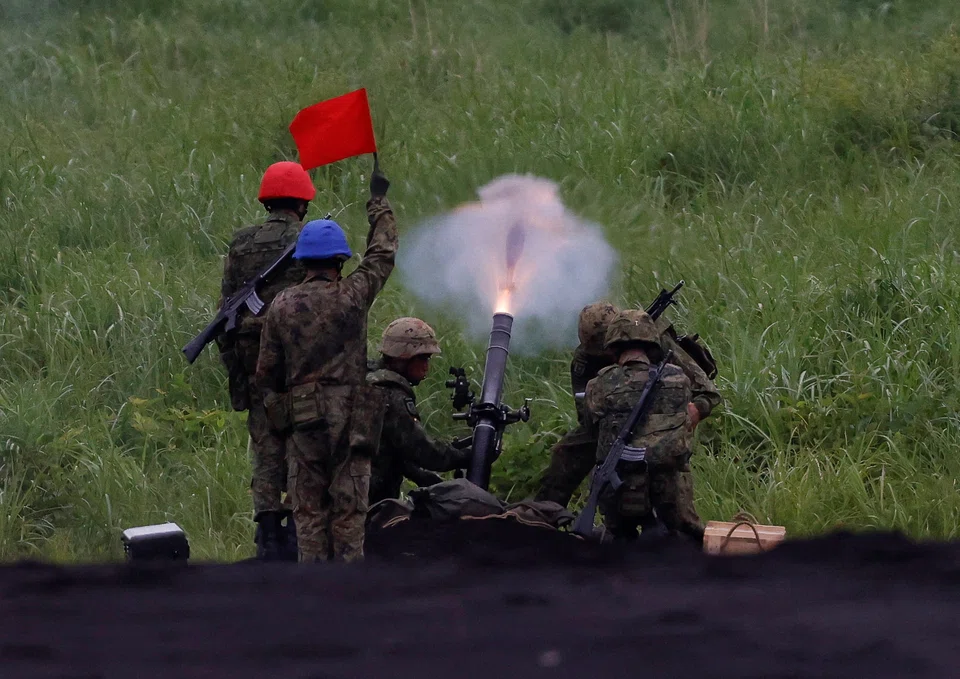
ASIA is in the middle of its biggest defence build-up in a generation.
While security is the primary motivating force, defence is also emerging as the region’s next industrial policy in a strategic bet that military spending can seed domestic champions, open export markets and generate technology spillovers.
Over the three decades following the end of the Cold War, Asia reaped a “peace dividend”, as defence spending fell from 3 to 4 per cent of gross domestic product in the 1980s to below 2 per cent by the 2010s.
Governments redirected military budgets towards infrastructure, education and social spending on the view that regional stability and US security guarantees would endure. That era is over.
Washington’s burden-sharing demands on Nato allies have led Asian countries to question the reliability of the US security umbrella.
Meanwhile, tensions in the South China Sea have intensified a regional arms race, further amplified by the Russia-Ukraine war and the Iran conflict.
Not surprisingly, countries are choosing to self-insure against an uncertain regional order. Asia and Oceania’s military spending surged by 8.1 per cent to US$681 billion in 2025, the largest annual increase since 2009, and this is likely just the beginning.
The composition of Asia’s defence spending is also shifting. In previous decades, defence budgets focused primarily on routine expenses, combat aircraft and legacy warships.
Now, spending is shifting towards modernisation, with a focus on long-range missiles, drones and artificial intelligence, maritime capabilities, air and missile defence as well as cyberspace intelligence.
Importantly, Asian governments are increasingly pursuing self-reliance and indigenisation.
From state-led military-civil fusion in China to approaches led by chaebols – large, industrial and often family-run local conglomerates – in South Korea and policy-driven initiatives in India, this shift is driven by the need to ensure strategic autonomy, supply chain security and technological sovereignty.
Benefits of defence indigenisation
The focus on more defence indigenisation is delivering several economic benefits. The most immediate is a moderation in defence imports, and a reduced burden on the exchange rate.
Rising domestic defence production is creating local industrial supply chain beneficiaries in top defence prime contractors, component and sub-system companies, and emerging technology players in autonomous systems, missiles and precision weapons.
Defence export opportunities are also rising, with Asia transforming from an arms importer to a significant exporter over the last decade.
China dominates within Asia, with most of its exports destined for Pakistan.
South Korea has emerged as a success story due to its cost advantage and Nato interoperability: Poland is its largest buyer, the Middle East is the largest market, and exports to Asean are picking up.
India’s defence exports to the Global South are also on the rise, and while Japan is still a small player, its decision in April to relax defence export restrictions is set to open new markets for Japanese defence contractors.
In all, Asian companies are globally competitive and are positioning themselves as trusted, alternative partners in a fragmenting world.
Asia’s shift towards indigenised defence production and export expansion should also boost growth via higher defence spending multipliers.
International Monetary Fund research shows the economic impact of increased defence spending is greater when import intensity is low and procurement is focused on equipment, rather than personnel expenses.
This is exactly the shift happening in Asia.
Defence research can also accelerate technologies with civilian applications, including robotics, navigation, advanced computing, communications and new materials.
History offers many examples of when military demand served as a catalyst for industrialisation through technological spillovers.
The Global Positioning System and Internet, both born from defence research, now underpin trillions in global economic activity.
Defence partnerships can also reshape Asia’s foreign-policy alignments.
Procurement of a complex platform often ties a country to the supplier for training, software updates, ammunition, maintenance and replacement parts.
Asia’s arms exports could thus serve as a strategic lever to extend its diplomatic influence and intelligence sharing.
Trade-offs to assess
That said, there are real trade-offs to consider.
Higher defence spending can raise fiscal sustainability concerns. US Secretary of War Pete Hegseth has repeatedly urged Asian allies to emulate Europe and raise their defence spending to 5 per cent of GDP. This does not look easy.
After considering the stipulated debt ceilings in countries, our estimate of the military expenditure shortfall – current spending versus a potential target of 5 per cent of GDP – suggests that such targets remain fiscally impractical for most of the region.
While Australia and Singapore may have less of a budget constraint, Japan, India and many Asean economies, including Malaysia and Thailand, face clear limits.
If these countries fund their defence build-up through deficit financing, the rise in debt-to-GDP ratios could trigger fiscal sustainability concerns, pushing up interest rates and crowding out private investment.
The alternative is raising taxes or pruning other spending, which could prove tricky. Tax increases may face political opposition, and are often limited by administrative capacity.
Reprioritising spending by cutting allocations to healthcare, education and other welfare programmes would create a direct trade-off between military capability and human capital investment.
Countries will therefore need to find other creative solutions.
More defence cooperation is one answer for Asia, including via multilateral frameworks, bilateral defence agreements and joint exercises. Co-production agreements between countries can also spread costs while building interoperability.
Where national security takes precedence, fiscal capacity will need to be fine-tuned to meet higher defence spending.
Yet, for Asia, defence is no longer just about security; it has also become industrial policy with a military edge. Walking the fiscal fine line carefully will be the challenge.
The writer is chief economist for Asia excluding Japan at Nomura
TRENDING NOW

Once staunchly pro-China, Malaysian Chinese businesses are now distancing themselves from Beijing

Britain’s mansion tax shows the difficulty of targeting wealth

Three hats, one goal: How Ng Kian Swan runs sustainability at NUHS

COE review: The gap between luxury and mass-market cars isn’t the only one worth bridging

