NEWS ANALYSIS

Defiant Fed chief to send clear signal he calls the shots on US monetary policy

Despite continued pressure by Trump, Powell remains unlikely to cut interest rates any time soon
Summarise
    • The markets will be focused on whether Jerome Powell underscores the Fed's desire to cut rates this year, or if he remains non-committal.
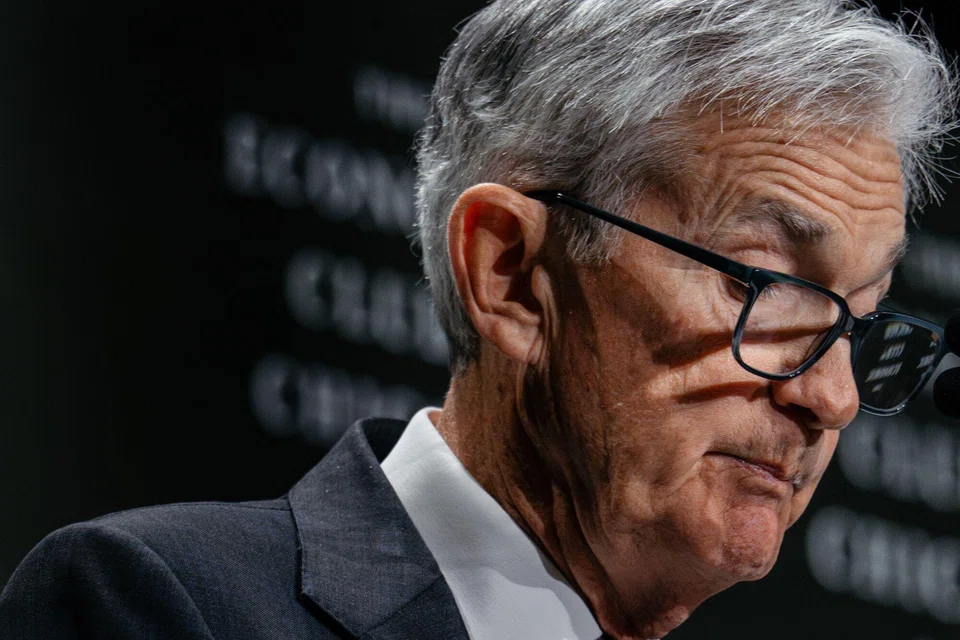
    • The markets will be focused on whether Jerome Powell underscores the Fed's desire to cut rates this year, or if he remains non-committal. PHOTO: BLOOMBERG
    Published Mon, Jul 28, 2025 · 02:00 PM

    [WASHINGTON] US President Donald Trump has gone to extraordinary lengths to pressure US Federal Reserve chairman Jerome Powell to cut interest rates, but Trump’s decision to feud with the central banker is having the opposite of its intended effect.

    Anyone who watched the both of them during Trump’s tour of the Fed’s building renovation project on Thursday (Jul 24) could easily tell that the two are on a collision course.

    Powell, however, remains unbowed. Rather than being defensive when Trump confronted him about the budget overrun of the renovation, Powell instead corrected Trump on his cost estimates. Trump is bound to keep berating Powell until his term ends in May 2026, and Powell is very unlikely to cut rates any time soon.


    As the central bank’s Federal Open Market Committee prepares to meet this week, Wall Street economists are expecting the benchmark rate to stay in a range of between 4.25 and 4.5 per cent for the fifth straight meeting.

    Markets are likely to await Powell’s press conference on Wednesday to gauge whether this is a “dovish” hold, where the rate-setting committee leans towards a rate cut as the next move, or a “hawkish” hold, where the committee is becoming more concerned about inflation.

    One brokerage said that Powell will likely keep his cards close to his chest. 

    “We expect the Fed to maintain maximal optionality at its July meeting,” said economists at Bank of America Global Research, in a note to clients. “Powell would prefer to see the July data before potentially guiding the markets for September at (the Fed’s annual economic symposium in) Jackson Hole.”

    The economists added that “markets will be focused on whether Powell underscores the Fed’s desire to cut rates this year, or if he remains non-committal”.

    Nonetheless, Powell could give a hawkish signal if he emphasises the continued threat of tariffs, or a dovish one “if he focuses on the stability of services inflation and expectations”.

    In the second-quarter earnings season, most companies – with rare exceptions such as German automaker Volkswagen, which is heavily dependent on US exports – seem to be taking tariffs in their stride. Of course, that could simply mean that US households are bearing more of the pain as corporations successfully pass on the costs of new tariffs.

    While Trump appears to have succeeded in forcing a new protectionist trade regime on the world without the kind of market meltdown that seemed imminent in the aftermath of his “Liberation Day” in April, the Fed and other economists still view short-term or even long-term consumer-price increases as a likely result. 

    At his press conference this Wednesday, Powell is likely to flex the Fed’s muscle as an independent agency. Any sign that he was bowing to Trump’s pressure campaign would represent more than reputational damage.

    The Fed has the ability to act as the backstop of the US Treasury market and only as long as market participants trust the central bank to police inflation.

    If markets sniffed out signs that the Fed had shifted its mission to a fiscal one – concentrating solely on economic stimulus, as Trump seems to be advocating, and as less influential central banks elsewhere often do – the Treasury market would simply cease responding to the Fed.

    This happened in the 1970s, when inflation was out of control. In those years, Treasury yields, and hence mortgage rates and other consumer loans, spiked above 10 per cent.

    “We think Trump’s pressure on the Fed to cut rates makes rate cuts less likely,” said strategists at BNP Paribas. The pressure campaign has made Treasury markets jumpy, however, because of fears about the role of politics at the Fed, they said.

    Powell pushed back on Trump’s estimates of renovation costs on Thursday’s tour of the Fed building. This week, he’s likely to push back again to remind global markets – and more importantly, Trump – who calls the shots on US monetary policy.