Despite shrinking cash usage, the informal economy persists
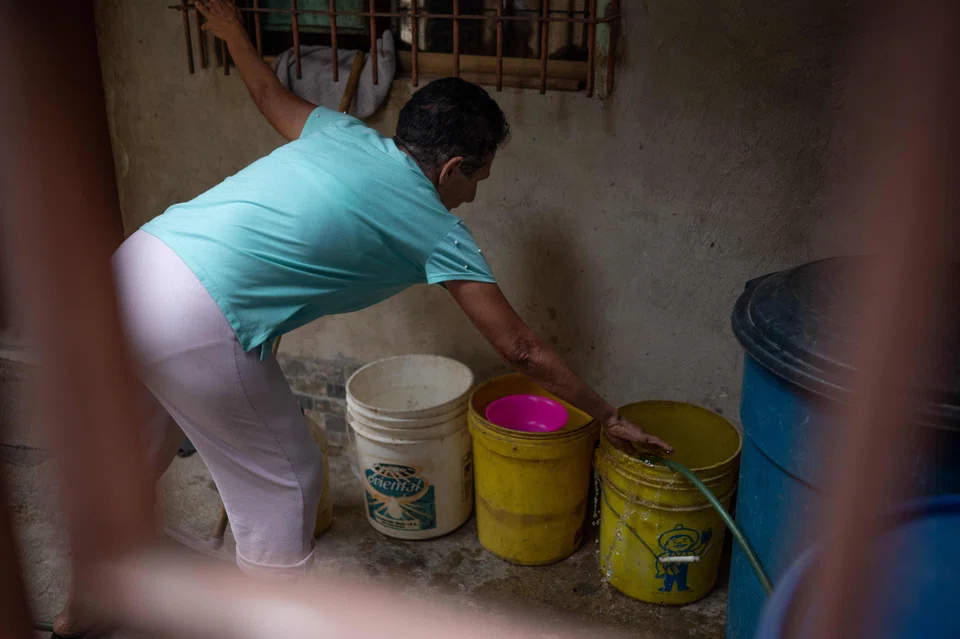
THE global shadow, the informal economy, remains huge despite rapid strides in digital payments.
This is frustrating for developed and emerging-nation governments that wish to claw in as much tax as possible to meet expenditure and cut borrowings.
It is exceedingly difficult to accurately quantify the size of the shadow, the underground economy. People involved in it include builders, artisans, cleaners, gardeners, vendors and others who receive cash and either pay no tax, or only a portion to the Inland Revenue. Legal and illegal immigrants who cannot obtain formal taxed and social insurance jobs also tend to be participants in the informal economy. Others are criminals such as drug dealers, pimps and small-time arms traders.
Estimates (which are really guesstimates) vary considerably. For the Indian sub-continent, Asia, Africa, South America and Eastern Europe, the International Monetary Fund (IMF) reckoned that the shadow economy in 2020 was about a third of gross domestic product (GDP); for advanced economies, 15 per cent.
According to the International Labour Organization, about two billion workers, or 60 per cent of the world’s employed population aged 15 and older, spend at least part of their time in the informal economy. The size of these underground transactions slowly decreases as economies develop, said the IMF.
There are wide variations across regions and countries. The underground economies in Afghanistan, Zimbabwe, Nigeria, Bolivia and India, for example, range between 40 per cent and 72 per cent of GDP, according to World Economics, a company that collates data. But they account for a much smaller 17 per cent to 30 per cent proportion in countries such as Algeria, Indonesia, Vietnam, Costa Rica and South Africa.
Concerned about inadequate taxes to help pay for burgeoning European Union (EU) spending, the EU Parliament commissioned informal economy specialists and academics Friedrich Schneider and Alban Asllani to assess underground economic activity.
In their November 2022 study, Schneider and Asllani estimated that the shadow economy of 36 developed nations rose from 15 per cent of GDP in 2019 to 17 per cent in 2020. The pandemic contributed to the increase because there was less control over home workers, and fewer officials to audit non-payment of tax.
Despite the growth in digital payments in 2022, there was only a 0.5 per cent decrease in the informal economies of EU member states and the US, Canada, Australia and New Zealand.
Indeed, the cost-of-living and energy crises may well encourage more cash payments to evade high tax, Schneider and Asllani said. So much so that they predict there could be an increase of 5 per cent to 7 per cent in all EU nations’ informal economies.
Unsurprisingly, the poorer Eastern, Central and Southern European countries, such as Bulgaria, Cyprus, the Czech Republic, Latvia, Lithuania and Poland, have larger shadow economies than the wealthier Western European nations, notably Austria, Germany, France and the Netherlands.
Also, Southern European countries Italy, Spain and Portugal “have considerably higher shadow economies than Northern Europe”, the paper said.
Outside the EU, Australia, Canada, Japan, New Zealand, the US and Singapore have lower shadow economies with an average size of just over 8 per cent of GDP, estimated Schneider and Asllani.
The underground economy is a double-edged sword. On the negative side, those working and not paying the taxes place a burden on taxpayers. Governments could potentially lower taxes if they were able to obtain more revenue from the underground economy. Instead, due to inflation of wages, higher state expenditure and interest on borrowings, governments are raising taxes on employees and businesses that are following the law.
Governments have less to spend on education, hospitals and other departments, which would also benefit underground workers who need these services. Moreover, unscrupulous employers can exploit immigrants and other illegal workers by paying them low wages for many hours of work.
On the positive side, informal economy workers are also consumers, whose consumption boosts the global economy. Also, labour statistics may be overstating the degree of unemployment because the numbers do not include those who are working without official documentation.
Various studies aim at encouraging workers to enter the formal economy. There should be tax reforms – for example, simplified zero or negligible taxation for low-income groups – to encourage more people to declare all their earnings. Sales tax could be raised, but this would also be a burden for normal taxpayers.
Those who need social and medical care should have transparent documents showing that they are official workers or self-employed. African and other third-world governments and billionaire philanthropists should back entrepreneurs and provide incentives and encouragement for hard-working immigrants and others.
Police and security forces should be educated in countering criminals who are evading taxes and taking advantage of lawful citizens.
Some initial efforts have been made, but there’s still a long way to go.
TRENDING NOW
UOB found ‘grossly negligent’ over Stamford Land rights issue advice, to pay S$1.9 million
MAS allocates S$1.45 billion to five asset managers in third EQDP batch: Chee Hong Tat
He built the Vingroup empire. Now South-east Asia’s richest man is handing some key roles to his sons
NoMad Singapore marks brand’s arrival in Asia