Donald Trump drops demands to own Greenland, but the harm has been done
A revised defence pact is a modest improvement, but annexation threats were a costly blunder
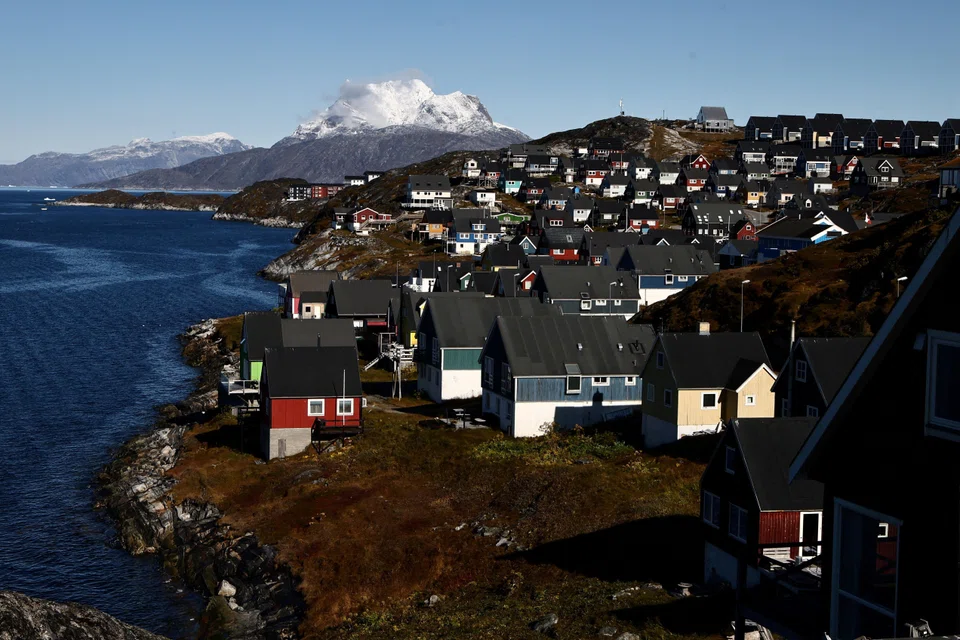
THE Arctic is now a safer place for America and its allies. Due credit must go to President Donald Trump, a self-styled man of peace. He has, after all, lifted the shadow of imminent invasion from Greenland, the vast and hard-to-defend island that guards Nato’s high north.
In the longer term, a new defence agreement announced by the Trump administration, Denmark and Greenland on Sep 18, 2026 represents a modest advance on previous treaties.
It will make it easier for America to strengthen its military presence on the island, and to control encroachment on Greenlandic soil by China, Russia and other adversaries.
The pact is due to be signed by America, Denmark and Greenland at the United Nations General Assembly in New York.
Trump should not expect a Nobel peace prize for his efforts. It was, of course, he who cast the war shadows over Greenland, threatening to annex the island if he were not allowed to buy it. In these cynical times, it is a relief when war-talk turns out to be bluster, but not grounds for a medal.
By Trump’s own previously stated standards, the deal falls short. Time and again, including in a speech that appalled world leaders at Davos in January 2026, he applied a property developer’s logic to America’s decades-old presence on Greenland.
In that address to the World Economic Forum, he scorned his predecessor, Harry Truman, for handing Greenland back to Denmark at the end of the second world war, ending an American military occupation of the island designed to stop it from falling into the hands of Nazi Germany.
“How stupid were we to do that?” growled Trump, accusing modern Denmark of ingratitude. Back then, he insisted that he needed to own Greenland outright, title deeds and all. If a war breaks out, “who the hell wants to defend a licence agreement or a lease?” the president demanded to know.
To be fair, previous presidents had similar concerns. In 1946 the Truman administration officials and army chiefs thought Greenland was so strategic that they seriously considered buying it from Denmark for US$100 million in gold (US$1.7 billion in today’s money), or swapping bits of it for chunks of Alaska.
After Denmark balked, cold-war America settled for a treaty allowing it to maintain bases on Greenland more or less at will, as long as Denmark was consulted. Truman and his successors saw value in America shunning the colonial land-grabs of earlier great powers.
Now America has a president who talks big about taking territory, from the Western Hemisphere to the Middle East.
Thankfully for other governments, he has been content, thus far, with fantasies showing him planting the Stars and Stripes on far-flung lands, in AI-generated images of conquest pumped out by White House social-media minions.
In the actual case of Greenland, he has settled for what amounts to reworded lease terms, with demands for ownership quietly dropped.
Trump calls the new agreement a “dream come true” for America, which he says now controls Greenland’s security and “all other needs” in perpetuity.
There will be no cost to America as it develops a “large military presence” in Greenland, he adds. It remains unclear what that he means by that, for Denmark, a country of six million people, is not about to foot the whole bill for America’s Arctic garrison.
At least a deal was done. That stands in contrast with interminable talks over Ukraine, Iran and Gaza that Trump has entrusted to his fellow property developers, Steve Witkoff and Jared Kushner. Those envoys are guided by the principle that foreign-policy disputes are, at root, wrangles about land and resources, which can be resolved by offering profitable opportunities to each side.
Earlier on, some in Trump-world talked loudly about minerals and oil buried beneath Greenland’s permafrost, ignoring warnings about the expense of Arctic operations.
But the final deal was the result of months of discreet diplomacy, supervised on the American side by Marco Rubio, the US secretary of state and national security adviser, and by his deputy Mike Needham.
Trump did not offer a running commentary on the talks, and there were no boasts about billion-dollar profits to be made. As if pleading for Trump to take a win for quiet professionalism and move on, Rubio says that “this deal permanently and completely addresses our national security concerns in Greenland”.
Trump puts ties with Europe on ice
Not long ago Danes were among the most pro-American of Europeans. Just 7 per cent called America an ally in a poll in May 2026.
Their government this year signalled interest in joining other European members of Nato in accepting an offer to be protected by France’s nuclear deterrent. Not long ago, Atlanticist Denmark would never have signed up to that sort of Gallic scheme.
But the Greenland scare leaves European governments determined to be less dependent on a fickle America. Asked whether Trump is a good salesman for European weapons, as Nato members think twice about buying American, a Nordic prime minister replies: “Absolutely.”
Nor will Trump’s departure heal all wounds.
Eagerly defending his boss, Vice-President JD Vance called Denmark a bad ally, appalling Danes who remember the heavy losses their troops suffered, fighting alongside America in Afghanistan and Iraq.
Denmark learned a painful lesson: the next generation of American leaders includes many veterans like Vance, who think the war on terror was a catastrophe and feel no nostalgia for its shared struggles.
America’s desire for Arctic bases (and Europe’s need for American help to deter Russia) resolved this particular presidential tantrum. But gibes asking why America should defend foreign soil cannot be unsaid.
The transatlantic bond is growing colder and far more transactional. Trump wanted Greenland to be part of his legacy and so it will be. Just not as he imagined.
©2026 The Economist Newspaper Limited. All rights reserved