

Economic effects of the US government shutdown: A self-inflicted wound
This political impasse does not resolve underlying policy disagreements, but instead creates costs ultimately borne by taxpayers
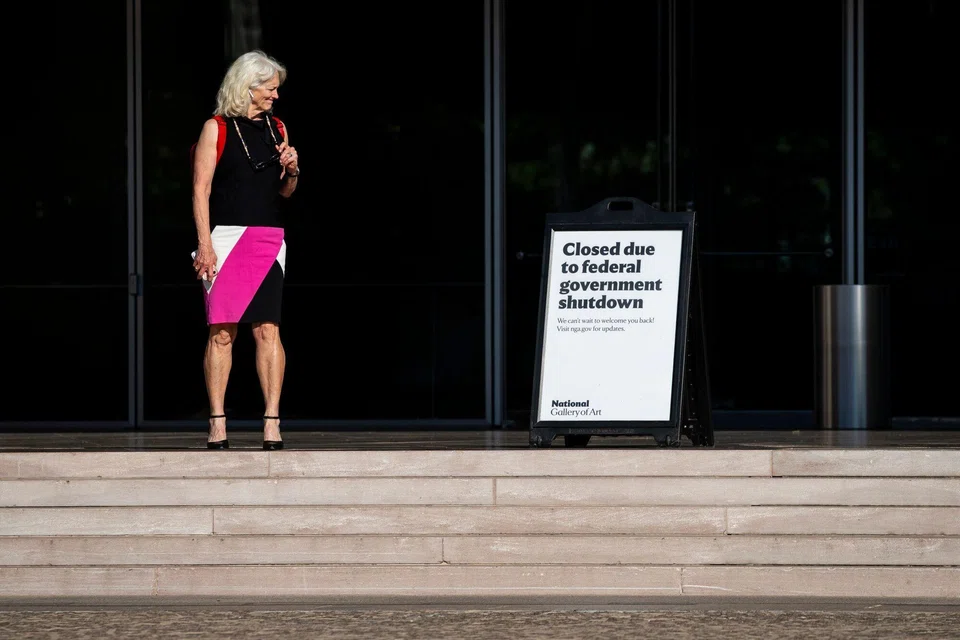
THE US federal government shut down last Wednesday (Oct 1), after lawmakers failed to reach an agreement to extend government funding. This is the first shutdown since 2019, with economic ramifications already becoming apparent across multiple sectors of the American economy.
EY-Parthenon chief economist Gregory Daco estimates that each week of the ongoing shutdown could cost the economy US$7 billion, and reduce gross domestic product growth by 0.1 percentage point.
While short-lived shutdowns are unlikely to have broad financial impacts, economists and analysts suggest this one could be different, potentially signalling a more prolonged disruption.
The shutdown’s most immediate effect is on federal employees. About 750,000 federal employees are expected to be furloughed each day, with hundreds of thousands more required to work without immediate pay.
This creates a dual problem: furloughed workers lose income, reducing their consumer spending, while those working without pay face financial uncertainty that ripples through their local economies.
Under the Government Employee Fair Treatment Act, employees who are furloughed or made to work during a shutdown must be paid after it ends, but this delayed compensation does not prevent immediate financial hardship for families who rely on regular pay cheques to meet monthly obligations.
The shutdown creates cascading effects throughout the economy.
When hundreds of thousands of workers face income uncertainty, consumer spending – which drives approximately 70 per cent of US economic activity – takes a hit. Federal workers may delay major purchases and reduce discretionary spending.
At the same time, there is business uncertainty. Government contractors and businesses that rely on federal services face operational disruptions. Processing delays for permits, licences and regulatory approvals can stall business projects and investments.
Then there are service disruptions. Essential services such as Social Security payments continue, but new benefit verification and the issuing of new cards are paused, potentially delaying processing for new recipients. Such delays affect vulnerable populations, and can strain state and local resources.
Beyond the direct US$7 billion weekly cost, there are harder-to-quantify opportunity costs: economic development projects stall, research pauses, and long-term planning becomes impossible in an environment of uncertainty.
Immediate costs aside, repeated shutdowns exact a toll on government effectiveness that compounds over time. Talented professionals may leave federal service for more stable private-sector jobs. Institutional knowledge is lost. Agencies struggle to recruit qualified candidates when employment stability is in question. This brain drain ultimately means Americans receive lower-quality government services.
The international dimension also matters. When the world’s largest economy cannot maintain basic governmental functions, it raises questions about American reliability as a trading partner and ally. Financial markets may begin to price in a “shutdown risk” premium, marginally increasing borrowing costs for the federal government and, potentially, the private sector.
The longer a shutdown persists, the more severe its economic effects become.
Previous extended shutdowns have shown that initial modest impacts can compound into significant economic drag. If this shutdown extends beyond a few weeks, the 0.1 percentage point weekly reduction in GDP growth could meaningfully affect quarterly economic performance.
This makes the resolution of this crisis not merely a matter of political necessity, but an economic imperative. The damage already done – in lost productivity, delayed services and diminished confidence – will take time to fully repair, even after the government reopens.
The fundamental paradox of government shutdowns is that they are entirely self-inflicted wounds. Most developed democracies have mechanisms to ensure government continuity during Budget disputes.
The economic damage from shutdowns serves no productive purpose; it does not meaningfully reduce spending, does not resolve underlying policy disagreements, and creates costs that must ultimately be paid by taxpayers.
As shutdowns have become more frequent and prolonged in recent years, their normalisation represents a troubling trend. The American economy is remarkably resilient, but resilience should not be confused with immunity. Each shutdown chips away at economic efficiency, public trust and governmental effectiveness.
For an economy to thrive, it needs the stability that comes from a functioning government, not the recurring chaos of political brinkmanship that puts basic operations at risk.
The question facing policymakers and voters alike is whether this economic price is worth whatever political points might be scored. The evidence suggests the answer is a resounding no.






