

The economics of regime change
Lessons from history for Venezuela and Iran
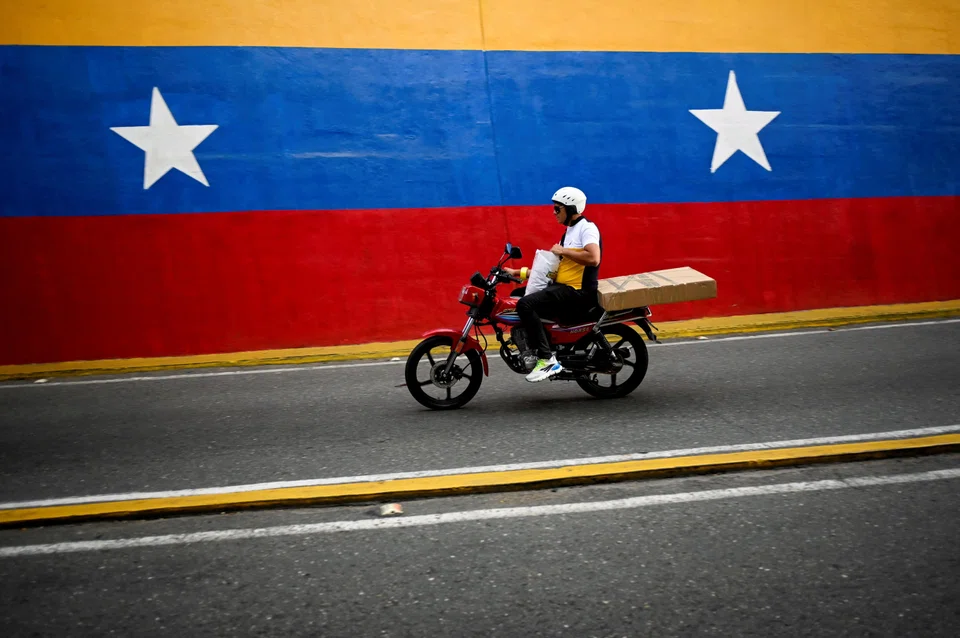
REGIME change is often viewed as an economic turning point.
Impoverished by years of fiscal indiscipline, price controls and state decay, nearly seven in 10 Venezuelans believe their livelihoods will improve over the next year now that America has deposed their feckless leader, Nicolas Maduro.
Many Iranians bravely protesting against their theocratic rulers over sinking living standards must harbour similar hopes. Yet, even though political moments can arrive abruptly, as Maduro and the ayatollahs have learned, economic outcomes take longer to adjust.
Economists have long tried to pin down what political upheaval does to growth.
Early answers were pessimistic. In the 1990s, when cross-country growth regressions were in vogue, Alberto Alesina of Harvard University and his co-authors found that frequent changes of government were associated with slower growth. Robert Barro, also of Harvard, showed that revolutions and coups went hand in hand with weaker investment, largely because they undermined property rights.
Political instability, on average, looked bad for business. Yet, those averages concealed striking variation. Russia’s transition in the early 1990s ended in collapse. South Korea after 1987, and Poland after 1989, endured disruption but then rebounded.
Similar political shocks, in other words, produced very different economic outcomes.
Democracy alone does not explain the divergence. Democratic transitions in places such as Ecuador and Romania did not lead to robust growth. As Alesina and his co-authors showed, democracies do not reliably outperform autocracies during periods of upheaval.
The decisive factor is whether a rupture convinces households and firms that the economic rules they face have genuinely changed – and will endure.
In a paper from 1991, Dani Rodrik showed how uncertainty about the longevity of reforms can deter investment even when policies look sound on paper.
Chile after 1990 illustrates the opposite dynamic. Democracy returned, but the new centre-left government preserved the economic framework it inherited. By maintaining fiscal discipline, open markets and property rights, it reassured investors that the rules were stable. Confidence held and growth remained strong.
Serbia in October 2000 offers the clearest case of a rupture that reset expectations. Slobodan Milosevic fell after refusing to accept an election defeat, amid the unforgettable sight of a bulldozer smashing into a state broadcaster in Belgrade.
The new government moved fast to rejoin the world economy. It restored relations with the International Monetary Fund and the European Union, reopened trade and steadied the macroeconomy.
Inflation, which had averaged almost 50 per cent a year in the preceding five years, fell by more than half in the next five. Growth averaged over 6 per cent a year, and foreign capital returned.
Many structural reforms, from bank privatisation to the slow unwinding of state firms, came later. The early gains came from people’s belief that the rules of the game had changed for good.
Contrast this with Tunisia in 2011. The Jasmine Revolution toppled Zine el-Abidine Ben Ali, as protesters were carried along by a poet’s promise that fate would respond to popular aspiration. Competitive elections and a democratic constitution soon followed.
Yet, the economy remained stuck in old grooves. Successive governments tried to buy calm with higher spending and an expanding public payroll, while postponing tougher choices on subsidies, state firms and rigid labour markets.
Corruption returned in familiar forms. By 2018, trust in the government had fallen by half. Investors saw new politics layered on top of old economics. Youth unemployment, the original grievance, barely budged.
Fate may respond to aspiration; markets are harder to persuade.
Libya illustrates the most destructive outcome. Muammar Gaddafi fell quickly in 2011. Soon after the state collapsed into civil war. Rival governments and militias fought for territory and control of oil revenues.
With no authority able to tax reliably, borrow credibly or enforce contracts, economic management became impossible. Output rose and fell with oil production. As fields and ports were seized or blockaded, inflation turned volatile and investment evaporated. Economic policy was whatever the men with guns allowed.
All these episodes point to a simple lesson. Political rupture matters economically only if it establishes a credible anchor – clarity over who sets the rules, how they are enforced and whether they will last long enough to justify investment.
Venezuela today relies on borrowed credibility. US President Donald Trump is working with a new face of the old regime, Delcy Rodriguez, and managing oil flows from afar. Stability is sustained by oil exports and external oversight. This can keep trade moving, but does little to revive long-term investment.
Likewise, toppling Iran’s regime will not by itself guarantee economic recovery.
Anchor aweigh
What also matters is not whether crowds are dispersed, but whether shared beliefs about rules, contracts and policies fracture.
In 2021, the junta in Myanmar overturned an election in a coup but kept the state running; what broke was confidence. Sanctions returned, capital fled and investment dried up. Thai generals’ interventions offer a milder version of this: no revolution, but enough meddling to sap credibility and slow growth.
Rich democracies are not immune from such institutional erosion. Economic expectations can fray without uprisings or coups. They rest on the state’s credible commitment not to rewrite contracts, politicise regulation or debase the currency.
As Trump busies himself with reshaping Venezuela and maybe Iran, from afar, his attacks on the Federal Reserve may cause their own type of fracture. The economics of rupture is about credibility. That is easier to lose quietly at home than to rebuild loudly abroad.
©2026 The Economist Newspaper Limited. All rights reserved
TRENDING NOW

Once staunchly pro-China, Malaysian Chinese businesses are now distancing themselves from Beijing

Britain’s mansion tax shows the difficulty of targeting wealth

Three hats, one goal: How Ng Kian Swan runs sustainability at NUHS

COE review: The gap between luxury and mass-market cars isn’t the only one worth bridging

