Trump’s Venezuela operation: a dangerous precedent
His administration’s approach echoes past interventions that began with confidence and ended in quagmires
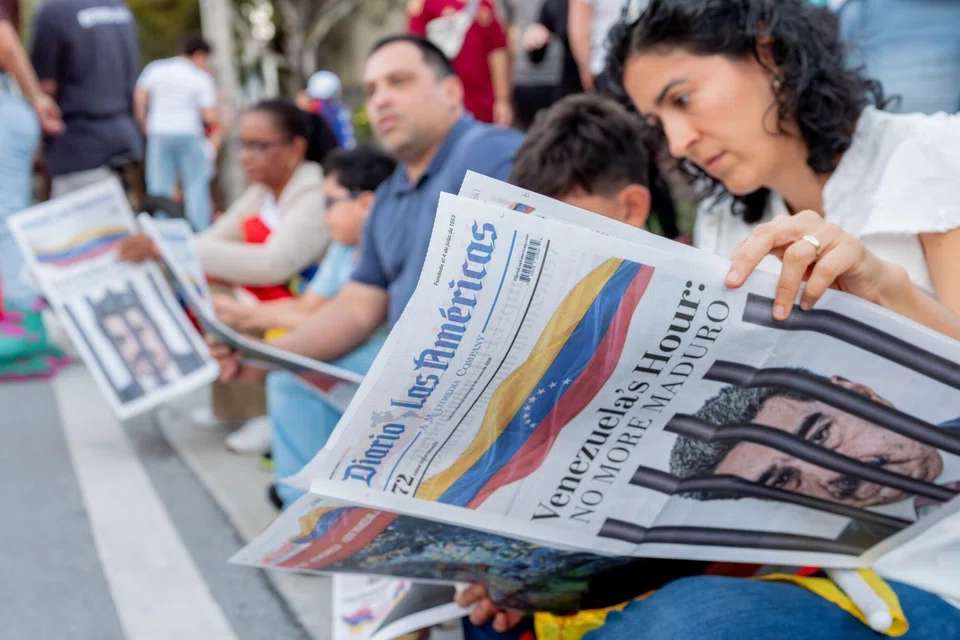
ON JAN 3, 2026, the US conducted an extraordinary military operation against Venezuela, bombing multiple targets in and around Caracas before capturing President Nicolas Maduro and his wife.
The strikes, involving over 150 aircraft, represent the most aggressive American intervention in Latin America since the 1989 Panama invasion. As the captured president faces charges of narco-terrorism and other conspiracies in New York, this operation demands urgent examination across legal, geopolitical and moral dimensions.
The legal ramifications
The Trump administration’s legal justification for the operation rests on shaky ground. Officials claim the military action supported what was essentially a law enforcement operation, citing presidential authority to protect American personnel executing an arrest warrant. They point to a 2020 indictment charging Maduro with leading the Cartel de los Soles and conspiring with Colombian guerrillas in drug trafficking.
Yet, this rationale collapses under scrutiny. The administration did not notify Congress before the operation, despite White House Chief of Staff Susie Wiles stating just two months earlier that land strikes in Venezuela would require congressional approval.
Legal experts are unequivocal in their condemnation. They note the operation was an act of war lacking the self-defence justification that would permit bypassing Congress. Notre Dame Law School professor Jimmy Gurule characterised it as blatantly illegal and criminal.
The administration’s reliance on a classified Justice Department memo to justify months of preliminary strikes against alleged drug-trafficking vessels only deepens concerns. When the legal foundation for military action remains opaque from Congress and the public, democratic accountability evaporates.
Furthermore, US President Donald Trump himself has undermined the counter-narcotics justification by pardoning (in November 2025) former Honduran president Juan Orlando Hernandez, who was serving 45 years for cocaine trafficking.
International law in tatters
Beyond domestic constitutional questions, the operation represents a flagrant violation of international law. The global response has been swift and largely condemnatory.
United Nations Secretary-General Antonio Guterres warned that the strikes constitute a dangerous precedent, expressing deep alarm that rules of international law have not been respected. French Foreign Minister Jean-Noel Barrot said the military action violated the principle against resorting to force that underpins the international legal order.
China and Russia denounced the operation as armed aggression against a sovereign state. Mexico’s President Claudia Sheinbaum emphasised that the strikes breached the UN Charter.
Even European allies expressed concern, with multiple nations calling for emergency UN Security Council meetings. Perhaps most tellingly, Colombia’s President Gustavo Petro deployed forces to the Venezuelan border while condemning the attack as aggression against all of Latin America.
Some commentators have drawn uncomfortable parallels between America’s actions and those it routinely condemns. Some argued the operation is not fundamentally different from Russia’s invasion of Ukraine, potentially setting a precedent that could legitimise a future Chinese invasion of Taiwan.
Such comparisons may seem extreme, but they underscore a fundamental question: What prevents other powerful nations from adopting similar justifications for military intervention?
The resource grab
Trump’s own statements reveal motivations beyond countering narcotics. At his Mar-a-Lago press conference, the president declared the US would “run” Venezuela during a transition period and that American companies would be “very strongly involved” in the Venezuelan oil industry.
He spoke repeatedly about rebuilding oil infrastructure and generating revenue, barely mentioning drug trafficking.
This admission transforms the operation’s character from law enforcement to resource extraction. Venezuela possesses the world’s largest proven oil reserves, and Trump has claimed that US oil companies would modernise Venezuela’s crude infrastructure “to make money for the country”.
The desire to seize control of another nation’s natural resources during what amounts to military occupation recalls the darkest chapters of 20th-century imperialism.
Humanitarian concerns
Regional stability hangs in the balance. Latin American nations have responded with alarm and condemnation. Cuba characterised the operation as state terrorism, while Brazil’s President Luiz Inacio Lula da Silva warned that attacking countries in violation of international law represents the first step towards a world where the law of the strongest prevails over multilateralism.
The humanitarian implications are also deeply troubling. The strikes reportedly caused power outages in southern Caracas, and the full civilian toll remains unknown. Colombia has deployed security forces along its border, in anticipation of refugee flows from a country already devastated by years of economic collapse and political repression.
The UN Independent Fact-Finding Mission on Venezuela has warned that accountability for documented human rights abuses under Maduro must not be eclipsed by this new crisis, while emphasising that alleged violations cannot justify an intervention that itself breaches international law.
Historical echoes
The Venezuela operation inevitably evokes historical precedents, particularly the 1989 Panama invasion to capture Manuel Noriega and the 2003 Iraq invasion. Like those operations, this one targets a defiant leader, cites drug trafficking and democracy concerns, and proceeds without clear international legitimacy.
The Panama parallel is especially apt: both operations relied on drug indictments, involved relatively limited military action focused on regime change, and drew on controversial legal opinions about presidential authority to seize foreign nationals.
Yet, the Venezuela operation may prove even more consequential. Unlike Panama’s Noriega, whose government was internationally isolated, or Iraq’s Saddam Hussein, whose invasion of Kuwait provided at least some pretext for intervention, Maduro led a government that, however illegitimate domestically, maintained diplomatic relations with major powers.
The operation also comes at a moment when the international order faces unprecedented strain, with rising powers increasingly willing to challenge American hegemony.
The immediate future remains deeply uncertain. With Maduro in custody and the US promising to “run” Venezuela temporarily, questions multiply. Will American forces occupy the country – and for how long? What happens to Venezuela’s government institutions? How will neighbouring countries respond if the situation deteriorates?
The Trump administration’s failure to articulate clear objectives or an exit strategy echoes past interventions that began with confidence and ended in quagmires.
The Venezuela operation thus marks a watershed moment in international relations. By conducting regime change through military force without congressional authorisation, justified by secret legal opinions and contradicted by the president’s own actions on drug policy, the US has set a precedent that undermines the rules-based international order it helped create.
Whether those rules can withstand this blow, and what world emerges if they cannot, remains the defining question of this dangerous moment.
TRENDING NOW
He built the Vingroup empire. Now South-east Asia’s richest man is handing some key roles to his sons
32 companies, 6 individuals bag accolades at Singapore Corporate Awards 2026
Can a first-time homebuyer couple earning S$18,000 a month afford a new EC unit?
Floods compound Philippine growth woes from public-works scandal