The election-devaluation cycle
Recent experiences in Nigeria, Turkey, Argentina, Egypt, and Indonesia seem to bear out the idea that developing economies might seek to prop up their currencies before a vote
[CAMBRIDGE] The proposition that major currency devaluations are more likely to come immediately after, rather than before, an election is being tested anew. In the biggest voting year in history, the implications could be far-reaching.
Economists will recall the Nobel laureate economist William D Nordhaus’ influential 1975 paper The Political Business Cycle. According to him, in the year leading up to an election, governments are more inclined to pursue fiscal and monetary expansion. The idea is that accelerating output and employment growth will boost the incumbent’s popularity before the election, with the Bill – in terms of debt troubles and inflation – coming due only after the vote.
But Nordhaus’ seminal paper also predicted a political foreign-exchange cycle. Emerging-market and developing economies, Nordhaus suggested, might seek to prop up the value of their currencies before an election, even if it means spending down their foreign-exchange reserves, only to undergo a devaluation soon after.
The theory of the election-devaluation cycle was more fully developed in a series of papers by Ernesto Stein and co-authors. Devaluation might be pursued intentionally, with the incoming government blaming the consequences – including inflation and, often, economic contraction – on its predecessor. (Devaluations are so unpopular that a political leader is almost twice as likely to lose office in the six months following one as in normal times.) Or it might be forced on the country, in the form of a balance-of-payments crisis.
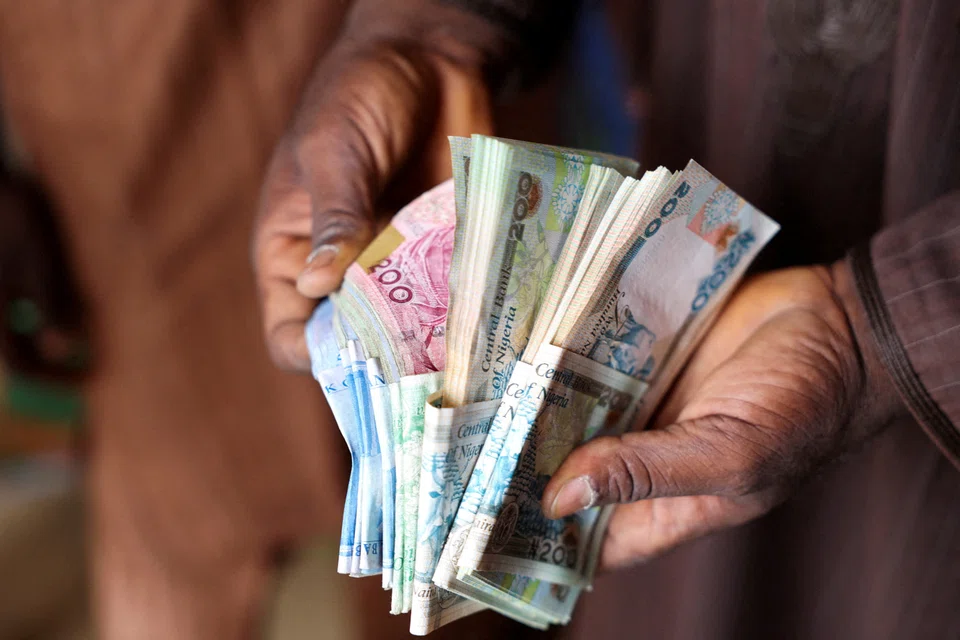
Recent events appear to support this claim. Consider Nigeria’s February 2023 presidential election. The incumbent, who was term-limited, had long used foreign-exchange intervention, capital controls, and multiple exchange rates to avoid devaluing the naira. But Nigeria’s new president, Bola Tinabu, oversaw a 49 per cent devaluation on Jun 14, 2023, just two weeks after his inauguration. (This was not enough to restore equilibrium in the balance of payments, and the naira has since plummeted further.)
Turkey offers another example. Before the May 2023 elections, President Recep Tayyip Erdogan famously instructed the central bank to keep interest rates low in order to boost growth and to intervene to support the lira, attracting considerable ridicule for his insistence that the populist policy would reduce soaring inflation. After the vote, the lira was immediately devalued, and it continued to depreciate throughout the year.
Then there is Argentina, which surprised the world by electing Javier Milei in its presidential election last November. Often described as a far-right libertarian, Milei – who does not represent an established political party – campaigned on a promise to reduce the government’s role in the economy and abolish the central bank’s ability to print money.
Two days after his inauguration, Milei devalued the peso by more than half. He has also slashed government spending (for example, on energy subsidies), thereby rapidly achieving a budget surplus, and introduced sweeping pro-business reforms. Though inflation remains very high, the central bank’s foreign-exchange reserves stopped falling after the devaluation – an outcome that is consistent with Nordhaus’ theory.
A fourth example is Egypt. President Abdel Fattah al-Sisi’s control over state institutions and neutralisation of any serious political challenger would have been enough to assure his re-election in last December’s election. Nonetheless, Sisi’s government postponed unpleasant economic measures until after the vote, even though the economy had been in crisis for some time. The widely expected devaluation of the Egyptian pound (by 45 per cent) – part of an International Monetary Fund programme that also included the usual unpopular demands for monetary and fiscal discipline – came on Mar 6.
Finally, in Indonesia, the rupiah has been depreciating ever since February’s contentious presidential election. It neared an all-time low earlier in April. President-elect Prabowo Subianto – who won the election thanks to the backing of his popular but term-limited predecessor, Joko Widodo – has not even been inaugurated yet. It is almost as if the departing government is attempting to do Subianto a favour by getting the devaluation out of the way.
Of course, elections do not always bring devaluations. Neither India, where elections are now underway, nor Mexico, which will hold a vote in June, seems to be in need of major exchange-rate adjustment. But the election-devaluation cycle could play out in, say, Bolivia, which is under considerable balance-of-payments pressure, with dwindling international reserves, as it approaches its 2025 presidential election.
One could also imagine this cycle taking hold in Venezuela, where the economy is in shambles, owing to long-term mismanagement, and the currency (the bolivar) is chronically overvalued. But just as the government effectively prohibits political challengers – no major opposition candidates are being allowed to run in this July’s presidential election – it essentially outlaws foreign-exchange purchases. As a result, it might be a long time before equilibrium is restored to the foreign-exchange market.
Spending foreign-exchange reserves is not the only way to fend off a currency devaluation; capital controls or multiple exchange rates can also be employed. But while such measures can enable governments to delay difficult reforms – especially in a repressive political environment, where leaders are insulated from voters’ wrath – the pressure to adjust to macroeconomic fundamentals is unavoidable. PROJECT SYNDICATE
The writer, who is Professor of Capital Formation and Growth at Harvard University, served as a member of former US president Bill Clinton’s Council of Economic Advisers. He is a research associate at the US National Bureau of Economic Research.