BROAD VIEW

Embracing neurodivergence: the untapped advantage in an AI-powered world

Embracing those whose brains are wired to work differently can create advantages for the team
Summarise
    • In strategy, neurodivergent perspectives help move beyond incremental optimisation towards genuine reinvention, spotting opportunities at the intersection of domains that AI alone might overlook.
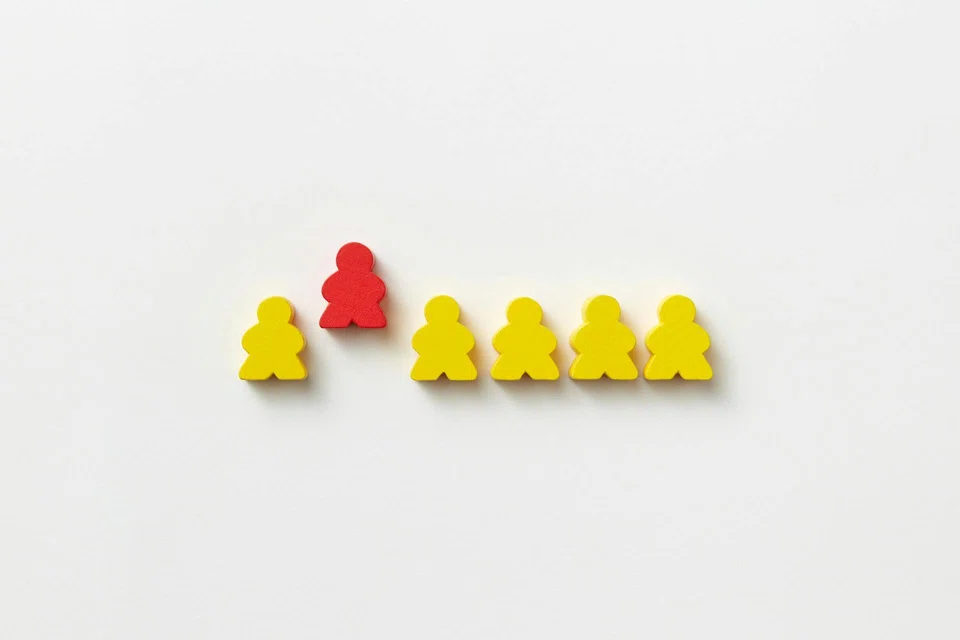
    • In strategy, neurodivergent perspectives help move beyond incremental optimisation towards genuine reinvention, spotting opportunities at the intersection of domains that AI alone might overlook. PHOTO: PEXELS
    Published Sat, Apr 11, 2026 · 07:00 AM

    I SPENT decades debating whether to share this publicly. Earlier this year, I finally did so on LinkedIn. Not because I needed the world to see me differently, but because I could no longer stay silent while watching others wrestle with the same quiet battles I once fought alone.

    For the first time, I openly declared myself neurodivergent. I was formally diagnosed with dyslexia at 19, but if assessed today, that label would likely capture only part of the picture.

    The understanding of neurodivergence has evolved, and many overlapping traits might now be recognised.

    The label was never the point. The real message is for every parent, teacher and employer interacting with someone wired differently: You may not be looking at a problem to fix, you may be looking at an untapped advantage.

    Growing up, I felt school to be a daily indictment. I skipped classes to devour documentaries on astrophysics, biology and mathematics at home.

    Exams were brutal. Spelling and written English were constant struggles. Teachers often labelled me “just lazy”, with one declaring: “Nothing will come out of this one.” The world had already set my limits.

    Yet, glimmers of possibility emerged. A physics teacher gave me lab access to explore freely.

    My mother, with relentless love, refused to let me seek safe spaces. She taught me determination and independence of thought. My father offered simple wisdom: “So what if you fail? It’s not trying that’s the real failure.”

    A remarkable clinician, herself further along the neurodivergent spectrum, confirmed my dyslexia at 19. I treated it not as a shield, but as confirmation that the conventional view was wrong. I had to keep going.

    That resilience led me into data science and artificial intelligence (AI) leadership. The same mind that struggled to sit through lectures now navigates complex, ambiguous problems, spots hidden patterns and rejects easy no’s.

    In practice, this has meant connecting unrelated concepts across domains to generate fresh insights in data-driven work, and persisting through uncertainty where standard approaches stall.

    The broader conversation must shift, especially in a world powered by AI.

    Recent thinking, captured in Anne-Laure Le Cunff’s essay in Aeon, reframes the issue: What if we have been looking at this backwards? What if the real question is not what constrains attention, but what captures it?

    Instead of regulating hypercuriosity or trying to fix neurodivergent traits, we should ask how to design environments that work with them.

    This is not about denying real costs. Exhaustion, masking, burnout and anxiety often come from conforming to narrow definitions of normal. It is about practical hope.

    As Le Cunff wrote: “The question is whether we are ready to discover what hypercurious minds can achieve when they are not spending all their energy trying to sit still and think straight...

    “What would happen if we stopped trying to fix them and started building environments that actually supported them?”

    Palantir chief executive officer Alex Karp made a stronger and more stark point recently. He stated that there are basically two ways to know you have a future in the AI era: vocational training or neurodivergence.

    His company even runs a neurodivergent fellowship, recognising that such individuals can play a disproportionate role in shaping technology and innovation through their ability to see things from different angles.

    The reality may not be so binary as the way he put it. However, in an AI-driven economy, the ability to see the world differently is no longer optional. It is a strategic imperative.

    Machines excel at rapid pattern-matching and processing known data. They struggle, however, with the restless, boundary-crossing curiosity that links disparate ideas, challenges assumptions and poses entirely new questions.

    Neurodivergent minds have long done exactly this. When supported rather than corrected, they do not merely adapt – they redefine what is possible.

    This has profound implications for how we reconceptualise business strategy, operations and organisational structures.

    In strategy, neurodivergent perspectives help move beyond incremental optimisation towards genuine reinvention, spotting opportunities at the intersection of domains that AI alone might overlook.

    Operationally, they encourage flexible processes that value outcomes over rigid conformity, allowing faster experimentation and adaptation in uncertain environments.

    For organisational design, embracing diverse cognitive styles can lead to flatter, more resilient structures, where unconventional input is welcomed rather than managed. Teams become more creative and anti-fragile when difference is treated as a feature, not a bug.

    The challenges remain real. Many neurodivergent individuals expend enormous energy masking their traits to fit traditional moulds, leading to burnout and disengagement. I had navigated spaces where my way of thinking was seen as disruptive or inefficient, rather than complementary.

    Yet, when environments evolve, when curiosity leads, flexibility replaces rigidity and difference is valued, powerful outcomes follow. Ideas flow freely. Intractable problems yield unexpected solutions. Teams gain resilience and creativity.

    Parents, teachers and employers play a vital role. The next time attention drifts or a work style defies the template, pause before reaching for the fix.

    Ask instead: What environment would allow this mind to flourish? What if schools let curiosity guide even when it wanders? What if workplaces shaped roles around varied attentional styles rather than forcing uniformity?

    To those still debating whether to speak: The world needs your perspective precisely because of your differences. You bring ways of seeing and thinking that an AI-saturated future cannot easily replicate.

    To those who hire, teach, parent or simply engage with different thinkers, the message is clear: Stop trying to make us normal. Start building conditions where our differences become everyone’s advantage.

    Organisations that make this shift will be far better positioned for the future, classrooms supporting cognitive diversity will nurture true innovators, and families celebrating uniqueness will raise confident minds.

    The future belongs to those who are brave enough to move beyond managing neurodivergence, and towards harnessing its unique strengths. Unique minds are not just valuable, they are needed.

    The writer is a senior industry expert with over two decades in data science and AI